

Future Receivables Purchase Agreement
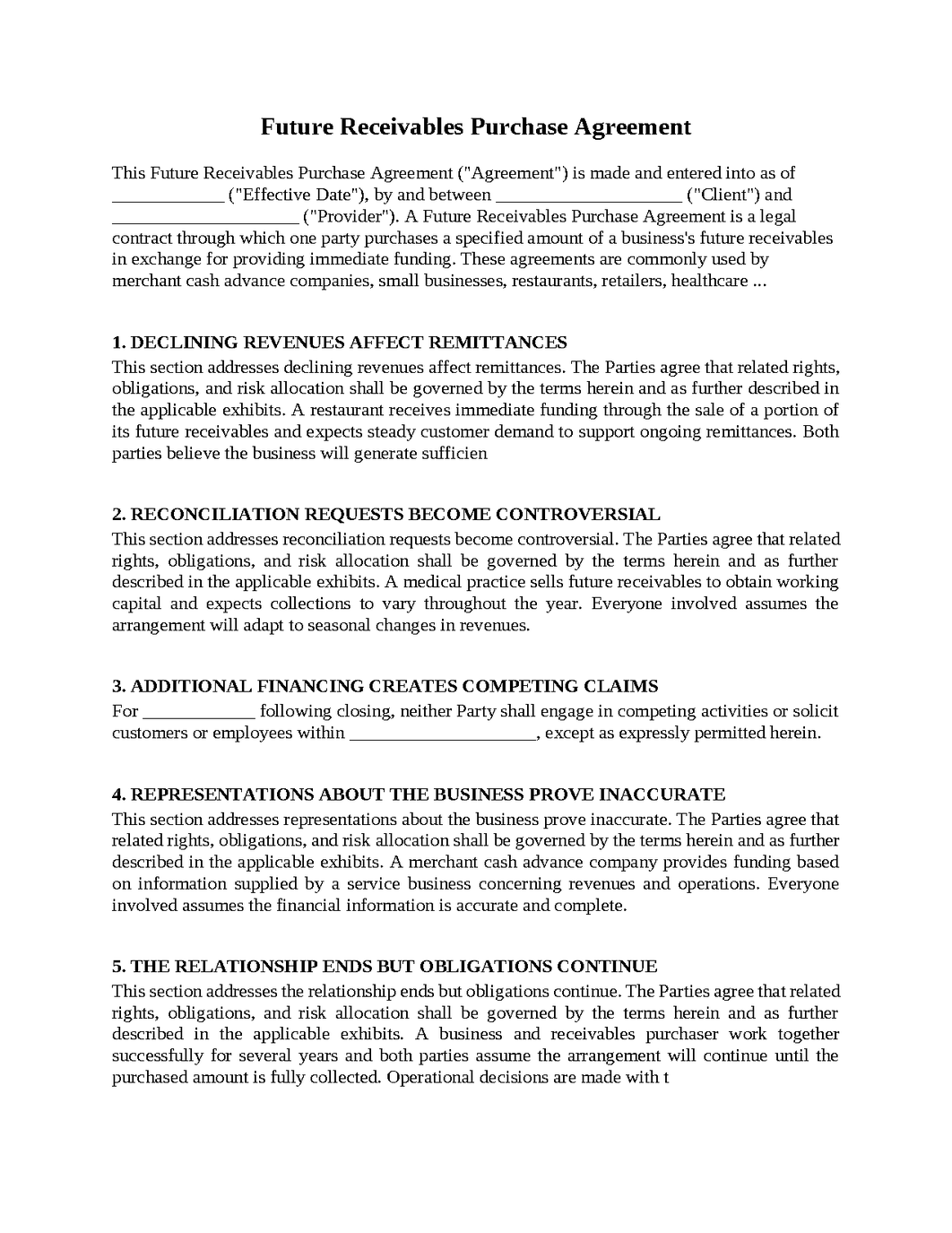
A Future Receivables Purchase Agreement is a legal contract through which one party purchases a specified amount of a business's future receivables in exchange for providing immediate funding. These agreements are commonly used by merchant cash advance companies, small businesses, restaurants, retailers, healthcare providers, and service companies seeking access to capital without entering into traditional loan arrangements. A Future Receivables Purchase Agreement typically addresses the purchase amount, remittance obligations, reconciliation procedures, default provisions, representations and warranties, and procedures governing termination. Because these arrangements rely on future revenue streams and involve ongoing collections, disputes can arise when expectations regarding obligations and rights are not documented clearly. A carefully drafted Future Receivables Purchase Agreement helps establish certainty and protect the interests of both purchasers and sellers.
Declining Revenues Affect Remittances
A restaurant receives immediate funding through the sale of a portion of its future receivables and expects steady customer demand to support ongoing remittances. Both parties believe the business will generate sufficient revenues to satisfy the arrangement without difficulty.
For several months, daily collections remain consistent and the relationship operates smoothly. Eventually, changing economic conditions and increased competition reduce sales, causing cash flow problems and making regular remittances more difficult.
The purchaser believes the agreed collection procedures should continue because the transaction was based upon the anticipated receivables. The business owner believes declining revenues justify adjustments and expects flexibility because the downturn was beyond management's control. As payment shortfalls increase, tensions emerge regarding how changing circumstances should affect the arrangement.
To help avoid this problem, a Future Receivables Purchase Agreement should clearly establish remittance procedures and define how fluctuations in revenue will be addressed.
Reconciliation Requests Become Controversial
A medical practice sells future receivables to obtain working capital and expects collections to vary throughout the year. Everyone involved assumes the arrangement will adapt to seasonal changes in revenues.
Over time, revenues decline and the practice requests adjustments to the daily remittance amounts. Questions arise regarding the timing and frequency of reconciliation requests and whether supporting documentation is sufficient.
The business believes reconciliation rights are essential because revenues naturally fluctuate and the remittance obligations should reflect actual performance. The purchaser believes excessive adjustments create uncertainty and argues that the agreement establishes reasonable procedures that should be followed. As financial pressures increase, disagreements emerge regarding the proper calculation of remittances.
To help prevent these issues, a Future Receivables Purchase Agreement should clearly establish reconciliation procedures and define the documentation required to support adjustment requests.
Additional Financing Creates Competing Claims
A retailer obtains funding through the sale of future receivables and later seeks additional financing to support expansion. Both parties believe future growth will generate sufficient revenues to satisfy all obligations.
Several months later, another financing provider asserts rights to the same receivables and questions the priority of existing claims. Uncertainty develops regarding which party should receive collections and whether multiple obligations can coexist.
The purchaser believes the original agreement provides priority rights to the receivables and expects those rights to be protected. The business owner believes additional financing is necessary to preserve operations and argues that all parties should cooperate to avoid disruptions. As competing demands increase, tensions emerge regarding the ownership of future collections.
To help avoid these problems, a Future Receivables Purchase Agreement should clearly establish priority rights and define the procedures governing additional financing arrangements.
Representations About the Business Prove Inaccurate
A merchant cash advance company provides funding based on information supplied by a service business concerning revenues and operations. Everyone involved assumes the financial information is accurate and complete.
After funding is provided, the purchaser discovers that revenues were overstated and that significant legal claims exist against the business. Concerns arise regarding whether the transaction would have occurred if accurate information had been disclosed.
The purchaser believes truthful disclosures were essential because the value of the receivables depended upon the health of the business. The business owner believes the inaccuracies were unintentional and argues that future revenues remain sufficient to support the arrangement. As risks increase, disagreements emerge regarding responsibility for the misrepresentations.
To help prevent these issues, a Future Receivables Purchase Agreement should clearly establish representations and warranties and define the consequences of inaccurate information.
The Relationship Ends but Obligations Continue
A business and receivables purchaser work together successfully for several years and both parties assume the arrangement will continue until the purchased amount is fully collected. Operational decisions are made with that expectation in mind.
Eventually, the business changes ownership and seeks to restructure its finances. Questions arise regarding outstanding balances, access to accounts, and obligations associated with previously purchased receivables.
The purchaser believes its rights survive changes in ownership and expects continued access to the agreed revenue streams. The business believes restructuring should provide greater flexibility and argues that existing obligations should be modified. As the transition progresses, disagreements emerge regarding the rights and responsibilities that survive the original relationship.
To help avoid this problem, a Future Receivables Purchase Agreement should clearly establish termination provisions and identify the obligations that continue until the purchased receivables have been fully satisfied.
Future Receivables Purchase Agreements are valuable tools that provide businesses with immediate access to capital while allowing purchasers to acquire future revenue streams. However, issues involving declining revenues, reconciliation disputes, competing claims, inaccurate representations, and post-transaction obligations can become significant sources of conflict when expectations are not documented clearly. A carefully drafted Future Receivables Purchase Agreement provides a structured framework for allocating responsibilities and protecting the interests of both parties. When prepared thoughtfully, it can reduce uncertainty, support business growth, preserve financial relationships, and provide the foundation necessary for successful receivables transactions.

Get started with Upsign today!
Easily send, sign and track your documents