

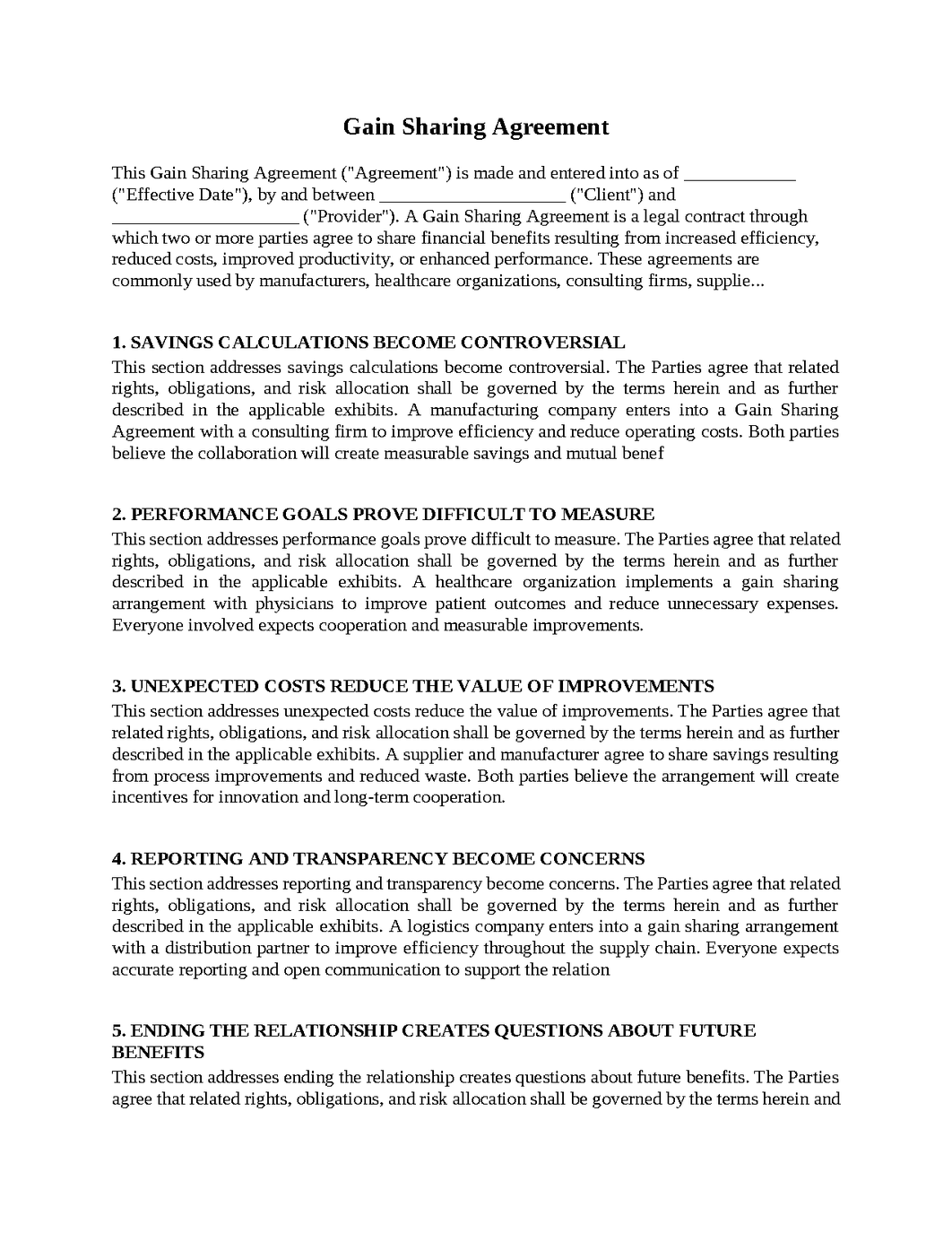
Gain Sharing Agreement
A Gain Sharing Agreement is a legal contract through which two or more parties agree to share financial benefits resulting from increased efficiency, reduced costs, improved productivity, or enhanced performance. These agreements are commonly used by manufacturers, healthcare organizations, consulting firms, suppliers, employee groups, and business partners seeking to align incentives and reward measurable improvements. A Gain Sharing Agreement typically addresses performance metrics, calculation methods, payment schedules, reporting obligations, and procedures governing disputes and termination. Because gain sharing arrangements depend upon measurable results and cooperation between multiple parties, disputes can arise when expectations regarding performance and compensation are not documented clearly. A carefully drafted Gain Sharing Agreement helps establish certainty and protect the interests of everyone involved.
Savings Calculations Become Controversial
A manufacturing company enters into a Gain Sharing Agreement with a consulting firm to improve efficiency and reduce operating costs. Both parties believe the collaboration will create measurable savings and mutual benefits.
During the first year, production processes improve and expenses decline. As financial benefits increase, however, questions arise regarding how the savings should be measured and which factors contributed to the improvements.
The consulting firm believes its recommendations and expertise were responsible for the results and expects compensation based on the full amount of the savings achieved. The manufacturer believes market conditions and internal efforts also contributed and argues that only a portion of the improvements should be subject to sharing. As the value of the gains increases, tensions emerge regarding how the calculations should be performed.
To help avoid this problem, a Gain Sharing Agreement should clearly establish performance metrics and define the methodology used to calculate savings and shared benefits.
Performance Goals Prove Difficult to Measure
A healthcare organization implements a gain sharing arrangement with physicians to improve patient outcomes and reduce unnecessary expenses. Everyone involved expects cooperation and measurable improvements.
Over time, questions arise regarding which outcomes should be considered and whether external factors affected the results. Different interpretations of performance data create uncertainty.
The physicians believe they should receive compensation because quality improvements and efficiencies were achieved. The healthcare organization believes certain results cannot be attributed solely to physician efforts and argues that additional factors influenced the outcomes. As compensation discussions become more difficult, disagreements emerge regarding how performance should be evaluated.
To help prevent these issues, a Gain Sharing Agreement should clearly establish performance standards and define the procedures used to measure success.
Unexpected Costs Reduce the Value of Improvements
A supplier and manufacturer agree to share savings resulting from process improvements and reduced waste. Both parties believe the arrangement will create incentives for innovation and long-term cooperation.
After several years, inflation, labor costs, and regulatory changes increase expenses and offset many of the expected benefits. Questions arise regarding whether the original gain-sharing formulas remain appropriate.
The supplier believes the agreement should recognize the value created by operational improvements even though external factors affected profitability. The manufacturer believes net savings should reflect all costs and argues that gains should only be shared when measurable benefits actually exist. As margins decline, tensions emerge regarding how unexpected expenses should affect compensation.
To help avoid these problems, a Gain Sharing Agreement should clearly establish calculation methods and define how external factors and additional costs will be treated.
Reporting and Transparency Become Concerns
A logistics company enters into a gain sharing arrangement with a distribution partner to improve efficiency throughout the supply chain. Everyone expects accurate reporting and open communication to support the relationship.
As savings increase, concerns arise regarding the accuracy of financial reports and whether all relevant information is being disclosed. Different accounting methods create conflicting results.
One party believes complete transparency is essential because compensation depends upon reliable information. The other believes existing reports provide sufficient detail and argues that excessive disclosure requirements create unnecessary burdens. As trust begins to erode, disagreements emerge regarding reporting obligations.
To help prevent these issues, a Gain Sharing Agreement should clearly establish reporting requirements and define how financial information will be verified and shared.
Ending the Relationship Creates Questions About Future Benefits
A company and its business partner work together successfully for many years and generate significant efficiencies through their collaboration. Both parties assume the arrangement will continue indefinitely and structure operations around that expectation.
Eventually, changing priorities lead one side to terminate the relationship. Questions arise regarding payments associated with improvements already implemented and whether benefits realized after termination should continue to be shared.
One party believes years of effort justify continued participation in gains resulting from previously developed initiatives. The other believes gain sharing should end when the relationship concludes and expects future benefits to remain exclusively with the business. As the transition unfolds, disagreements emerge regarding the obligations that survive termination.
To help avoid this problem, a Gain Sharing Agreement should clearly establish termination procedures and identify the rights and responsibilities that continue after the relationship ends.
Gain Sharing Agreements are valuable tools that align incentives and encourage cooperation by rewarding measurable improvements and efficiencies. However, issues involving savings calculations, performance measurements, unexpected costs, reporting obligations, and post-termination rights can become significant sources of conflict when expectations are not documented clearly. A carefully drafted Gain Sharing Agreement provides a structured framework for allocating responsibilities and protecting the interests of all parties involved. When prepared thoughtfully, it can reduce uncertainty, strengthen relationships, encourage innovation, and provide the foundation necessary for long-term success.

Get started with Upsign today!
Easily send, sign and track your documents