

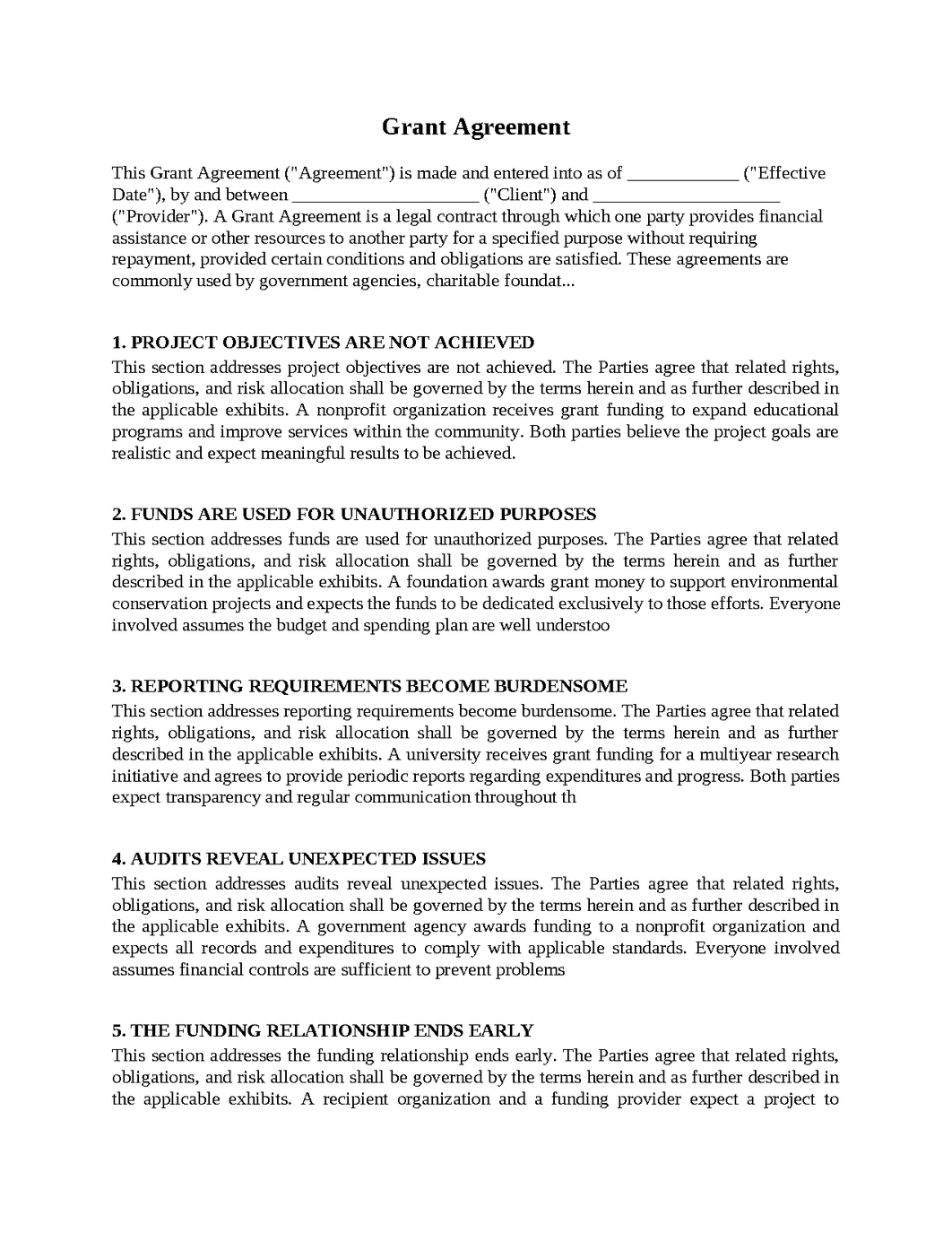
Grant Agreement
A Grant Agreement is a legal contract through which one party provides financial assistance or other resources to another party for a specified purpose without requiring repayment, provided certain conditions and obligations are satisfied. These agreements are commonly used by government agencies, charitable foundations, nonprofit organizations, universities, research institutions, and businesses seeking support for projects, programs, or initiatives. A Grant Agreement typically addresses funding amounts, permitted uses, reporting obligations, performance requirements, audit rights, and procedures governing termination and repayment. Because grants often involve public or charitable resources and specific expectations, disputes can arise when responsibilities and conditions are not documented clearly. A carefully drafted Grant Agreement helps establish certainty and protect the interests of both grantors and recipients.
Project Objectives Are Not Achieved
A nonprofit organization receives grant funding to expand educational programs and improve services within the community. Both parties believe the project goals are realistic and expect meaningful results to be achieved.
During the first year, the organization hires staff and launches several initiatives. Over time, however, lower participation and unexpected operational challenges prevent the project from meeting the original objectives.
The grantor believes the recipient should have managed the program more effectively and produced measurable results because the funding was awarded based upon specific goals. The recipient believes changing circumstances and limited resources affected performance and argues that reasonable efforts were made to achieve the intended outcomes. As future funding decisions approach, tensions emerge regarding accountability and expectations.
To help avoid this problem, a Grant Agreement should clearly establish performance requirements and define how success will be measured.
Funds Are Used for Unauthorized Purposes
A foundation awards grant money to support environmental conservation projects and expects the funds to be dedicated exclusively to those efforts. Everyone involved assumes the budget and spending plan are well understood.
As operating expenses increase, the recipient begins using portions of the grant to cover administrative costs unrelated to the approved programs. Questions arise regarding whether those expenditures are consistent with the original intent of the funding.
The foundation believes strict adherence to the approved budget is necessary because the grant was awarded for a specific purpose. The recipient believes maintaining overall operations indirectly supports the project and argues that flexibility is essential to long-term success. As reviews and audits begin, disagreements emerge regarding the proper use of the funds.
To help prevent these issues, a Grant Agreement should clearly establish spending restrictions and define the procedures governing changes to approved budgets.
Reporting Requirements Become Burdensome
A university receives grant funding for a multiyear research initiative and agrees to provide periodic reports regarding expenditures and progress. Both parties expect transparency and regular communication throughout the project.
As the research becomes more complex, delays occur in preparing reports and compiling supporting information. Questions arise regarding whether the reporting obligations are being satisfied adequately.
The grantor believes timely reports are essential because they demonstrate accountability and allow informed decisions regarding continued support. The recipient believes excessive reporting requirements interfere with research activities and argues that resources should remain focused on achieving project goals. As deadlines are missed, tensions develop regarding compliance.
To help avoid these problems, a Grant Agreement should clearly establish reporting requirements and define the consequences associated with late or incomplete submissions.
Audits Reveal Unexpected Issues
A government agency awards funding to a nonprofit organization and expects all records and expenditures to comply with applicable standards. Everyone involved assumes financial controls are sufficient to prevent problems.
Several years later, an audit identifies documentation deficiencies and expenditures that cannot be fully supported. Concerns arise regarding whether funds were administered properly.
The grantor believes complete records are essential because public resources must be protected and accounted for. The recipient believes the issues were unintentional and argues that the project itself produced substantial benefits. As corrective actions and repayment demands become possible, disagreements emerge regarding responsibility.
To help prevent these issues, a Grant Agreement should clearly establish recordkeeping requirements and define the procedures governing audits and financial reviews.
The Funding Relationship Ends Early
A recipient organization and a funding provider expect a project to continue for several years and structure operations around that expectation. Employees, budgets, and strategic plans are built upon the anticipated support.
Unexpected economic conditions and changing priorities eventually cause the grantor to discontinue funding before the project is completed. Questions arise regarding unfinished work, remaining funds, and obligations involving employees and contracts.
The recipient believes adequate transition assistance is necessary because commitments were made in reliance upon the funding. The grantor believes changing circumstances justify ending the relationship and expects unused funds to be returned according to the agreement. As the project winds down, disagreements emerge regarding the obligations that survive termination.
To help avoid this problem, a Grant Agreement should clearly establish termination procedures and identify the rights and responsibilities that continue after funding ends.
Grant Agreements are valuable tools that allow organizations and institutions to pursue meaningful projects while promoting accountability and transparency. However, issues involving project performance, unauthorized expenditures, reporting obligations, audit findings, and early termination can become significant sources of conflict when expectations are not documented clearly. A carefully drafted Grant Agreement provides a structured framework for allocating responsibilities and protecting the interests of both grantors and recipients. When prepared thoughtfully, it can reduce uncertainty, strengthen relationships, encourage responsible stewardship, and provide the foundation necessary for successful programs and initiatives.

Get started with Upsign today!
Easily send, sign and track your documents