

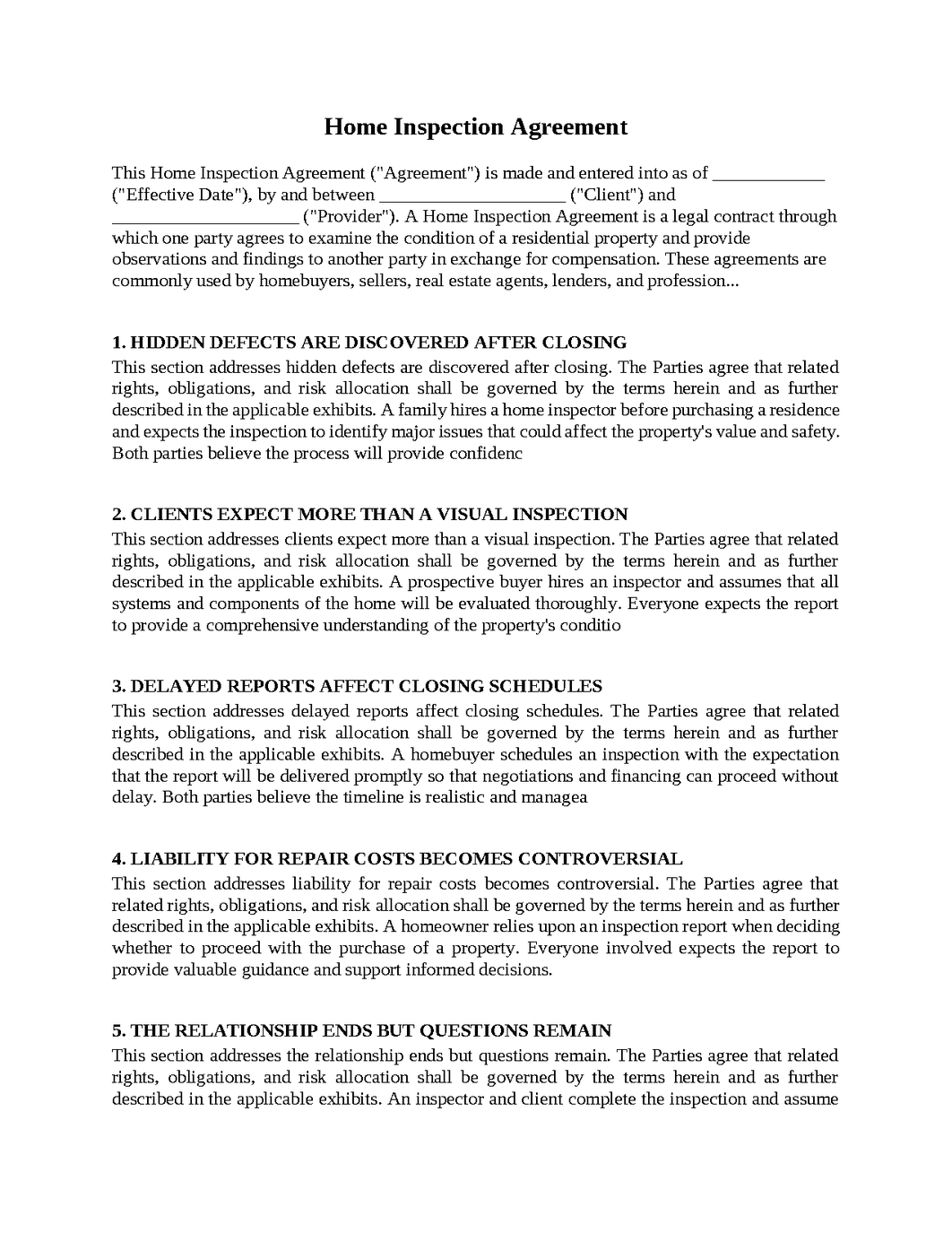
Home Inspection Agreement
A Home Inspection Agreement is a legal contract through which one party agrees to examine the condition of a residential property and provide observations and findings to another party in exchange for compensation. These agreements are commonly used by homebuyers, sellers, real estate agents, lenders, and professional inspectors seeking to evaluate the condition of a property before a transaction is completed. A Home Inspection Agreement typically addresses the scope of the inspection, limitations on liability, reporting requirements, fees, exclusions, and procedures governing disputes and termination. Because home inspections influence important financial decisions and cannot guarantee the discovery of every defect, disputes can arise when expectations regarding responsibilities and limitations are not documented clearly. A carefully drafted Home Inspection Agreement helps establish certainty and protect the interests of both inspectors and clients.
Hidden Defects Are Discovered After Closing
A family hires a home inspector before purchasing a residence and expects the inspection to identify major issues that could affect the property's value and safety. Both parties believe the process will provide confidence before closing.
The inspection is completed and the transaction proceeds successfully. Several months later, however, significant plumbing and foundation problems become apparent, requiring expensive repairs.
The buyers believe the inspector should have identified the defects because the inspection was intended to uncover major concerns. The inspector believes the issues were concealed or outside the scope of the inspection and argues that no inspection can guarantee the discovery of every condition. As repair costs increase, tensions emerge regarding responsibility for the undiscovered problems.
To help avoid this problem, a Home Inspection Agreement should clearly establish the scope of the inspection and define the limitations applicable to the services being provided.
Clients Expect More Than a Visual Inspection
A prospective buyer hires an inspector and assumes that all systems and components of the home will be evaluated thoroughly. Everyone expects the report to provide a comprehensive understanding of the property's condition.
After receiving the report, the buyer learns that certain systems and hidden areas were excluded from the inspection. Questions arise regarding whether specialized testing should have been performed.
The buyer believes additional evaluations should have been included because they were important to the purchasing decision. The inspector believes the agreement defined the services as a limited visual inspection and argues that specialized testing requires separate arrangements. As concerns increase, disagreements emerge regarding the scope of the engagement.
To help prevent these issues, a Home Inspection Agreement should clearly establish what is included and excluded from the inspection process.
Delayed Reports Affect Closing Schedules
A homebuyer schedules an inspection with the expectation that the report will be delivered promptly so that negotiations and financing can proceed without delay. Both parties believe the timeline is realistic and manageable.
Unexpected scheduling issues and increased demand delay the delivery of the report. The buyer worries that important contractual deadlines may be missed.
The buyer believes timely reporting is essential because inspection results influence decisions regarding repairs and financing. The inspector believes unexpected circumstances affected scheduling and argues that reasonable efforts were made to complete the report promptly. As closing dates approach, tensions develop regarding the delay.
To help avoid these problems, a Home Inspection Agreement should clearly establish reporting timelines and define how unexpected delays will be addressed.
Liability for Repair Costs Becomes Controversial
A homeowner relies upon an inspection report when deciding whether to proceed with the purchase of a property. Everyone involved expects the report to provide valuable guidance and support informed decisions.
After closing, expensive repairs become necessary and the homeowner seeks compensation from the inspector. Questions arise regarding whether damages should be limited by the agreement.
The homeowner believes the cost of repairs should be recoverable because the inspection influenced the purchasing decision. The inspector believes liability limitations are essential because inspection fees are small compared with the value of the property and argues that risks cannot be unlimited. As financial losses increase, disagreements emerge regarding the extent of liability.
To help prevent these issues, a Home Inspection Agreement should clearly establish liability limitations and define the remedies available in the event of errors or omissions.
The Relationship Ends but Questions Remain
An inspector and client complete the inspection and assume the transaction will proceed smoothly. Both parties expect the report to serve as the final step in the engagement.
After the sale is completed, questions arise regarding access to photographs, reliance by third parties, and requests for additional information. New owners and family members seek to use the report for purposes not originally contemplated.
The client believes continued access and assistance are reasonable because the report remains important after closing. The inspector believes the engagement concluded upon delivery of the report and expects additional services to require separate arrangements. As new requests emerge, disagreements arise regarding the obligations that survive completion of the inspection.
To help avoid this problem, a Home Inspection Agreement should clearly establish termination provisions and identify the rights and responsibilities that continue after the inspection services have been completed.
Home Inspection Agreements are valuable tools that provide buyers and homeowners with information necessary to make important decisions regarding real estate transactions. However, issues involving hidden defects, scope limitations, delayed reports, liability concerns, and post-engagement obligations can become significant sources of conflict when expectations are not documented clearly. A carefully drafted Home Inspection Agreement provides a structured framework for allocating responsibilities and protecting the interests of both inspectors and clients. When prepared thoughtfully, it can reduce uncertainty, strengthen professional relationships, support informed decisions, and provide the foundation necessary for effective property inspections.

Get started with Upsign today!
Easily send, sign and track your documents