

House Sitting Agreement
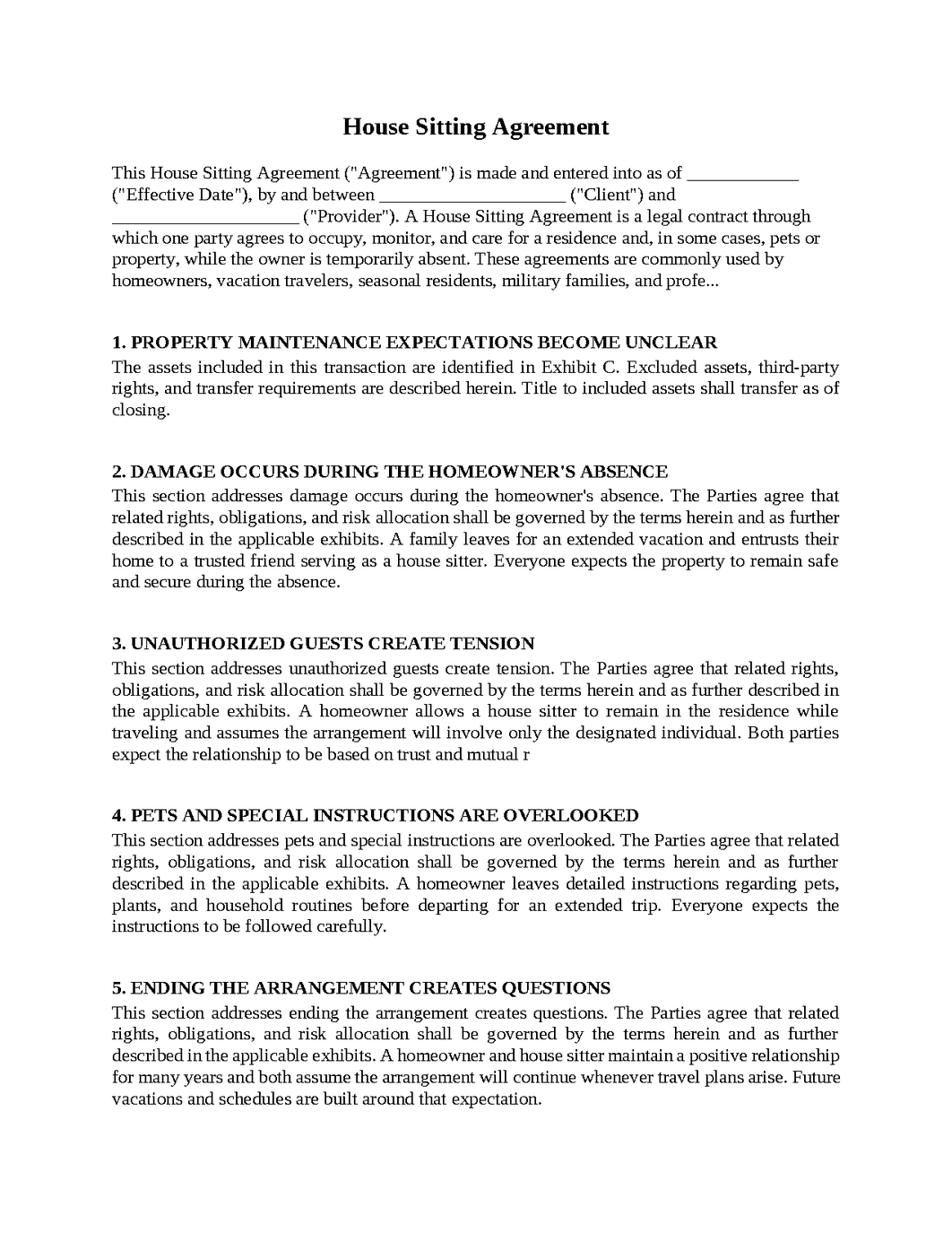
A House Sitting Agreement is a legal contract through which one party agrees to occupy, monitor, and care for a residence and, in some cases, pets or property, while the owner is temporarily absent. These agreements are commonly used by homeowners, vacation travelers, seasonal residents, military families, and professional house sitters seeking to protect property and establish clear expectations. A House Sitting Agreement typically addresses the duration of the arrangement, permitted activities, property maintenance responsibilities, compensation, emergency procedures, and processes governing liability and termination. Because house sitting relationships involve trust and access to valuable property, disputes can arise when expectations regarding responsibilities and boundaries are not documented clearly. A carefully drafted House Sitting Agreement helps establish certainty and protect the interests of both homeowners and house sitters.
Property Maintenance Expectations Become Unclear
A homeowner hires a house sitter while traveling abroad for several weeks and expects the property to be maintained in the same condition as when it was left. Both parties believe the arrangement is straightforward and that responsibilities are well understood.
Initially, communication is positive and routine tasks are performed without issue. Over time, however, questions arise regarding lawn care, mail collection, and minor maintenance items that were never discussed in detail.
The homeowner believes these responsibilities are naturally part of protecting the property because preserving the home's condition is the purpose of the arrangement. The house sitter believes certain tasks fall outside ordinary expectations and argues that additional duties should have been addressed beforehand. As concerns increase, tensions emerge regarding the scope of the house sitter's responsibilities.
To help avoid this problem, a House Sitting Agreement should clearly establish maintenance duties and define the expectations applicable to both parties.
Damage Occurs During the Homeowner's Absence
A family leaves for an extended vacation and entrusts their home to a trusted friend serving as a house sitter. Everyone expects the property to remain safe and secure during the absence.
During the arrangement, a water leak causes damage to flooring and furniture. Questions arise regarding whether the house sitter acted promptly and whether earlier intervention could have prevented greater losses.
The homeowners believe the house sitter should have noticed the problem and taken immediate action because safeguarding the property was a central responsibility. The house sitter believes the issue developed unexpectedly and argues that reasonable efforts were made under the circumstances. As repair costs increase, disagreements emerge regarding liability.
To help prevent these issues, a House Sitting Agreement should clearly establish emergency procedures and define the responsibilities associated with protecting the property.
Unauthorized Guests Create Tension
A homeowner allows a house sitter to remain in the residence while traveling and assumes the arrangement will involve only the designated individual. Both parties expect the relationship to be based on trust and mutual respect.
Several weeks into the arrangement, neighbors report unfamiliar visitors and overnight guests at the property. Concerns arise regarding security and whether the use of the home exceeds what was originally intended.
The homeowner believes the residence should not be used for social gatherings because maintaining privacy and security is essential. The house sitter believes occasional guests are harmless and argues that no damage resulted from the visits. As concerns about trust increase, tensions develop regarding acceptable use of the property.
To help avoid these problems, a House Sitting Agreement should clearly establish occupancy rules and define any restrictions regarding visitors and guests.
Pets and Special Instructions Are Overlooked
A homeowner leaves detailed instructions regarding pets, plants, and household routines before departing for an extended trip. Everyone expects the instructions to be followed carefully.
As the arrangement progresses, misunderstandings regarding feeding schedules and plant care lead to concerns about the condition of the pets and property. Family members become upset when they discover that some instructions were not followed exactly.
The homeowner believes the instructions were essential and should have been treated as priorities. The house sitter believes minor deviations were unavoidable and argues that reasonable care was provided. As emotions become involved, disagreements emerge regarding whether the responsibilities were fulfilled properly.
To help prevent these issues, a House Sitting Agreement should clearly establish care requirements and define the responsibilities relating to pets, plants, and household routines.
Ending the Arrangement Creates Questions
A homeowner and house sitter maintain a positive relationship for many years and both assume the arrangement will continue whenever travel plans arise. Future vacations and schedules are built around that expectation.
Eventually, changing circumstances require one party to end the relationship. Questions arise regarding access codes, keys, personal property, and obligations relating to future commitments.
The homeowner believes all property and access privileges should be returned promptly to ensure security. The house sitter believes adequate notice and compensation for existing commitments are appropriate because plans were made in reliance on the relationship. As the arrangement concludes, disagreements emerge regarding the obligations that survive termination.
To help avoid this problem, a House Sitting Agreement should clearly establish termination procedures and identify the rights and responsibilities that continue after the arrangement ends.
House Sitting Agreements are valuable tools that allow homeowners to travel with confidence while ensuring their homes and belongings receive appropriate care. However, issues involving maintenance expectations, property damage, unauthorized guests, care instructions, and post-termination obligations can become significant sources of conflict when expectations are not documented clearly. A carefully drafted House Sitting Agreement provides a structured framework for allocating responsibilities and protecting the interests of both homeowners and house sitters. When prepared thoughtfully, it can reduce uncertainty, strengthen trust, preserve valuable relationships, and provide the foundation necessary for successful house sitting arrangements.

Get started with Upsign today!
Easily send, sign and track your documents