

Insurance Agency Agreement
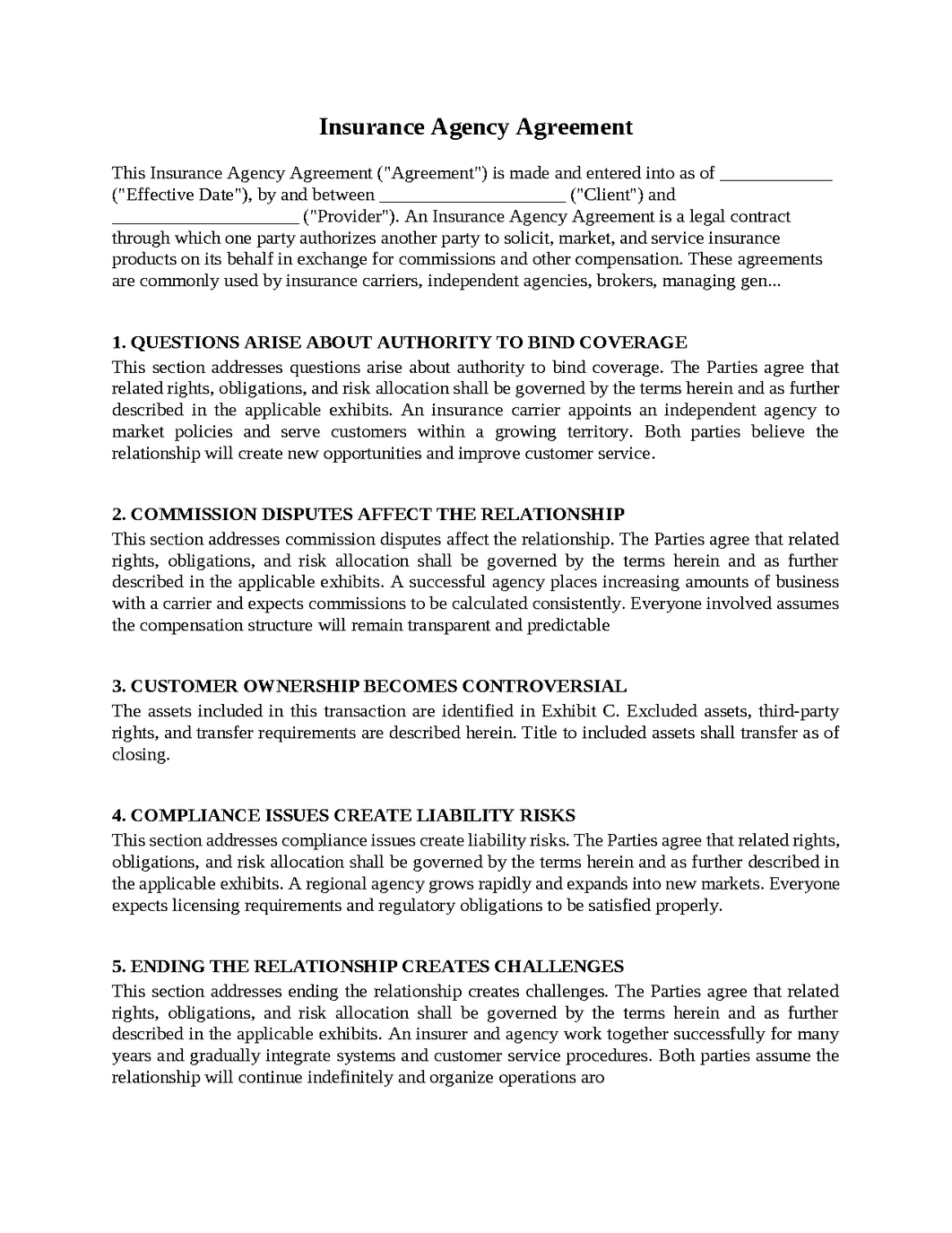
An Insurance Agency Agreement is a legal contract through which one party authorizes another party to solicit, market, and service insurance products on its behalf in exchange for commissions and other compensation. These agreements are commonly used by insurance carriers, independent agencies, brokers, managing general agents, and producers seeking to establish long-term business relationships. An Insurance Agency Agreement typically addresses authority to bind coverage, commission structures, licensing requirements, ownership of expirations, confidentiality obligations, and procedures governing termination and disputes. Because insurance relationships involve regulatory compliance and valuable customer relationships, disputes can arise when expectations regarding responsibilities and rights are not documented clearly. A carefully drafted Insurance Agency Agreement helps establish certainty and protect the interests of both insurers and agencies.
Questions Arise About Authority to Bind Coverage
An insurance carrier appoints an independent agency to market policies and serve customers within a growing territory. Both parties believe the relationship will create new opportunities and improve customer service.
Initially, business develops smoothly and policies are issued without difficulty. Over time, however, questions arise regarding whether certain coverages were properly bound and whether the agency exceeded its authority.
The carrier believes strict adherence to underwriting guidelines is essential because unauthorized coverage creates unnecessary risks. The agency believes it acted in the best interests of customers and argues that flexibility was necessary to maintain relationships. As claims arise, tensions emerge regarding the extent of the agency's authority.
To help avoid this problem, an Insurance Agency Agreement should clearly establish binding authority and define the limitations applicable to policy issuance.
Commission Disputes Affect the Relationship
A successful agency places increasing amounts of business with a carrier and expects commissions to be calculated consistently. Everyone involved assumes the compensation structure will remain transparent and predictable.
As premium volumes increase, disagreements develop regarding renewals, bonuses, and commission adjustments. Different interpretations of production requirements create confusion.
The agency believes compensation should reflect the value of its efforts in attracting and retaining customers. The carrier believes commissions must be calculated according to established formulas and argues that consistency is necessary across the distribution network. As revenues increase, disagreements emerge regarding compensation.
To help prevent these issues, an Insurance Agency Agreement should clearly establish commission structures and define how bonuses and adjustments will be calculated.
Customer Ownership Becomes Controversial
An agency spends years developing relationships with policyholders and expects those customers to remain valuable assets. Both parties believe cooperation will strengthen the business relationship.
Eventually, the carrier changes strategic priorities and begins communicating directly with customers. Questions arise regarding ownership of expirations and the right to service existing accounts.
The agency believes customer relationships are the result of years of effort and should remain under its control. The carrier believes the policies belong to the insurer and argues that direct communication is necessary to maintain service standards. As valuable accounts become involved, tensions develop regarding ownership rights.
To help avoid these problems, an Insurance Agency Agreement should clearly establish ownership rights relating to customer information and policy expirations.
Compliance Issues Create Liability Risks
A regional agency grows rapidly and expands into new markets. Everyone expects licensing requirements and regulatory obligations to be satisfied properly.
During an audit, regulators discover deficiencies involving documentation and sales practices. Concerns arise regarding whether the agency complied with applicable laws and carrier requirements.
The carrier believes the agency should bear responsibility because compliance is fundamental to maintaining a sound distribution system. The agency believes evolving regulations and administrative burdens contributed to the issues and argues that additional guidance should have been provided. As investigations increase, disagreements emerge regarding responsibility for compliance.
To help prevent these issues, an Insurance Agency Agreement should clearly establish regulatory obligations and define the procedures governing audits and corrective actions.
Ending the Relationship Creates Challenges
An insurer and agency work together successfully for many years and gradually integrate systems and customer service procedures. Both parties assume the relationship will continue indefinitely and organize operations around that expectation.
Eventually, changing business priorities lead one side to terminate the arrangement. Questions arise regarding commissions on renewals, customer records, and obligations relating to policies already in force.
The agency believes it should continue receiving compensation for business it originally produced and expects a smooth transition for customers. The carrier believes termination rights should be enforced according to the agreement and argues that certain rights end immediately. As the relationship concludes, disagreements emerge regarding the obligations that survive termination.
To help avoid this problem, an Insurance Agency Agreement should clearly establish termination procedures and identify the rights and responsibilities that continue after the relationship ends.
Insurance Agency Agreements are valuable tools that allow insurers and agencies to work together in serving customers and expanding business opportunities. However, issues involving binding authority, commissions, customer ownership, regulatory compliance, and post-termination obligations can become significant sources of conflict when expectations are not documented clearly. A carefully drafted Insurance Agency Agreement provides a structured framework for allocating responsibilities and protecting the interests of both carriers and agencies. When prepared thoughtfully, it can reduce uncertainty, strengthen professional relationships, encourage compliance, and provide the foundation necessary for long-term success in the insurance industry.

Get started with Upsign today!
Easily send, sign and track your documents