

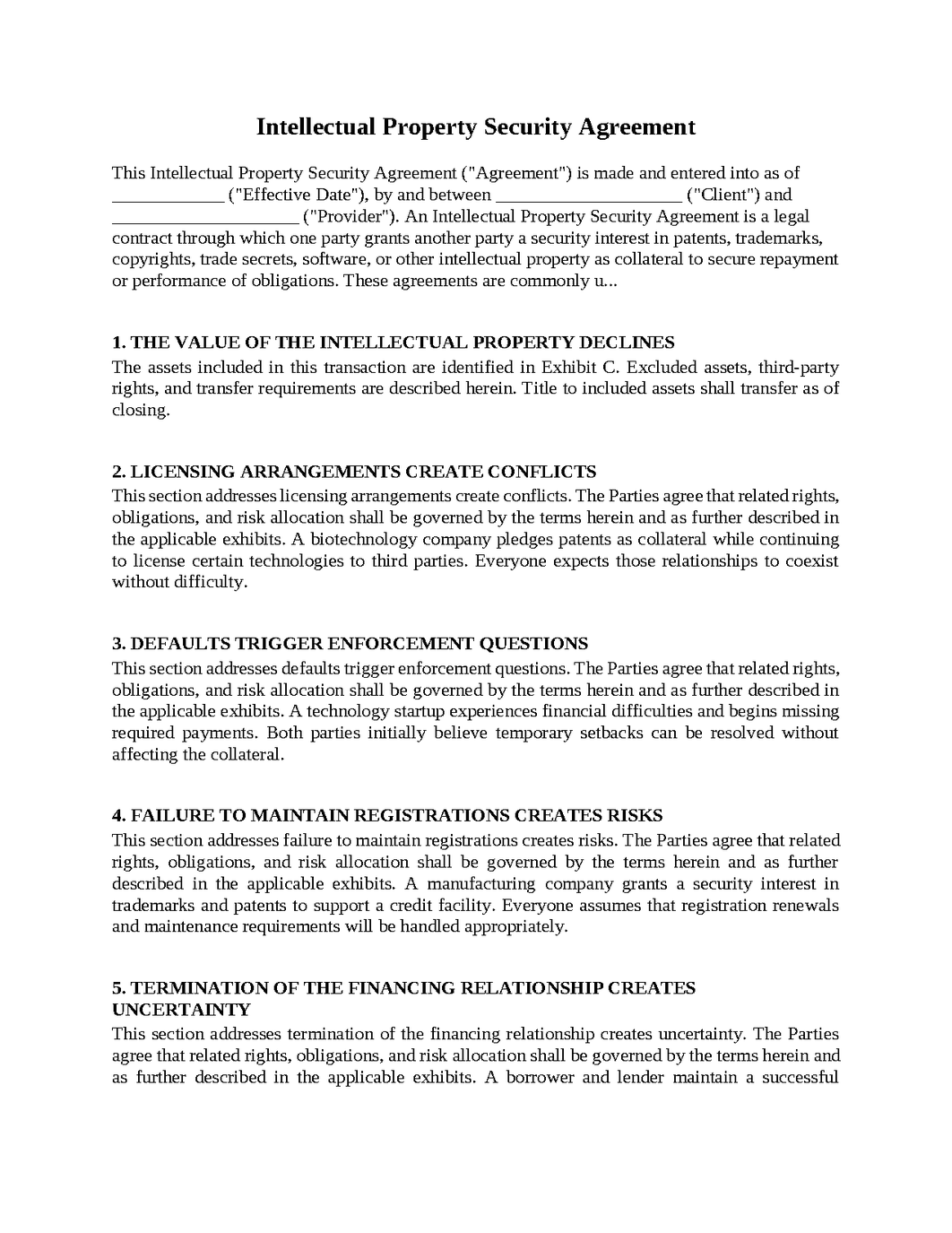
Intellectual Property Security Agreement
An Intellectual Property Security Agreement is a legal contract through which one party grants another party a security interest in patents, trademarks, copyrights, trade secrets, software, or other intellectual property as collateral to secure repayment or performance of obligations. These agreements are commonly used by lenders, investors, venture capital firms, technology companies, manufacturers, and businesses seeking financing while preserving ownership and operational use of their intellectual assets. An Intellectual Property Security Agreement typically addresses the collateral being pledged, perfection requirements, default provisions, rights upon foreclosure, ongoing maintenance obligations, and procedures governing termination and disputes. Because intellectual property often represents a company's most valuable assets, disputes can arise when expectations regarding rights and responsibilities are not documented clearly. A carefully drafted Intellectual Property Security Agreement helps establish certainty and protect the interests of both borrowers and secured parties.
The Value of the Intellectual Property Declines
A software company obtains financing and grants a security interest in its proprietary applications and related intellectual property. Both parties believe the value of the assets will support the financing arrangement and provide adequate protection.
Initially, the company experiences growth and customer demand remains strong. Over time, however, changing technology and increased competition reduce the commercial value of the software and related assets.
The lender believes the borrower should preserve the value of the collateral because the financing decision relied heavily upon the intellectual property. The company believes market conditions affected the entire industry and argues that reasonable efforts were made to maintain the value of the assets. As concerns regarding repayment increase, tensions emerge regarding the adequacy of the collateral.
To help avoid this problem, an Intellectual Property Security Agreement should clearly establish maintenance obligations and define the requirements applicable to preserving intellectual property rights.
Licensing Arrangements Create Conflicts
A biotechnology company pledges patents as collateral while continuing to license certain technologies to third parties. Everyone expects those relationships to coexist without difficulty.
As licensing activity expands, questions arise regarding whether additional agreements affect the lender's security interest and priority rights. Concerns develop about the impact of future transactions on the collateral.
The secured party believes new licenses should be restricted because they may reduce the value of the intellectual property. The borrower believes licensing arrangements are necessary to generate revenues and argues that ordinary business activities should continue. As commercial opportunities increase, disagreements emerge regarding the limits on future transactions.
To help prevent these issues, an Intellectual Property Security Agreement should clearly establish restrictions on transfers and define the circumstances under which licenses and assignments may be permitted.
Defaults Trigger Enforcement Questions
A technology startup experiences financial difficulties and begins missing required payments. Both parties initially believe temporary setbacks can be resolved without affecting the collateral.
As defaults continue, the lender considers exercising its rights against the intellectual property. Questions arise regarding ownership, access to source code, and the procedures required before foreclosure may occur.
The lender believes prompt enforcement is necessary because protecting the collateral is essential to minimizing losses. The borrower believes additional time should be provided because the business remains capable of recovery. As financial pressures increase, tensions develop regarding enforcement rights.
To help avoid these problems, an Intellectual Property Security Agreement should clearly establish default provisions and define the remedies available upon nonperformance.
Failure to Maintain Registrations Creates Risks
A manufacturing company grants a security interest in trademarks and patents to support a credit facility. Everyone assumes that registration renewals and maintenance requirements will be handled appropriately.
Several years later, certain registrations expire because deadlines were overlooked. Questions arise regarding whether the decline in collateral value resulted from inadequate maintenance.
The lender believes the borrower should bear responsibility because preserving the intellectual property was essential to protecting the collateral. The borrower believes administrative oversights were unintentional and argues that the underlying business value remains intact. As concerns regarding security increase, disagreements emerge regarding responsibility for maintaining registrations.
To help prevent these issues, an Intellectual Property Security Agreement should clearly establish maintenance requirements and define the obligations relating to registrations and renewals.
Termination of the Financing Relationship Creates Uncertainty
A borrower and lender maintain a successful relationship for many years and both expect the financing arrangement to conclude after repayment. Business plans and growth strategies are built around that expectation.
Eventually, the debt is satisfied and questions arise regarding releases, filing terminations, and documentation necessary to confirm that the security interest has been extinguished.
The borrower believes prompt release is essential because unrestricted ownership rights are necessary for future growth and financing opportunities. The lender believes all obligations should be verified before relinquishing its interests and expects the release process to occur according to established procedures. As repayment is completed, disagreements emerge regarding the obligations that survive the financing relationship.
To help avoid this problem, an Intellectual Property Security Agreement should clearly establish release procedures and identify the rights and obligations that continue after the secured obligations have been satisfied.
Intellectual Property Security Agreements are valuable tools that allow businesses to leverage valuable intangible assets while providing lenders with meaningful collateral protection. However, issues involving declining asset values, licensing arrangements, defaults, maintenance obligations, and post-repayment rights can become significant sources of conflict when expectations are not documented clearly. A carefully drafted Intellectual Property Security Agreement provides a structured framework for allocating responsibilities and protecting the interests of both borrowers and secured parties. When prepared thoughtfully, it can reduce uncertainty, strengthen financing relationships, support innovation, and provide the foundation necessary for successful secured transactions.

Get started with Upsign today!
Easily send, sign and track your documents