

Key Person Insurance Agreement
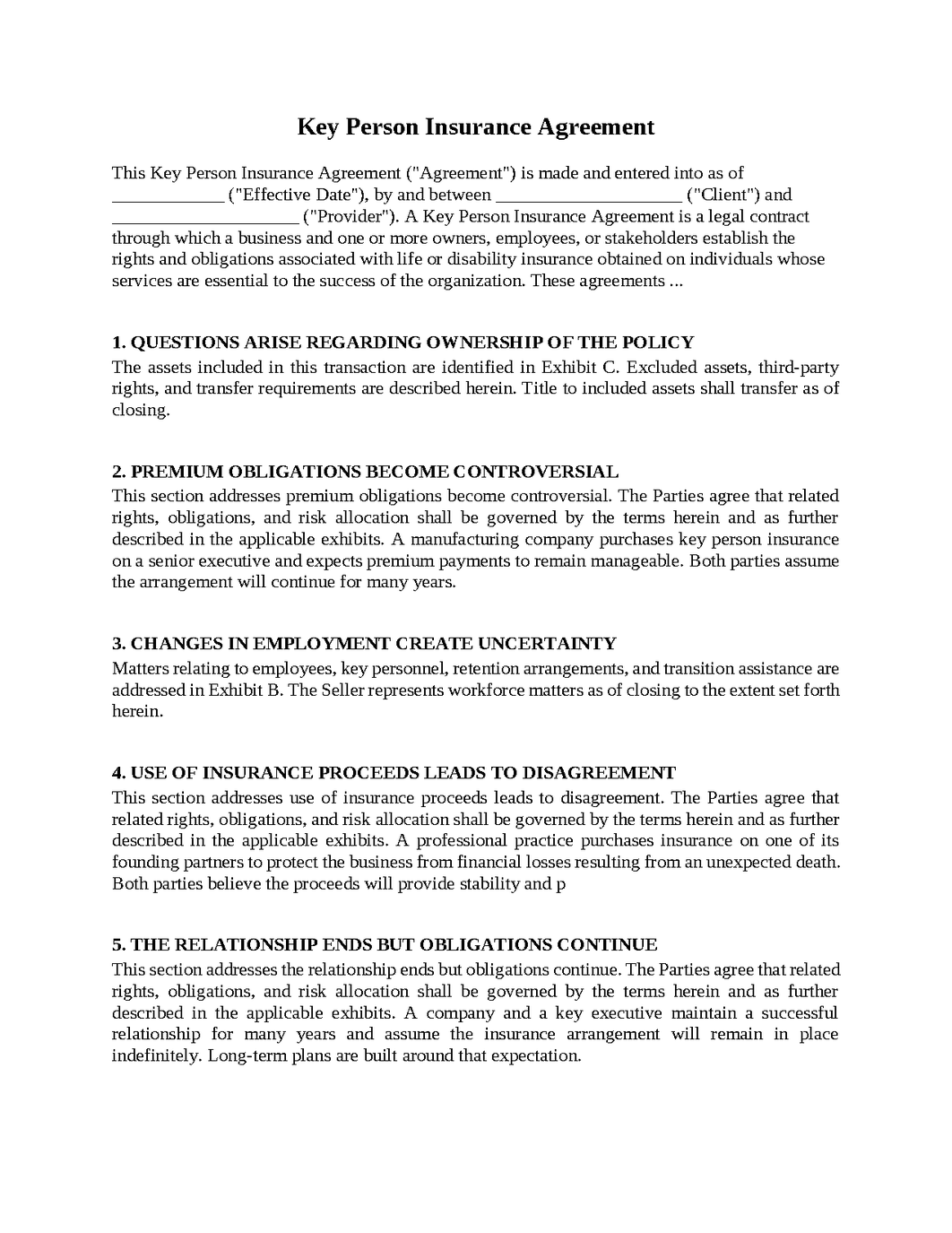
A Key Person Insurance Agreement is a legal contract through which a business and one or more owners, employees, or stakeholders establish the rights and obligations associated with life or disability insurance obtained on individuals whose services are essential to the success of the organization. These agreements are commonly used by closely held businesses, professional practices, partnerships, manufacturers, and growing companies seeking to protect against financial losses that could result from the death or disability of an important employee or executive. A Key Person Insurance Agreement typically addresses ownership of policies, beneficiary designations, premium obligations, rights to policy proceeds, and procedures governing changes and termination. Because these arrangements involve substantial financial interests and sensitive personal matters, disputes can arise when expectations regarding responsibilities and benefits are not documented clearly. A carefully drafted Key Person Insurance Agreement helps establish certainty and protect the interests of both businesses and insured individuals.
Questions Arise Regarding Ownership of the Policy
A successful company purchases insurance on its chief executive officer because management believes the individual's experience and relationships are critical to continued growth. Everyone expects the arrangement to provide financial stability in the event of an unexpected loss.
Over time, the executive's role evolves and compensation arrangements become more complex. Questions eventually arise regarding who owns the policy and whether the insured individual possesses any rights relating to its value.
The company believes ownership should remain with the business because the policy was obtained to protect corporate interests and the company paid the premiums. The executive believes years of service and personal involvement justify greater participation in decisions affecting the policy. As the value of the coverage increases, tensions emerge regarding ownership rights.
To help avoid this problem, a Key Person Insurance Agreement should clearly establish ownership provisions and define the rights associated with the policy.
Premium Obligations Become Controversial
A manufacturing company purchases key person insurance on a senior executive and expects premium payments to remain manageable. Both parties assume the arrangement will continue for many years.
As the business expands and insurance costs increase, questions arise regarding who should bear the growing expense and whether modifications to coverage are appropriate.
The company believes continuing premium payments are justified because protecting against the loss of key leadership remains important. The insured executive believes changes to compensation or benefits should accompany additional obligations associated with maintaining the coverage. As expenses increase, disagreements emerge regarding responsibility for future costs.
To help prevent these issues, a Key Person Insurance Agreement should clearly establish premium obligations and define the procedures governing changes to coverage.
Changes in Employment Create Uncertainty
A company insures a senior sales executive whose customer relationships are essential to the business. Everyone expects the relationship to continue indefinitely and assumes the insurance arrangement will remain beneficial.
Eventually, the executive accepts another opportunity and plans to leave the company. Questions arise regarding whether the policy should remain in force and whether the departing employee has any continuing rights.
The company believes the policy exists to protect business interests and expects to retain control following the employee's departure. The former employee believes years of service justify an opportunity to purchase or assume ownership of the policy. As the separation unfolds, tensions develop regarding future rights.
To help avoid these problems, a Key Person Insurance Agreement should clearly establish the consequences of termination of employment and define the rights of the parties following separation.
Use of Insurance Proceeds Leads to Disagreement
A professional practice purchases insurance on one of its founding partners to protect the business from financial losses resulting from an unexpected death. Both parties believe the proceeds will provide stability and preserve operations.
Following the death of the insured individual, surviving owners disagree regarding how the proceeds should be used. Questions arise concerning debt repayment, recruiting a replacement, and compensating the deceased partner's family.
Some owners believe the funds should be reinvested into the business to ensure continuity. Others believe certain obligations to the family should take priority because the deceased individual's contributions were instrumental to the success of the company. As emotions and financial pressures increase, disagreements emerge regarding the purpose of the proceeds.
To help prevent these issues, a Key Person Insurance Agreement should clearly establish the intended use of insurance proceeds and define the priorities governing their distribution.
The Relationship Ends but Obligations Continue
A company and a key executive maintain a successful relationship for many years and assume the insurance arrangement will remain in place indefinitely. Long-term plans are built around that expectation.
Eventually, changes in ownership and business strategy lead management to reconsider the need for coverage. Questions arise regarding surrender values, policy assignments, and continuing obligations.
The company believes it should retain flexibility because business circumstances evolve over time. The executive believes decisions affecting the policy should recognize years of service and previously established expectations. As the relationship changes, disagreements emerge regarding the rights and responsibilities that survive the original arrangement.
To help avoid this problem, a Key Person Insurance Agreement should clearly establish termination procedures and identify the rights and obligations that continue after the relationship ends.
Key Person Insurance Agreements are valuable tools that help businesses protect themselves against the financial consequences associated with the loss of essential employees and executives. However, issues involving policy ownership, premium obligations, employment changes, insurance proceeds, and post-termination rights can become significant sources of conflict when expectations are not documented clearly. A carefully drafted Key Person Insurance Agreement provides a structured framework for allocating responsibilities and protecting the interests of both businesses and insured individuals. When prepared thoughtfully, it can reduce uncertainty, strengthen relationships, preserve continuity, and provide the foundation necessary for long-term organizational stability.

Get started with Upsign today!
Easily send, sign and track your documents