

Non-Disclosure Agreement
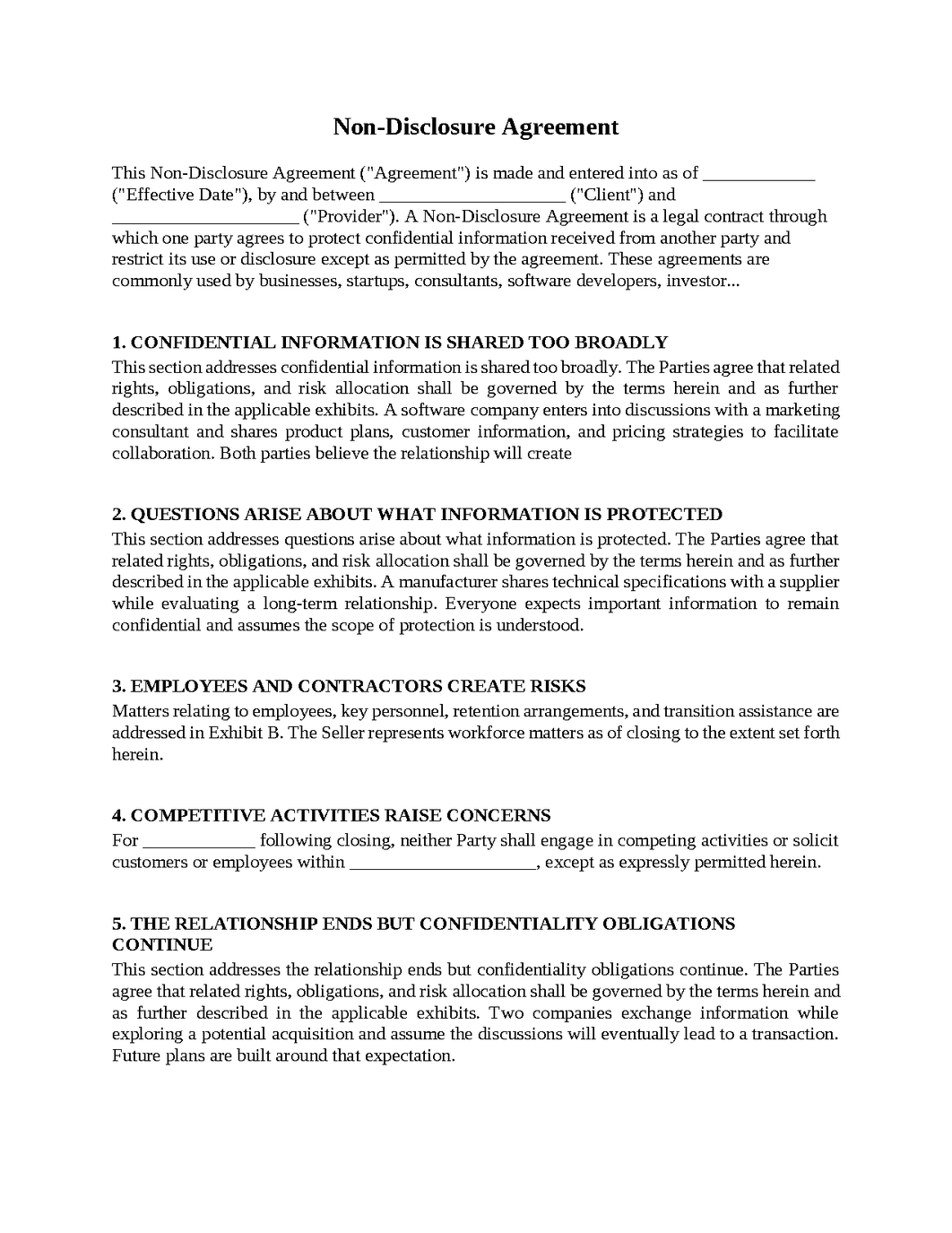
A Non-Disclosure Agreement is a legal contract through which one party agrees to protect confidential information received from another party and restrict its use or disclosure except as permitted by the agreement. These agreements are commonly used by businesses, startups, consultants, software developers, investors, manufacturers, and professional service providers seeking to safeguard trade secrets, proprietary information, customer data, and other sensitive materials. A Non-Disclosure Agreement typically addresses the definition of confidential information, permitted uses, exclusions, duration, remedies for breaches, and procedures governing disputes and termination. Because valuable information often represents a competitive advantage, disputes can arise when expectations regarding confidentiality and permitted disclosures are not documented clearly. A carefully drafted Non-Disclosure Agreement helps establish certainty and protect the interests of all parties involved.
Confidential Information Is Shared Too Broadly
A software company enters into discussions with a marketing consultant and shares product plans, customer information, and pricing strategies to facilitate collaboration. Both parties believe the relationship will create new opportunities and expect sensitive information to remain protected.
Initially, communications proceed smoothly and trust develops between the parties. Over time, however, concerns arise when individuals outside the project appear to possess knowledge of confidential matters.
The software company believes the consultant should have exercised greater care because protecting proprietary information was essential to the relationship. The consultant believes ordinary business discussions and subcontractor involvement made certain disclosures unavoidable and argues that reasonable precautions were taken. As concerns about competitive harm increase, tensions emerge regarding confidentiality obligations.
To help avoid this problem, a Non-Disclosure Agreement should clearly establish what information is considered confidential and define the circumstances under which disclosures are permitted.
Questions Arise About What Information Is Protected
A manufacturer shares technical specifications with a supplier while evaluating a long-term relationship. Everyone expects important information to remain confidential and assumes the scope of protection is understood.
As the relationship develops, disagreements arise regarding whether certain information was already publicly available or independently developed. Different interpretations create uncertainty regarding the extent of protection.
The manufacturer believes broad protections are necessary because years of investment produced the information being shared. The supplier believes publicly known concepts and independent developments should not be restricted and argues that confidentiality obligations should have clear limits. As business opportunities expand, disagreements emerge regarding the definition of confidential information.
To help prevent these issues, a Non-Disclosure Agreement should clearly establish the information covered by the agreement and define any exclusions that apply.
Employees and Contractors Create Risks
A medical technology company shares research and product concepts with an outside engineering firm. Both parties expect everyone involved in the project to maintain strict confidentiality.
As the work progresses, subcontractors and employees gain access to sensitive materials. Questions arise regarding whether adequate safeguards exist to prevent unauthorized disclosures.
The technology company believes the engineering firm should ensure that everyone with access understands and complies with confidentiality requirements. The engineering firm believes its internal procedures are reasonable and argues that complete control over every individual is impossible. As concerns increase, tensions develop regarding responsibility for third-party disclosures.
To help avoid these problems, a Non-Disclosure Agreement should clearly establish obligations relating to employees, contractors, and other individuals who may receive confidential information.
Competitive Activities Raise Concerns
A startup shares proprietary information with a strategic partner while exploring a joint venture. Everyone expects the discussions to benefit both organizations without creating unfair advantages.
Eventually, the startup learns that the partner is developing a competing product. Questions arise regarding whether confidential information influenced those efforts.
The startup believes the partner should be prohibited from using the information for any purpose other than evaluating the relationship because protecting competitive advantages is critical. The partner believes independent development and general industry knowledge cannot be restricted and argues that no confidential information was misused. As competition intensifies, disagreements emerge regarding permissible uses of the information.
To help prevent these issues, a Non-Disclosure Agreement should clearly establish permitted uses and define restrictions on competitive activities.
The Relationship Ends but Confidentiality Obligations Continue
Two companies exchange information while exploring a potential acquisition and assume the discussions will eventually lead to a transaction. Future plans are built around that expectation.
When negotiations end without a deal, questions arise regarding documents, electronic records, and continuing confidentiality obligations. Different expectations emerge regarding the handling of information after the relationship concludes.
One company believes all materials should be returned or destroyed because protecting proprietary information remains essential even after negotiations end. The other believes certain records must be retained for legal and administrative purposes and expects reasonable flexibility. As the parties move in different directions, disagreements emerge regarding the obligations that survive termination.
To help avoid this problem, a Non-Disclosure Agreement should clearly establish post-termination obligations and identify the procedures governing the return, destruction, or retention of confidential information.
Non-Disclosure Agreements are valuable tools that allow businesses and individuals to share sensitive information while preserving confidentiality and protecting competitive advantages. However, issues involving unauthorized disclosures, unclear definitions, third-party access, competitive activities, and post-termination obligations can become significant sources of conflict when expectations are not documented clearly. A carefully drafted Non-Disclosure Agreement provides a structured framework for allocating responsibilities and protecting the interests of all parties. When prepared thoughtfully, it can reduce uncertainty, strengthen business relationships, encourage collaboration, and provide the foundation necessary for successful exchanges of confidential information.

Get started with Upsign today!
Easily send, sign and track your documents