

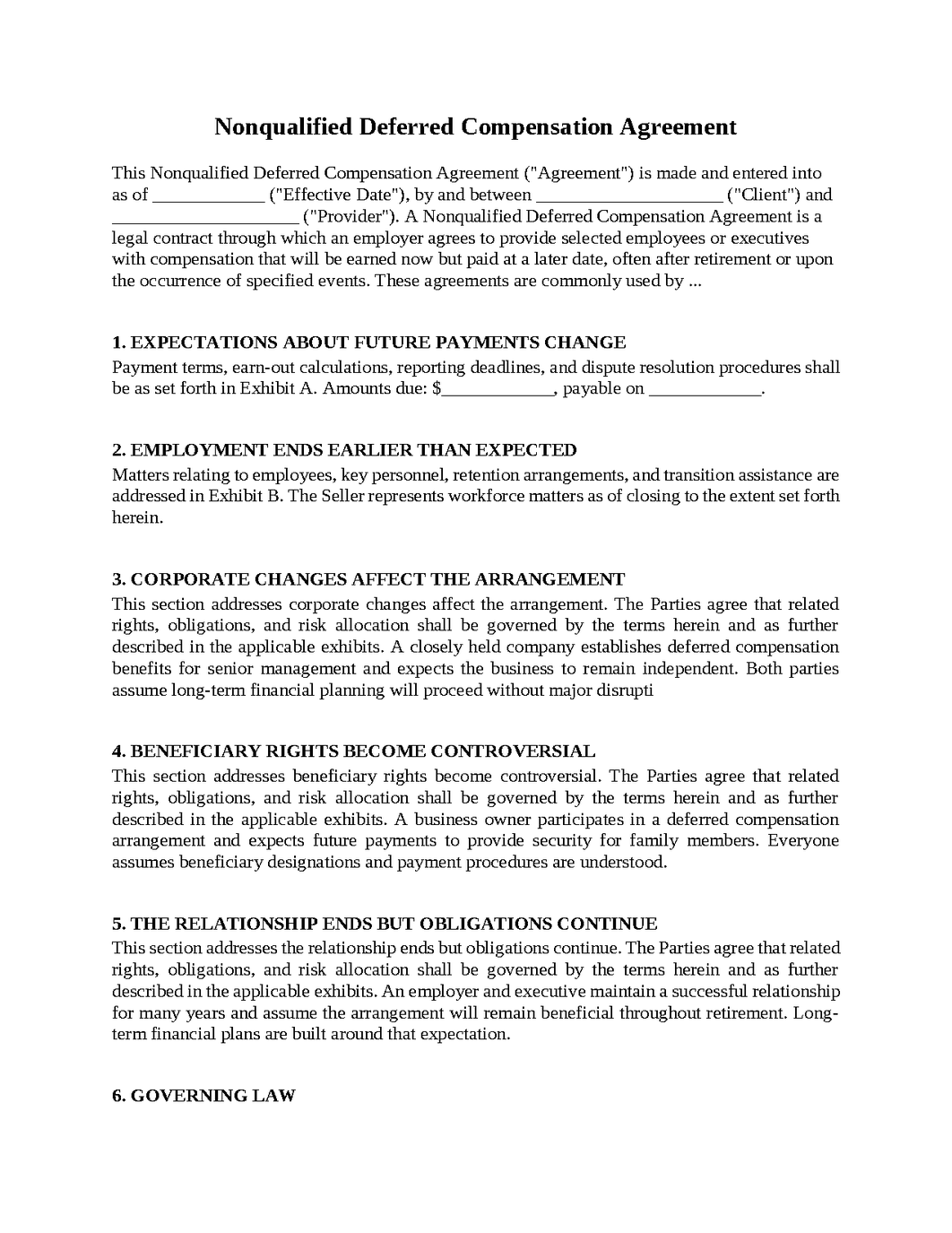
Nonqualified Deferred Compensation Agreement
A Nonqualified Deferred Compensation Agreement is a legal contract through which an employer agrees to provide selected employees or executives with compensation that will be earned now but paid at a later date, often after retirement or upon the occurrence of specified events. These agreements are commonly used by corporations, financial institutions, professional practices, closely held businesses, and executive teams seeking to attract and retain key talent through long-term incentive arrangements. A Nonqualified Deferred Compensation Agreement typically addresses vesting schedules, payment events, tax considerations, forfeiture provisions, beneficiary rights, and procedures governing disputes and termination. Because these arrangements involve future compensation and significant financial expectations, disputes can arise when responsibilities and rights are not documented clearly. A carefully drafted Nonqualified Deferred Compensation Agreement helps establish certainty and protect the interests of both employers and participants.
Expectations About Future Payments Change
A regional company offers a deferred compensation arrangement to a senior executive and expects the program to encourage long-term commitment and leadership. Both parties believe the arrangement will provide meaningful retirement benefits while supporting the company's growth.
Over time, the executive assumes additional responsibilities and contributes significantly to the success of the business. As retirement planning becomes more important, questions arise regarding the amount and timing of future payments.
The executive believes years of service and increased contributions justify receiving the full value of the promised benefits because the compensation was earned through continued dedication. The company believes the original arrangement should control and argues that changing circumstances do not automatically alter the agreed benefits. As retirement approaches, tensions emerge regarding expectations and payment obligations.
To help avoid this problem, a Nonqualified Deferred Compensation Agreement should clearly establish the timing and amount of future payments and define the circumstances under which changes may occur.
Employment Ends Earlier Than Expected
A manufacturing company enters into a deferred compensation arrangement with a key executive and assumes the relationship will continue for many years. Everyone expects the benefits to become fully vested through continued service.
Unexpected personal circumstances eventually lead the executive to resign before retirement. Questions arise regarding whether the executive remains entitled to future benefits and how vesting provisions apply.
The executive believes years of service should provide meaningful rights because significant contributions were made to the success of the company. The employer believes continued employment was an essential condition of the arrangement and argues that forfeiture provisions should apply. As the separation unfolds, disagreements emerge regarding vested rights and future payments.
To help prevent these issues, a Nonqualified Deferred Compensation Agreement should clearly establish vesting requirements and define the consequences of early termination of employment.
Corporate Changes Affect the Arrangement
A closely held company establishes deferred compensation benefits for senior management and expects the business to remain independent. Both parties assume long-term financial planning will proceed without major disruptions.
Several years later, a merger or acquisition opportunity arises and questions emerge regarding the treatment of deferred compensation obligations. Different expectations create uncertainty regarding payment schedules and corporate responsibilities.
The executives believe promised benefits should remain secure because their contributions helped increase the value of the business. The new owners believe certain modifications may be necessary and argue that existing obligations should be interpreted according to the transaction documents. As ownership changes occur, tensions develop regarding the continuation of benefits.
To help avoid these problems, a Nonqualified Deferred Compensation Agreement should clearly establish the treatment of benefits following mergers, acquisitions, and other corporate transactions.
Beneficiary Rights Become Controversial
A business owner participates in a deferred compensation arrangement and expects future payments to provide security for family members. Everyone assumes beneficiary designations and payment procedures are understood.
Following the participant's death, questions arise regarding the proper recipients of benefits and the timing of distributions. Family members and the company interpret the arrangement differently.
The beneficiaries believe payments should occur promptly because the compensation represented earned benefits intended to provide financial security. The company believes distribution procedures and documentation requirements must be followed carefully to ensure compliance with the agreement. As emotions and financial concerns increase, disagreements emerge regarding beneficiary rights.
To help prevent these issues, a Nonqualified Deferred Compensation Agreement should clearly establish beneficiary provisions and define the procedures governing distributions after death.
The Relationship Ends but Obligations Continue
An employer and executive maintain a successful relationship for many years and assume the arrangement will remain beneficial throughout retirement. Long-term financial plans are built around that expectation.
Eventually, changing circumstances bring the employment relationship to an end. Questions arise regarding ongoing obligations, payment schedules, and the rights that survive separation.
The executive believes deferred compensation represents earned benefits that should remain protected regardless of future employment status. The employer believes certain conditions and restrictions continue to apply and expects contractual requirements to be honored. As retirement and separation become realities, disagreements emerge regarding the obligations that survive the employment relationship.
To help avoid this problem, a Nonqualified Deferred Compensation Agreement should clearly establish post-employment obligations and identify the rights and responsibilities that continue after employment ends.
Nonqualified Deferred Compensation Agreements are valuable tools that help businesses attract and retain key employees while providing long-term financial incentives. However, issues involving future payment expectations, early termination, corporate changes, beneficiary rights, and post-employment obligations can become significant sources of conflict when expectations are not documented clearly. A carefully drafted Nonqualified Deferred Compensation Agreement provides a structured framework for allocating responsibilities and protecting the interests of both employers and participants. When prepared thoughtfully, it can reduce uncertainty, strengthen executive relationships, encourage loyalty, and provide the foundation necessary for effective long-term compensation planning.

Get started with Upsign today!
Easily send, sign and track your documents