

Novation Agreement
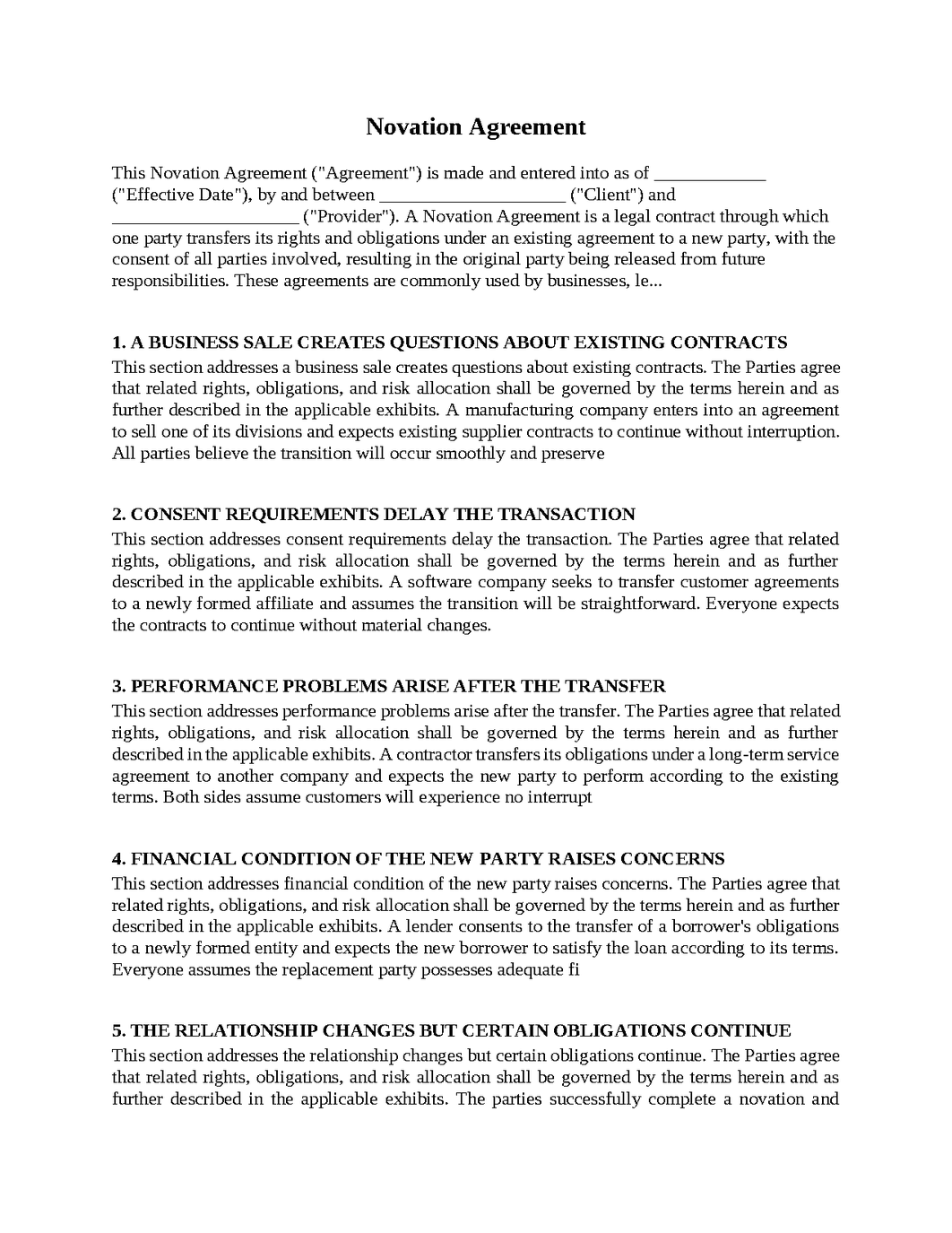
A Novation Agreement is a legal contract through which one party transfers its rights and obligations under an existing agreement to a new party, with the consent of all parties involved, resulting in the original party being released from future responsibilities. These agreements are commonly used by businesses, lenders, contractors, landlords, service providers, and companies involved in mergers, acquisitions, and reorganizations seeking to substitute one party for another without terminating the underlying contract. A Novation Agreement typically addresses the transfer of obligations, consent requirements, representations and warranties, effective dates, releases of liability, and procedures governing disputes and termination. Because novations involve replacing contractual relationships, disputes can arise when expectations regarding future responsibilities are not documented clearly. A carefully drafted Novation Agreement helps establish certainty and protect the interests of all parties involved.
A Business Sale Creates Questions About Existing Contracts
A manufacturing company enters into an agreement to sell one of its divisions and expects existing supplier contracts to continue without interruption. All parties believe the transition will occur smoothly and preserve important business relationships.
As the transaction progresses, suppliers become concerned about whether the acquiring company will fulfill the obligations previously assumed by the seller. Questions arise regarding who remains responsible if problems occur after the transfer.
The original company believes it should be released from future obligations because the acquiring company agreed to assume the contracts. The suppliers believe continuity is important and expect assurance that their rights will remain protected. As the closing date approaches, tensions emerge regarding the allocation of future responsibilities.
To help avoid this problem, a Novation Agreement should clearly establish which obligations are being transferred and define the extent to which the original party is released from liability.
Consent Requirements Delay the Transaction
A software company seeks to transfer customer agreements to a newly formed affiliate and assumes the transition will be straightforward. Everyone expects the contracts to continue without material changes.
Several customers express concerns about the transfer and delay providing their consent. Questions arise regarding whether the original company may proceed without unanimous approval.
The transferring company believes the reorganization should not disrupt operations because the services will continue substantially unchanged. The customers believe consent rights are important because the identity and financial condition of the contracting party influence their decisions. As delays increase, disagreements emerge regarding the effectiveness of the transfer.
To help prevent these issues, a Novation Agreement should clearly establish consent requirements and define the procedures necessary to complete the substitution of parties.
Performance Problems Arise After the Transfer
A contractor transfers its obligations under a long-term service agreement to another company and expects the new party to perform according to the existing terms. Both sides assume customers will experience no interruption in service.
After the transfer becomes effective, performance problems begin affecting the relationship. Customers question whether they may pursue claims against the original contractor.
The customers believe the original contractor should remain responsible because the relationship originated with that company. The original contractor believes the novation released it from future liability and argues that any issues should be resolved with the replacement provider. As losses and frustrations increase, tensions develop regarding responsibility for post-transfer problems.
To help avoid these problems, a Novation Agreement should clearly establish the effect of the transfer and define the extent to which prior parties remain liable after the substitution.
Financial Condition of the New Party Raises Concerns
A lender consents to the transfer of a borrower's obligations to a newly formed entity and expects the new borrower to satisfy the loan according to its terms. Everyone assumes the replacement party possesses adequate financial resources.
Over time, the lender becomes concerned that the new borrower lacks the financial strength necessary to perform. Questions arise regarding whether additional guarantees or protections should have been required.
The lender believes financial stability is essential because repayment expectations influenced the original transaction. The new borrower believes it accepted the obligations in good faith and argues that changing economic conditions affected performance. As financial difficulties emerge, disagreements develop regarding the adequacy of the transfer.
To help prevent these issues, a Novation Agreement should clearly establish representations and warranties and define any additional security or guarantees required from the replacement party.
The Relationship Changes but Certain Obligations Continue
The parties successfully complete a novation and expect the new relationship to continue without complications. Future plans are built around the assumption that the transition permanently resolved prior obligations.
Eventually, questions arise regarding indemnities, confidentiality obligations, and liabilities that originated before the transfer. Different interpretations create uncertainty regarding which rights survive.
The original party believes the novation should provide a complete release because the purpose of the agreement was to substitute one party for another. The remaining parties believe certain obligations should survive because they relate to events that occurred before the transfer. As claims and responsibilities emerge, disagreements arise regarding the continuing effect of the agreement.
To help avoid this problem, a Novation Agreement should clearly establish which obligations survive the transfer and identify the rights and responsibilities that continue after the substitution becomes effective.
Novation Agreements are valuable tools that allow businesses and individuals to transfer contractual relationships while preserving continuity and minimizing disruptions. However, issues involving the transfer of obligations, consent requirements, post-transfer performance, financial capacity, and surviving obligations can become significant sources of conflict when expectations are not documented clearly. A carefully drafted Novation Agreement provides a structured framework for allocating responsibilities and protecting the interests of all parties involved. When prepared thoughtfully, it can reduce uncertainty, facilitate business transactions, strengthen commercial relationships, and provide the foundation necessary for successful contractual transitions.

Get started with Upsign today!
Easily send, sign and track your documents