

Option to Purchase Agreement
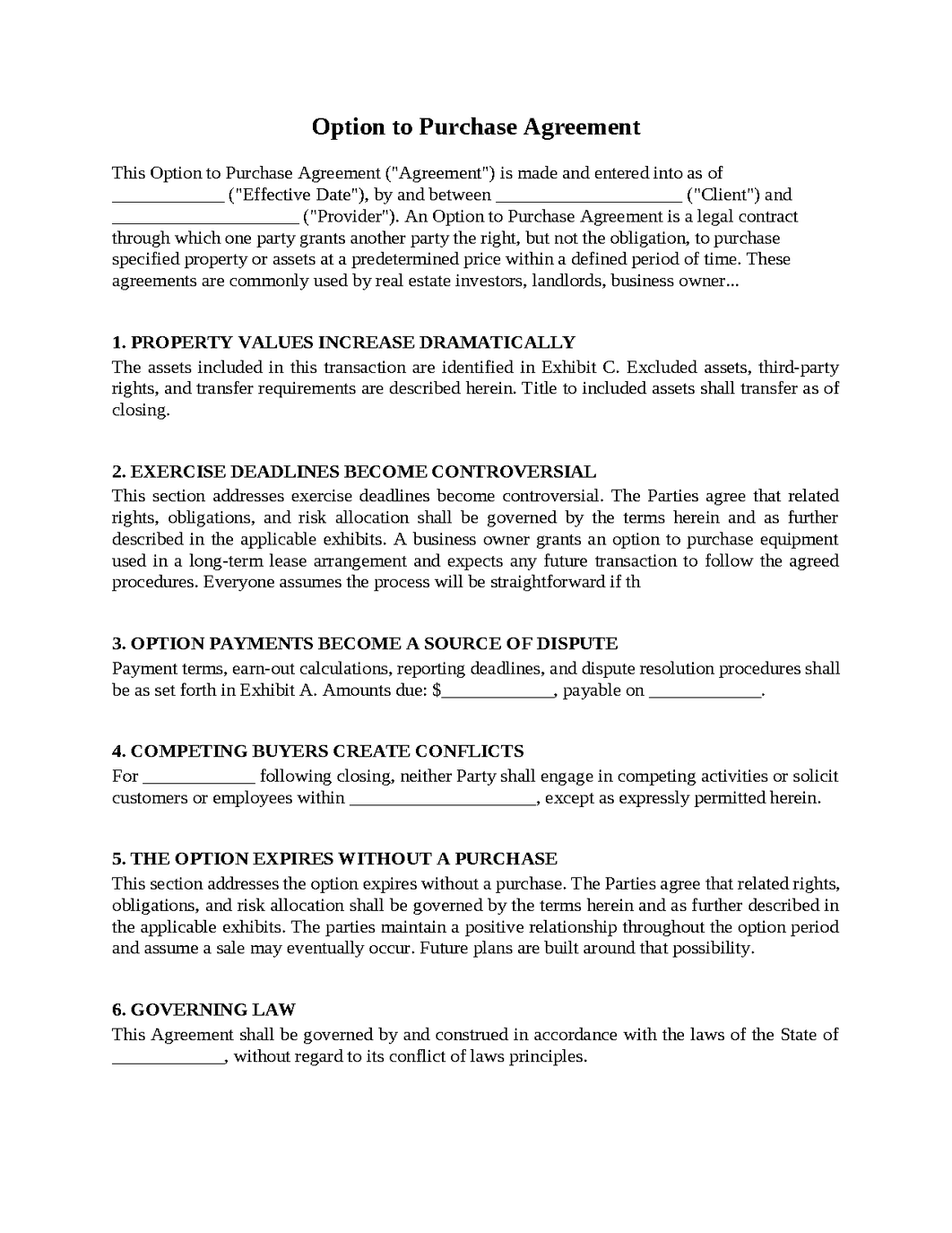
An Option to Purchase Agreement is a legal contract through which one party grants another party the right, but not the obligation, to purchase specified property or assets at a predetermined price within a defined period of time. These agreements are commonly used by real estate investors, landlords, business owners, developers, equipment sellers, and buyers seeking flexibility while preserving future opportunities. An Option to Purchase Agreement typically addresses the purchase price, option period, option payments, exercise procedures, exclusivity rights, and procedures governing disputes and termination. Because the value of assets and market conditions can change significantly over time, disputes can arise when expectations regarding future rights are not documented clearly. A carefully drafted Option to Purchase Agreement helps establish certainty and protect the interests of both option holders and property owners.
Property Values Increase Dramatically
A tenant obtains an option to purchase a commercial building while operating a successful business from the premises. Both parties believe the arrangement provides flexibility and allows time to evaluate future opportunities.
Initially, market conditions remain stable and neither side anticipates major changes. Over several years, however, the surrounding area experiences substantial growth and property values increase significantly.
The tenant believes the original purchase price should remain enforceable because the option payments secured the right to acquire the property. The owner believes the appreciation was extraordinary and argues that selling at the original price would result in an unfair outcome. As values continue rising, tensions emerge regarding the enforceability of the agreement.
To help avoid this problem, an Option to Purchase Agreement should clearly establish pricing provisions and define the rights that remain fixed throughout the option period.
Exercise Deadlines Become Controversial
A business owner grants an option to purchase equipment used in a long-term lease arrangement and expects any future transaction to follow the agreed procedures. Everyone assumes the process will be straightforward if the buyer decides to proceed.
As the expiration date approaches, questions arise regarding notice requirements and whether the option was exercised properly. Different interpretations create uncertainty regarding the effectiveness of the exercise.
The option holder believes the intent to purchase was communicated clearly and argues that minor technical issues should not prevent the transaction. The owner believes strict compliance with deadlines and procedures is essential because certainty and finality are important. As the deadline passes, disagreements emerge regarding whether the option remains valid.
To help prevent these issues, an Option to Purchase Agreement should clearly establish exercise procedures and define the requirements applicable to notices and deadlines.
Option Payments Become a Source of Dispute
A landowner grants a developer the right to purchase vacant property in exchange for option payments and expects those payments to compensate for delaying other opportunities. Both parties believe the arrangement benefits everyone involved.
Unexpected market changes eventually cause the developer to abandon the project. Questions arise regarding whether the option payments should be refunded or credited toward future transactions.
The developer believes changing circumstances justify some accommodation because significant planning costs were incurred. The landowner believes the payments represented compensation for granting exclusivity and argues that they should remain nonrefundable. As negotiations continue, tensions develop regarding the treatment of the option fees.
To help avoid these problems, an Option to Purchase Agreement should clearly establish the purpose and treatment of option payments and define whether those amounts are refundable.
Competing Buyers Create Conflicts
A homeowner grants a prospective buyer an option to purchase a residence and assumes the arrangement will provide certainty while preserving flexibility. Everyone expects the transaction to proceed if the buyer exercises the option.
Before the option period expires, another party offers substantially more money for the property. Questions arise regarding whether the homeowner may pursue the competing offer.
The option holder believes exclusivity is essential because valuable consideration was paid for the right to purchase the property. The homeowner believes maximizing value is important and argues that changing circumstances justify reconsidering the arrangement. As competing opportunities emerge, disagreements develop regarding exclusivity rights.
To help prevent these issues, an Option to Purchase Agreement should clearly establish exclusivity provisions and define the restrictions applicable during the option period.
The Option Expires Without a Purchase
The parties maintain a positive relationship throughout the option period and assume a sale may eventually occur. Future plans are built around that possibility.
Eventually, the option expires without being exercised. Questions arise regarding confidential information, access rights, and whether any continuing obligations remain in effect.
The property owner believes all rights associated with the opportunity should end because the option period has expired. The former option holder believes certain obligations should survive because resources and information were exchanged during the relationship. As the parties move forward independently, disagreements emerge regarding the obligations that continue after expiration.
To help avoid this problem, an Option to Purchase Agreement should clearly establish post-expiration obligations and identify the rights and responsibilities that survive termination or expiration of the option.
Option to Purchase Agreements are valuable tools that provide flexibility and preserve future opportunities while allowing parties additional time to evaluate important transactions. However, issues involving changing property values, exercise procedures, option payments, competing buyers, and post-expiration obligations can become significant sources of conflict when expectations are not documented clearly. A carefully drafted Option to Purchase Agreement provides a structured framework for allocating responsibilities and protecting the interests of both option holders and property owners. When prepared thoughtfully, it can reduce uncertainty, facilitate future transactions, strengthen business relationships, and provide the foundation necessary for successful acquisitions.

Get started with Upsign today!
Easily send, sign and track your documents