

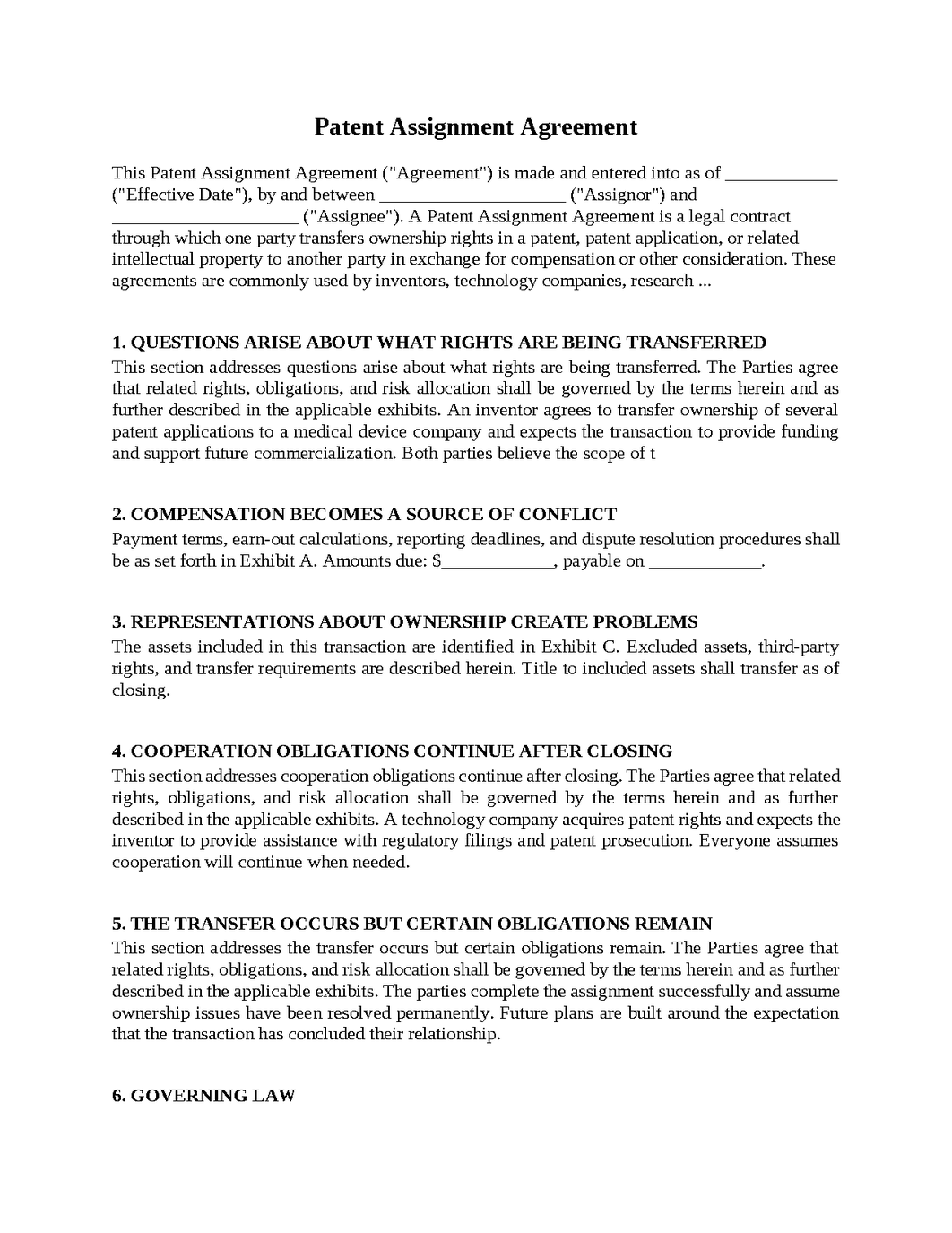
Patent Assignment Agreement
A Patent Assignment Agreement is a legal contract through which one party transfers ownership rights in a patent, patent application, or related intellectual property to another party in exchange for compensation or other consideration. These agreements are commonly used by inventors, technology companies, research institutions, startups, investors, and acquiring businesses seeking to obtain exclusive ownership of valuable innovations. A Patent Assignment Agreement typically addresses the patents being transferred, compensation arrangements, representations and warranties, cooperation obligations, intellectual property rights, and procedures governing disputes and termination. Because patents often represent significant commercial value and future revenue opportunities, disputes can arise when expectations regarding ownership and responsibilities are not documented clearly. A carefully drafted Patent Assignment Agreement helps establish certainty and protect the interests of both assignors and assignees.
Questions Arise About What Rights Are Being Transferred
An inventor agrees to transfer ownership of several patent applications to a medical device company and expects the transaction to provide funding and support future commercialization. Both parties believe the scope of the assignment is clearly understood.
As development progresses, questions emerge regarding improvements, related inventions, and foreign patent rights. Different interpretations create uncertainty regarding which intellectual property assets are included in the transfer.
The company believes the assignment should include all rights necessary to commercialize the technology successfully because significant resources are being invested. The inventor believes certain future developments and unrelated inventions should remain personal assets and argues that only specified patents were intended to be transferred. As the value of the technology increases, tensions emerge regarding ownership rights.
To help avoid this problem, a Patent Assignment Agreement should clearly establish the intellectual property being transferred and define any exclusions applicable to future inventions and related rights.
Compensation Becomes a Source of Conflict
A startup acquires patent rights from a software developer and expects the technology to support future growth. Everyone assumes the agreed compensation fairly reflects the value of the intellectual property.
As the company expands and revenues increase, questions arise regarding additional payments, royalties, and contingent compensation arrangements. Different expectations create uncertainty regarding the inventor's entitlement to future benefits.
The inventor believes the commercial success of the technology justifies additional compensation because years of development contributed to the company's growth. The startup believes the original purchase price fully compensated the inventor and argues that ownership rights were transferred permanently. As profits increase, disagreements emerge regarding financial arrangements.
To help prevent these issues, a Patent Assignment Agreement should clearly establish compensation provisions and define whether any continuing payments or royalties are contemplated.
Representations About Ownership Create Problems
A pharmaceutical company purchases patent rights after reviewing documentation and conducting due diligence. Both parties believe ownership of the patents is free from competing claims.
Following the transaction, questions arise regarding prior agreements, undisclosed licenses, and competing ownership interests. Concerns increase regarding the validity of the assignment.
The purchaser believes clear ownership was essential because significant investments were made in reliance upon the patents. The inventor believes all disclosures were made in good faith and argues that certain issues were unforeseen. As legal expenses and risks increase, tensions develop regarding responsibility for the ownership disputes.
To help avoid these problems, a Patent Assignment Agreement should clearly establish representations and warranties and define the remedies available if ownership issues arise.
Cooperation Obligations Continue After Closing
A technology company acquires patent rights and expects the inventor to provide assistance with regulatory filings and patent prosecution. Everyone assumes cooperation will continue when needed.
As additional filings and legal proceedings become necessary, the inventor becomes less involved and questions arise regarding ongoing obligations.
The company believes continued assistance is essential because the inventor possesses unique knowledge regarding the technology. The inventor believes ownership has already been transferred and argues that additional work requires separate compensation. As legal requirements increase, disagreements emerge regarding cooperation responsibilities.
To help prevent these issues, a Patent Assignment Agreement should clearly establish post-closing cooperation obligations and define the circumstances under which additional assistance is required.
The Transfer Occurs but Certain Obligations Remain
The parties complete the assignment successfully and assume ownership issues have been resolved permanently. Future plans are built around the expectation that the transaction has concluded their relationship.
Eventually, questions arise regarding confidentiality obligations, indemnification provisions, and liabilities associated with events that occurred before the transfer. Different interpretations create uncertainty regarding continuing responsibilities.
The assignor believes the transfer should provide a complete separation because ownership rights have already changed hands. The assignee believes certain obligations should survive because they protect the value and enforceability of the patents acquired. As new issues emerge, disagreements arise regarding the rights and responsibilities that continue after closing.
To help avoid this problem, a Patent Assignment Agreement should clearly establish post-closing obligations and identify the rights and responsibilities that survive the transfer.
Patent Assignment Agreements are valuable tools that allow inventors and businesses to transfer ownership of intellectual property while facilitating innovation and commercialization. However, issues involving ownership rights, compensation arrangements, representations and warranties, cooperation obligations, and post-closing responsibilities can become significant sources of conflict when expectations are not documented clearly. A carefully drafted Patent Assignment Agreement provides a structured framework for allocating responsibilities and protecting the interests of both assignors and assignees. When prepared thoughtfully, it can reduce uncertainty, strengthen commercial relationships, encourage innovation, and provide the foundation necessary for successful intellectual property transactions.

Get started with Upsign today!
Easily send, sign and track your documents