

Patent Licensing Agreement
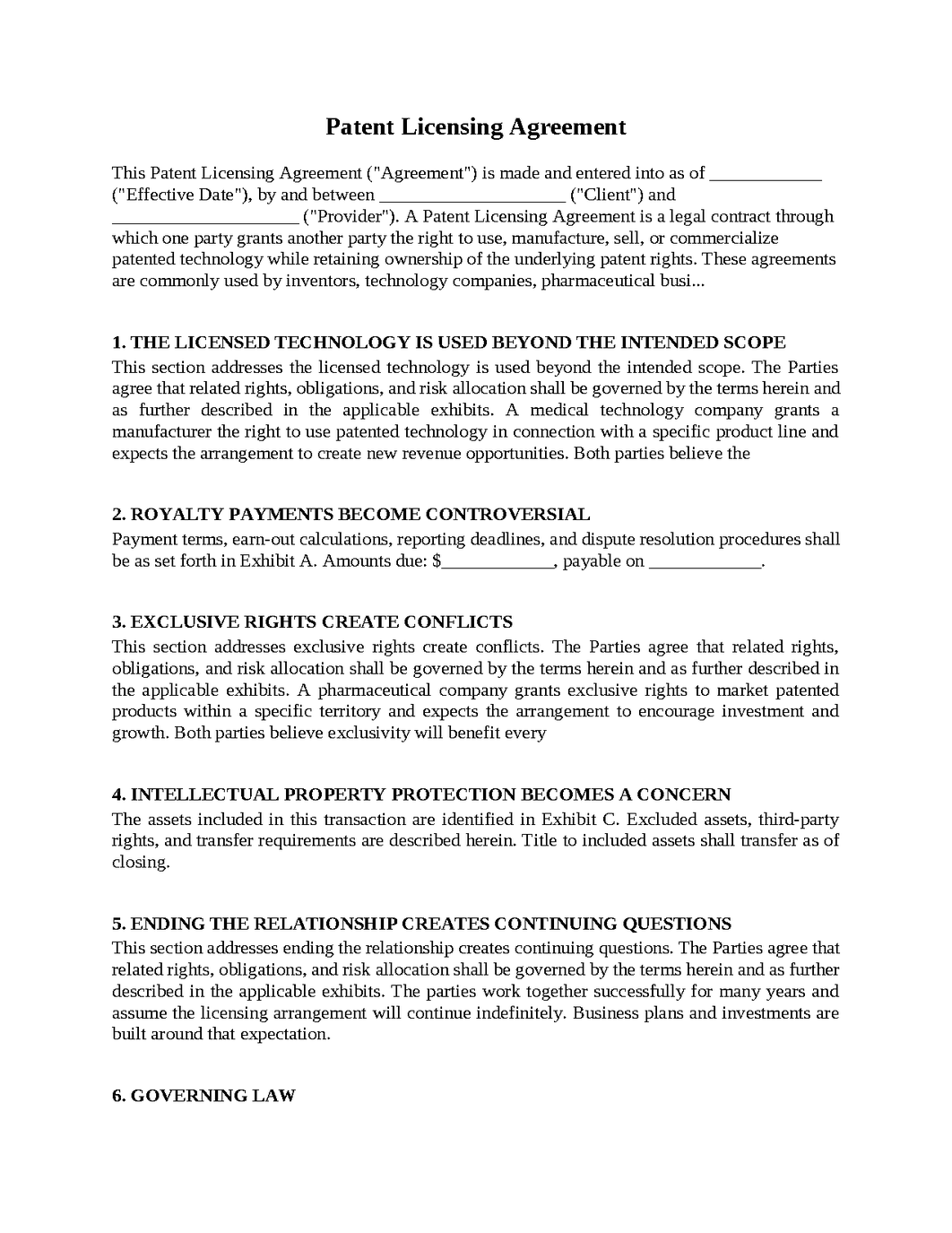
A Patent Licensing Agreement is a legal contract through which one party grants another party the right to use, manufacture, sell, or commercialize patented technology while retaining ownership of the underlying patent rights. These agreements are commonly used by inventors, technology companies, pharmaceutical businesses, manufacturers, universities, and research organizations seeking to monetize innovations without transferring ownership. A Patent Licensing Agreement typically addresses the scope of the license, royalty arrangements, exclusivity rights, quality standards, intellectual property protections, and procedures governing disputes and termination. Because patents often represent valuable competitive advantages and long-term revenue opportunities, disputes can arise when expectations regarding rights and obligations are not documented clearly. A carefully drafted Patent Licensing Agreement helps establish certainty and protect the interests of both licensors and licensees.
The Licensed Technology Is Used Beyond the Intended Scope
A medical technology company grants a manufacturer the right to use patented technology in connection with a specific product line and expects the arrangement to create new revenue opportunities. Both parties believe the scope of the license is clearly understood.
Initially, the manufacturer uses the technology according to the agreed terms. Over time, however, additional products and applications begin incorporating the patented invention. Questions arise regarding whether those uses are authorized.
The patent owner believes the additional applications exceed the original agreement because different products may justify separate licensing arrangements and compensation. The manufacturer believes evolving business opportunities are consistent with the intended purpose of the relationship and argues that flexibility is necessary to remain competitive. As sales increase, tensions emerge regarding the scope of the license.
To help avoid this problem, a Patent Licensing Agreement should clearly establish permitted uses and define any limitations applicable to the licensed technology.
Royalty Payments Become Controversial
An inventor licenses patented manufacturing processes to a global supplier and expects royalty payments to provide reliable long-term income. Everyone assumes the reporting process and calculations are straightforward.
As production volumes increase, questions arise regarding deductions, product classifications, and how royalties should be calculated. Different interpretations create uncertainty regarding compensation.
The inventor believes royalties should reflect the full value generated by the patented technology because the invention made the products possible. The manufacturer believes certain expenses and discounts should affect the calculations and argues that industry practices support those adjustments. As revenues increase, disagreements emerge regarding the amount owed.
To help prevent these issues, a Patent Licensing Agreement should clearly establish royalty calculations and define the reporting requirements applicable to the parties.
Exclusive Rights Create Conflicts
A pharmaceutical company grants exclusive rights to market patented products within a specific territory and expects the arrangement to encourage investment and growth. Both parties believe exclusivity will benefit everyone involved.
As market demand expands, opportunities arise in neighboring regions and additional companies express interest in obtaining licenses. Questions emerge regarding the extent of the exclusivity granted.
The licensee believes exclusivity is essential because substantial resources were invested in product development and marketing. The patent owner believes maintaining flexibility is important because additional markets may create valuable opportunities. As expansion opportunities emerge, tensions develop regarding exclusivity rights.
To help avoid these problems, a Patent Licensing Agreement should clearly establish territorial and exclusivity provisions and define the limitations applicable to future licenses.
Intellectual Property Protection Becomes a Concern
A software company licenses patented technology to a strategic partner and expects confidential information and proprietary processes to remain protected. Everyone assumes the value of the patent depends upon preserving competitive advantages.
As engineers and contractors gain access to the technology, concerns arise regarding unauthorized disclosures and misuse of proprietary information. Questions emerge regarding responsibility for protecting intellectual property.
The patent owner believes strict safeguards are necessary because years of research and development created the technology. The licensee believes reasonable precautions are already in place and argues that no system can eliminate every risk. As concerns increase, disagreements emerge regarding confidentiality and intellectual property protections.
To help prevent these issues, a Patent Licensing Agreement should clearly establish confidentiality obligations and define the procedures governing the protection of proprietary information.
Ending the Relationship Creates Continuing Questions
The parties work together successfully for many years and assume the licensing arrangement will continue indefinitely. Business plans and investments are built around that expectation.
Eventually, changing priorities lead one side to terminate the relationship. Questions arise regarding existing inventory, continuing royalties, and the right to use products already in development.
The patent owner believes all rights should cease according to the agreement because preserving ownership and control is essential. The licensee believes significant investments justify a transition period and expects reasonable accommodations. As the relationship concludes, disagreements emerge regarding the rights and obligations that survive termination.
To help avoid this problem, a Patent Licensing Agreement should clearly establish termination procedures and identify the rights and responsibilities that continue after the relationship ends.
Patent Licensing Agreements are valuable tools that allow inventors and businesses to commercialize innovations while preserving ownership rights and creating long-term revenue opportunities. However, issues involving unauthorized uses, royalty disputes, exclusivity provisions, intellectual property protections, and post-termination obligations can become significant sources of conflict when expectations are not documented clearly. A carefully drafted Patent Licensing Agreement provides a structured framework for allocating responsibilities and protecting the interests of both licensors and licensees. When prepared thoughtfully, it can reduce uncertainty, strengthen business relationships, encourage innovation, and provide the foundation necessary for successful commercialization of patented technologies.

Get started with Upsign today!
Easily send, sign and track your documents