

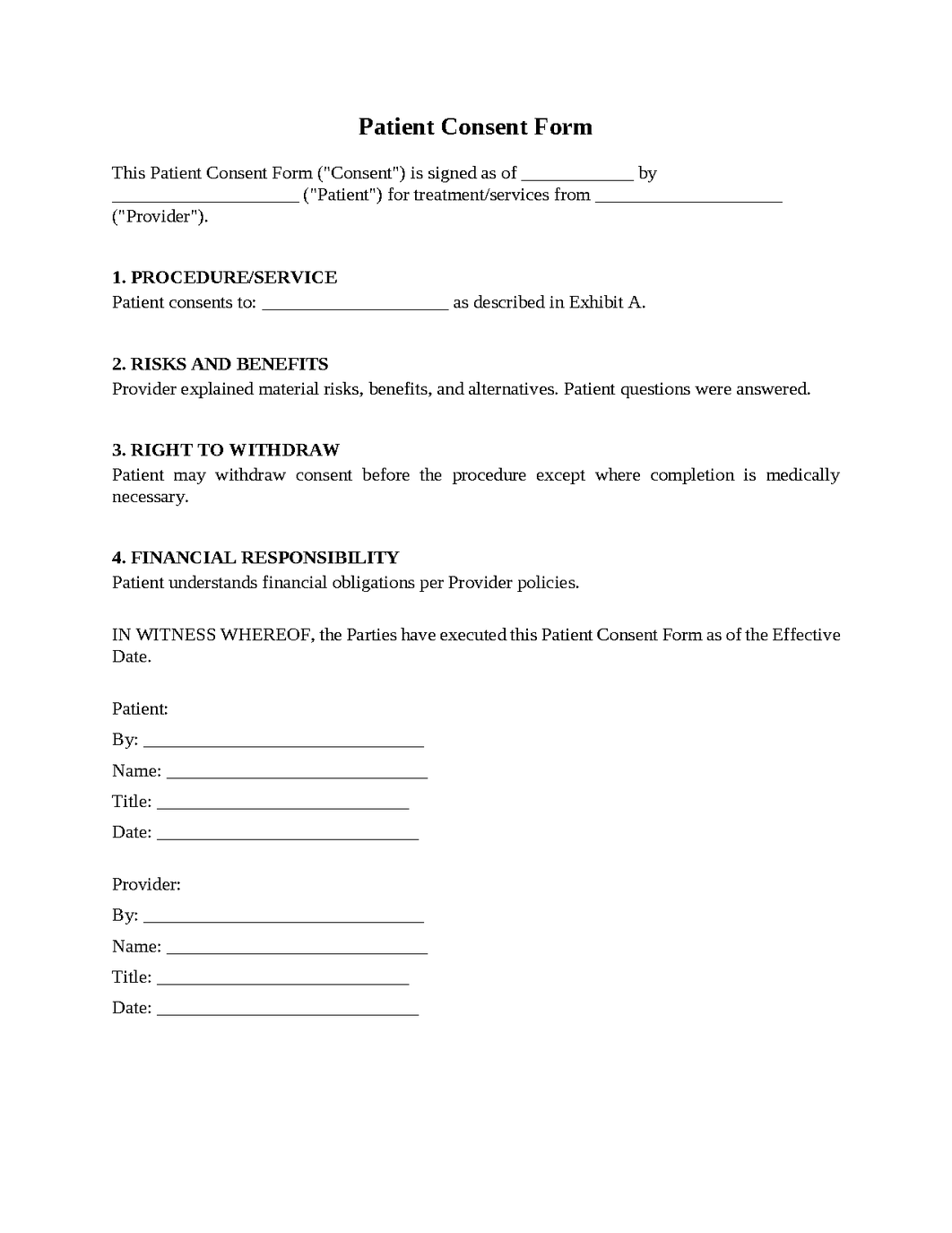
Patient Consent Form
A Patient Consent Form is a legal document used to obtain a patient's voluntary authorization before a healthcare provider performs a medical procedure, treatment, examination, diagnostic test, research activity, or other healthcare service. The purpose of the form is to ensure that patients understand the nature of the proposed treatment, the potential benefits, risks, alternatives, and possible outcomes before making a decision. Patient Consent Forms are used in hospitals, physician practices, surgical centers, dental offices, research institutions, therapy clinics, and virtually every healthcare setting. Because medical decisions often involve significant health, financial, and personal consequences, disputes frequently arise when patients later claim they did not fully understand what they agreed to. A properly drafted Patient Consent Form helps document informed decision-making and protects both patients and healthcare providers.
The Patient Claims the Risks Were Never Explained
A patient schedules a routine surgical procedure that has a high success rate and is commonly performed by experienced physicians.
During preoperative discussions, the physician explains the procedure and answers several questions. The patient signs the consent form and proceeds with treatment.
Unfortunately, a known complication occurs after surgery.
Although the complication is rare, it was a recognized risk associated with the procedure. The patient's recovery becomes longer and more difficult than expected.
The patient later argues that the possibility of the complication was never explained adequately. Had the patient understood the risk, alternative treatment options would have been considered more carefully.
The physician believes the risk was discussed and points to the signed consent documentation.
What initially appeared to be a routine medical procedure becomes a dispute regarding informed consent and patient understanding.
To help avoid this problem, a Patient Consent Form should clearly identify material risks, potential complications, expected outcomes, and alternative treatment options. The form should encourage patients to ask questions and confirm that they understand the information being provided.
A Language Barrier Creates Confusion
A patient with limited English proficiency seeks treatment for a medical condition requiring a specialized procedure.
The healthcare provider supplies a standard consent form written in English and conducts a brief discussion before treatment.
The patient signs the form.
After the procedure, concerns arise regarding whether the patient truly understood the nature of the treatment and the associated risks.
Family members claim that important information was not communicated effectively. The patient states that portions of the explanation were difficult to understand and that questions remained unanswered.
The provider believed the patient appeared comfortable proceeding and had voluntarily signed the document.
The disagreement centers on whether meaningful informed consent was actually obtained.
A signed form alone may not resolve concerns if comprehension was limited by language barriers.
To reduce these risks, a Patient Consent Form should address language accommodations, interpreter services, translated documents, and procedures for confirming patient understanding. These steps can help ensure that consent is genuinely informed rather than merely documented.
The Procedure Changes During Treatment
A patient consents to a specific surgical procedure after discussing the treatment plan with the physician.
During surgery, unexpected conditions are discovered.
The physician determines that an additional procedure would significantly improve the patient's outcome. Acting in what appears to be the patient's best interest, the physician performs the additional treatment.
After recovery, the patient learns that more extensive treatment occurred than originally anticipated.
Although the patient benefits medically, concerns arise regarding whether authorization existed for the expanded procedure.
The patient argues that consent was provided only for the original treatment. The physician responds that the additional procedure was medically appropriate and necessary under the circumstances.
The disagreement becomes a legal and ethical issue involving the scope of consent.
To help avoid these problems, a Patient Consent Form should address circumstances under which additional procedures may be performed, identify limitations on physician discretion, and explain how unexpected findings will be handled whenever possible.
The Patient Does Not Understand Available Alternatives
A physician recommends a particular treatment for a chronic medical condition.
The patient signs the consent form and begins treatment.
Several months later, the patient learns that other treatment options existed. Some alternatives may have involved different risks, costs, recovery periods, or long-term outcomes.
The patient becomes frustrated.
Although the recommended treatment was medically appropriate, the patient feels deprived of the opportunity to make a fully informed decision.
The physician believes the selected treatment represented the best clinical option and focused discussions accordingly.
The patient argues that meaningful consent requires understanding reasonable alternatives as well.
The dispute shifts from the quality of care to the quality of information provided before the decision was made.
To help prevent these issues, a Patient Consent Form should identify reasonable treatment alternatives, explain why certain options may be recommended, and confirm that the patient had an opportunity to discuss alternative approaches before consenting.
A Family Member Challenges the Patient's Decision
An elderly patient consents to a medical procedure after consulting with healthcare providers and making an independent decision.
The treatment proceeds successfully.
Afterward, family members become upset because they would have preferred a different course of treatment. They argue that the patient was pressured, did not fully understand the decision, or should have consulted family members before proceeding.
The healthcare provider reviews the records and confirms that the patient appeared competent, understood the information provided, and voluntarily signed the consent form.
Nevertheless, the dispute creates tension among family members and prompts questions regarding the decision-making process.
The situation becomes particularly sensitive because healthcare providers must balance patient autonomy with family concerns.
A clear record of the patient's decision becomes critically important.
To reduce these risks, a Patient Consent Form should document the patient's capacity to make decisions, confirm that consent was voluntary, and establish that the patient had an opportunity to ask questions and receive answers before authorizing treatment.
Patient Consent Forms play a vital role in modern healthcare by supporting informed decision-making and protecting patient autonomy. Medical treatments often involve important choices regarding risks, benefits, alternatives, and expected outcomes. When patients later question whether they truly understood those choices, disputes can arise that affect providers, patients, and family members alike. A carefully drafted Patient Consent Form provides a structured framework for documenting informed consent and ensuring that patients receive the information necessary to make meaningful healthcare decisions. When used properly, it can help reduce misunderstandings, strengthen patient trust, support legal compliance, and promote better healthcare outcomes.

Get started with Upsign today!
Easily send, sign and track your documents