

Physician Call Coverage Agreement
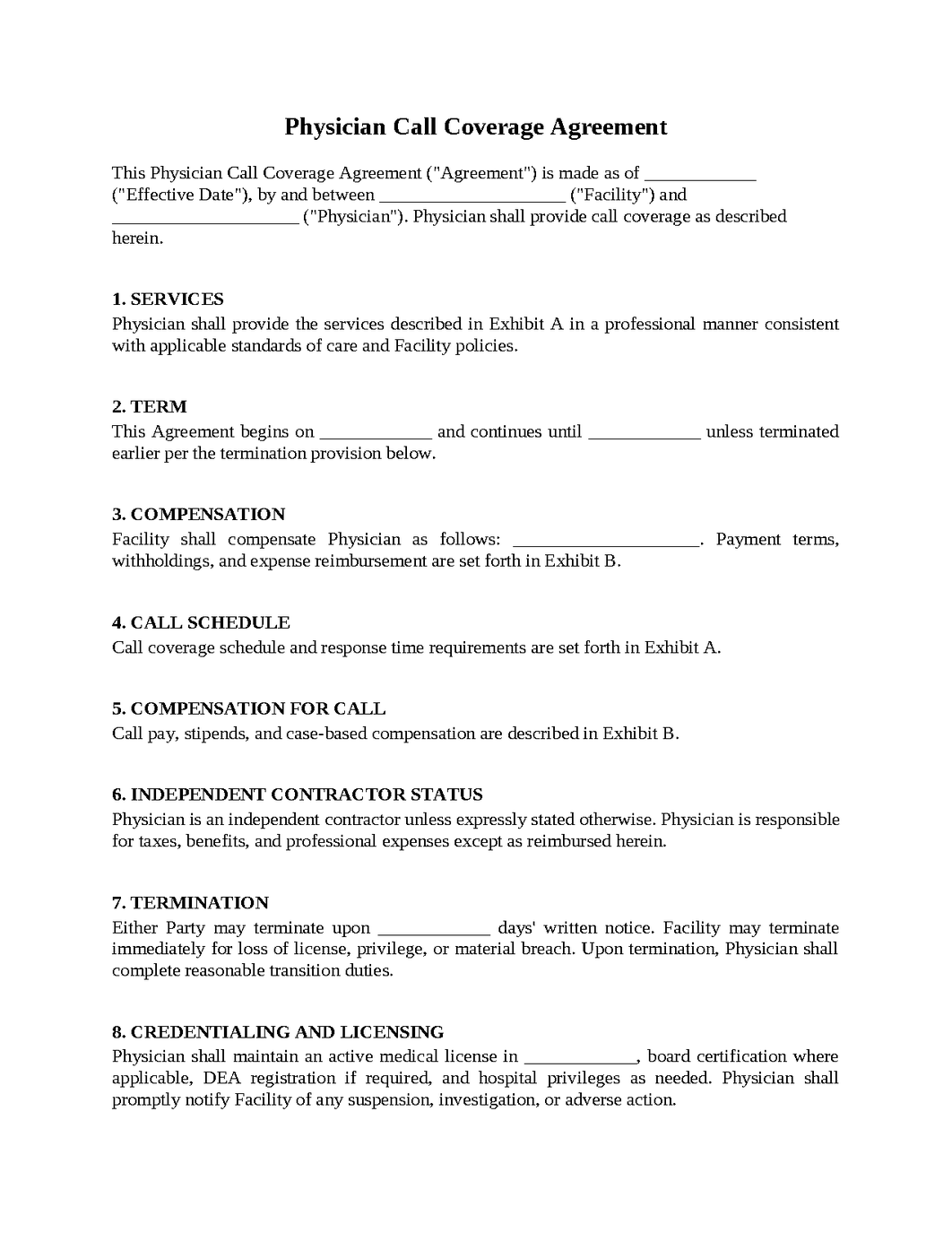
A Physician Call Coverage Agreement is a legal contract that establishes the terms under which one physician or medical group provides on-call medical coverage for another physician, practice, hospital, or healthcare organization. These agreements are commonly used to ensure continuous patient care during vacations, illnesses, staffing shortages, physician departures, specialty coverage gaps, and after-hours service needs. A Physician Call Coverage Agreement typically addresses coverage schedules, response time requirements, compensation, patient responsibilities, hospital obligations, malpractice insurance, communication procedures, and termination rights. Because on-call coverage often involves urgent medical decisions, emergency consultations, and significant professional liability exposure, disputes can arise when expectations are not documented clearly. A well-drafted Physician Call Coverage Agreement helps ensure continuity of patient care while reducing operational and legal risks.
The Physician Receives More Calls Than Expected
A cardiology practice hires another physician to provide weekend call coverage while one of its partners takes an extended leave of absence. During negotiations, the parties discuss the number of physicians in the practice, patient volume, and the anticipated workload.
Based on those discussions, the covering physician believes call responsibilities will be manageable and agrees to a compensation structure that reflects the expected volume. For the first several weekends, however, it becomes apparent that the actual workload is far greater than anticipated.
The covering physician receives dozens of patient calls each day, handles multiple hospital consultations, and frequently travels to evaluate patients in person. The volume of work resembles a full-time clinical schedule rather than a traditional on-call arrangement.
As frustration grows, the physician argues that the compensation no longer reflects the actual demands of the assignment. The practice responds that patient needs are unpredictable and that call volume can vary significantly from week to week.
The disagreement becomes increasingly contentious because neither party anticipated the true workload associated with the coverage arrangement.
To help avoid this problem, a Physician Call Coverage Agreement should define expected call volume, identify covered facilities, establish compensation adjustments for unusually high workloads, and provide mechanisms for reviewing the arrangement if service demands differ substantially from expectations.
Response Time Expectations Create Conflict
A hospital contracts with a specialist to provide evening and weekend call coverage for emergency consultations.
During initial discussions, everyone assumes the physician will respond promptly when contacted. Because the parties have worked together before, they do not spend much time discussing specific response requirements.
Several months into the arrangement, concerns begin emerging. Emergency department staff complain that return calls occasionally take longer than expected. The physician believes responses have been reasonable given the circumstances and the need to manage other professional obligations.
Hospital administrators become concerned because delayed consultations can affect patient care, operational efficiency, and physician satisfaction among emergency department staff.
The physician argues that expectations were never defined clearly. The hospital insists that rapid responses are essential to maintaining quality care.
The disagreement grows because both sides are relying on assumptions rather than documented standards.
To reduce these risks, a Physician Call Coverage Agreement should establish specific response time requirements, define communication procedures, identify escalation protocols, and clarify expectations regarding in-person evaluations and hospital attendance.
Compensation Becomes a Source of Dispute
A surgeon agrees to provide call coverage for a community hospital facing staffing challenges.
The agreement provides a fixed daily stipend for call coverage, and both parties initially view the arrangement as fair. Over time, however, patient volume increases significantly, and the surgeon begins handling a growing number of emergency procedures during coverage periods.
The surgeon believes the original compensation structure was based on substantially lower service demands. The hospital maintains that the stipend compensates the surgeon for availability rather than the number of patient encounters.
As the workload continues increasing, the surgeon becomes reluctant to continue under the existing arrangement. The hospital worries that losing coverage would create serious operational challenges.
What began as a mutually beneficial relationship becomes strained because compensation expectations no longer align with reality.
To help prevent these disputes, a Physician Call Coverage Agreement should clearly identify compensation methodology, address additional payments for procedures or consultations, and establish review procedures if call volume changes materially during the term of the agreement.
Malpractice Coverage Is Not Clearly Addressed
A physician agrees to provide specialty call coverage for a rural hospital that struggles to recruit permanent specialists.
Because the physician already maintains professional liability insurance through a separate practice, both parties assume malpractice concerns have been addressed adequately. The agreement references insurance generally but does not explain how coverage responsibilities will be allocated.
Several years later, a patient files a claim relating to care provided during a call coverage assignment. The physician assumes the hospital's insurance program will provide protection. The hospital believes the physician's individual policy should respond first.
As insurance carriers review the matter, confusion develops regarding policy limits, reporting obligations, and defense responsibilities. Legal expenses begin accumulating before the underlying claim is even resolved.
The disagreement becomes costly despite the fact that both parties intended to comply with professional standards.
To help avoid these problems, a Physician Call Coverage Agreement should clearly identify insurance requirements, minimum coverage limits, reporting obligations, indemnification provisions, and responsibility for tail coverage when applicable. Detailed insurance provisions can prevent significant uncertainty later.
Patient Follow-Up Responsibilities Fall Through the Cracks
A physician provides overnight call coverage for a large internal medicine group.
During one coverage period, several patients require urgent consultations, medication changes, and follow-up testing. The covering physician addresses the immediate concerns appropriately and documents the encounters.
When the primary physicians return, however, communication problems emerge. Some follow-up recommendations are not reviewed promptly. Certain test results remain outstanding, and several patients assume the covering physician will continue managing their care.
The covering physician believes responsibility ended when the call shift concluded. The primary physicians assume all urgent matters were fully resolved before the handoff occurred.
As gaps in communication become apparent, patient care coordination suffers. Although no one intentionally neglected responsibilities, unclear expectations create unnecessary risk and confusion.
To reduce these risks, a Physician Call Coverage Agreement should establish handoff procedures, define follow-up responsibilities, require communication regarding unresolved patient matters, and identify documentation standards for transitions between physicians.
Physician call coverage arrangements are essential to maintaining continuous access to medical care outside normal business hours. However, issues involving workload expectations, response times, compensation, malpractice coverage, and patient follow-up can quickly become sources of conflict if responsibilities are not documented carefully. A well-drafted Physician Call Coverage Agreement provides a structured framework for addressing these concerns before problems arise. When prepared thoughtfully, it can help support continuity of care, reduce misunderstandings, protect professional relationships, and ensure that patients receive timely and effective medical attention whenever it is needed.

Get started with Upsign today!
Easily send, sign and track your documents