

Physician Coverage Agreement
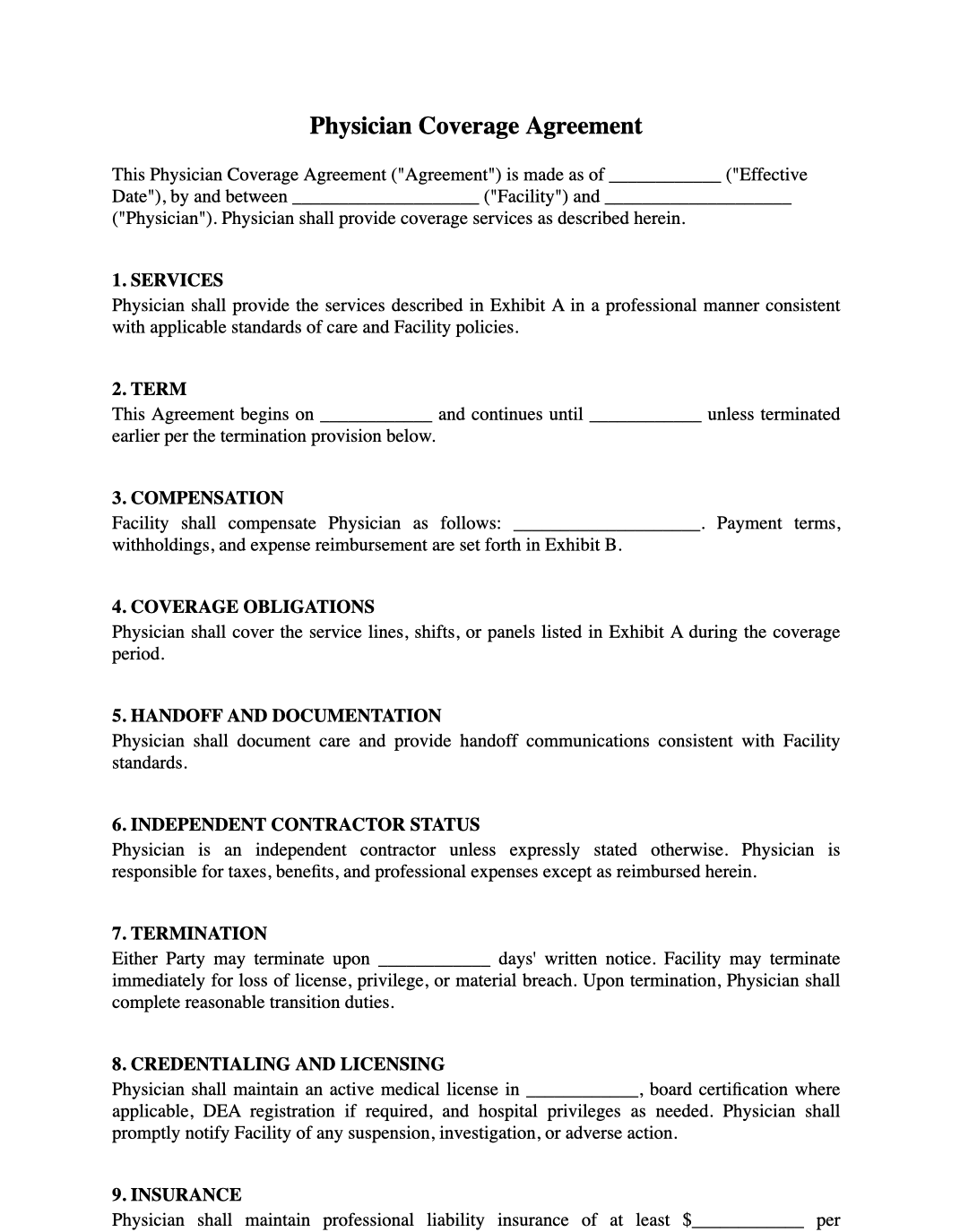
A Physician Coverage Agreement is a legal contract that establishes the terms under which one physician or medical group provides temporary professional coverage for another physician, practice, hospital, or healthcare organization. Coverage arrangements are commonly used during vacations, medical leave, military service, conferences, staffing shortages, unexpected absences, and transitions between providers. These agreements typically address patient care responsibilities, compensation, scheduling requirements, call coverage obligations, malpractice insurance, medical record access, and communication procedures. Because patients continue to require care regardless of staffing changes, disputes can arise when expectations regarding coverage responsibilities are not clearly documented. A well-drafted Physician Coverage Agreement helps ensure continuity of care while reducing operational, legal, and financial risks.
The Covering Physician Assumes Different Responsibilities Than Expected
A family medicine physician plans a three-week vacation and arranges for another physician to provide patient coverage during the absence. Both physicians have similar training backgrounds, and the arrangement initially appears straightforward.
Before leaving, the primary physician briefly discusses patient needs, pending test results, and scheduling considerations. Because the physicians know each other professionally, they assume there is a shared understanding regarding coverage responsibilities.
Several days into the coverage period, questions begin emerging. The covering physician believes responsibilities are limited to urgent patient issues and routine clinical matters. Meanwhile, office staff expect assistance with prescription refills, disability paperwork, insurance authorizations, and ongoing care coordination tasks that the absent physician normally handles.
As the requests accumulate, frustration develops. The covering physician feels that administrative duties were never part of the agreement, while the practice believes comprehensive coverage was expected.
What began as a simple vacation arrangement becomes a disagreement regarding the scope of services being provided.
To help avoid this problem, a Physician Coverage Agreement should clearly define the covering physician's responsibilities, identify administrative obligations, establish expectations regarding patient communications, and specify which duties remain with the absent physician. Detailed service descriptions help ensure that everyone shares the same understanding before coverage begins.
Call Coverage Requirements Become Overwhelming
A specialty practice hires a physician to provide temporary coverage while one of its partners recovers from surgery.
During initial discussions, the parties focus primarily on clinic hours and anticipated patient volume. Relatively little attention is given to after-hours responsibilities because everyone assumes call demands will remain manageable.
After coverage begins, however, the physician discovers that call responsibilities are significantly more demanding than expected. Emergency consultations occur regularly, hospital visits are required during evenings, and weekend interruptions become common.
The physician believes the workload exceeds what was originally discussed. The practice responds that the call volume reflects normal operations and should not come as a surprise.
As fatigue increases and expectations diverge, tensions develop between the parties. What was intended to be a temporary professional arrangement now feels unsustainable.
To reduce these risks, a Physician Coverage Agreement should clearly identify call coverage obligations, expected response times, hospital responsibilities, weekend requirements, and compensation for additional workload. Transparent expectations can help prevent disputes when coverage demands become more significant than anticipated.
Access to Medical Records Creates Patient Care Concerns
A physician agrees to provide temporary coverage for a busy internal medicine practice while the primary physician attends an extended training program.
The covering physician expects to have access to patient histories, medication records, laboratory results, and treatment plans necessary to provide safe care. Unfortunately, several technology and administrative issues delay access to critical records.
As patients begin arriving for appointments, the covering physician discovers that important information is missing or difficult to locate. Decisions must be made with incomplete knowledge of prior treatment plans and ongoing medical concerns.
The physician becomes increasingly concerned about patient safety and continuity of care. Practice administrators attempt to resolve the problems, but delays continue affecting clinical operations.
The situation highlights how even a well-intentioned coverage arrangement can create significant risks when information access is not planned properly.
To help avoid these issues, a Physician Coverage Agreement should establish procedures for medical record access, electronic health record permissions, patient information sharing, and confidentiality obligations. Clear planning helps ensure that physicians have the information necessary to provide safe and effective care.
Malpractice Coverage Leads to an Unexpected Dispute
A hospital contracts with a physician to provide temporary coverage during a staffing shortage.
The parties focus heavily on scheduling, compensation, and patient care needs. Because the assignment is expected to last only a few months, neither side spends much time discussing professional liability insurance.
Several months after the assignment ends, a patient files a malpractice claim relating to care provided during the coverage period. The physician assumes the hospital's insurance policy applies. The hospital believes the physician's personal policy should respond first.
As attorneys and insurance carriers review the matter, uncertainty grows regarding who is responsible for defense costs and potential liability. Both parties believed coverage existed, yet neither fully understood how the insurance arrangements interacted.
The disagreement becomes expensive and time-consuming despite the fact that both parties intended to handle the issue properly.
To help prevent these problems, a Physician Coverage Agreement should clearly identify insurance requirements, minimum coverage limits, reporting obligations, and responsibility for tail coverage when applicable. These provisions help ensure that professional liability protection is addressed before services begin.
Patient Follow-Up Responsibilities Are Never Defined
A physician provides coverage for a colleague during a month-long absence.
During the coverage period, several patients undergo diagnostic testing, receive specialist referrals, and begin treatment plans that will require ongoing monitoring. The covering physician manages these issues appropriately while the primary physician remains away.
When the primary physician returns, questions immediately arise regarding unfinished matters. Certain test results remain pending, follow-up appointments have not occurred, and several patients require continued monitoring.
The covering physician believes responsibility ended when the coverage assignment concluded. The returning physician assumes that all pending matters were fully addressed before the transition occurred.
As gaps in communication become apparent, both physicians become concerned about continuity of care and patient satisfaction.
The situation creates unnecessary confusion that could have been avoided through better planning.
To reduce these risks, a Physician Coverage Agreement should establish transition procedures, define follow-up responsibilities, address pending patient matters, and require communication regarding unresolved clinical issues. Clear handoff procedures can significantly improve patient care and reduce misunderstandings.
Physician coverage arrangements play a critical role in maintaining access to healthcare services when physicians are unavailable due to vacations, illness, training, staffing shortages, or other circumstances. However, issues involving service expectations, call responsibilities, medical record access, malpractice coverage, and patient follow-up can quickly create disputes if responsibilities are not documented clearly. A carefully drafted Physician Coverage Agreement provides a structured framework for addressing these concerns before problems arise. When prepared thoughtfully, it can help support continuity of care, reduce operational disruptions, protect professional relationships, and ensure that patients continue receiving high-quality medical services throughout the coverage period.

Get started with Upsign today!
Easily send, sign and track your documents