

Purchase Order
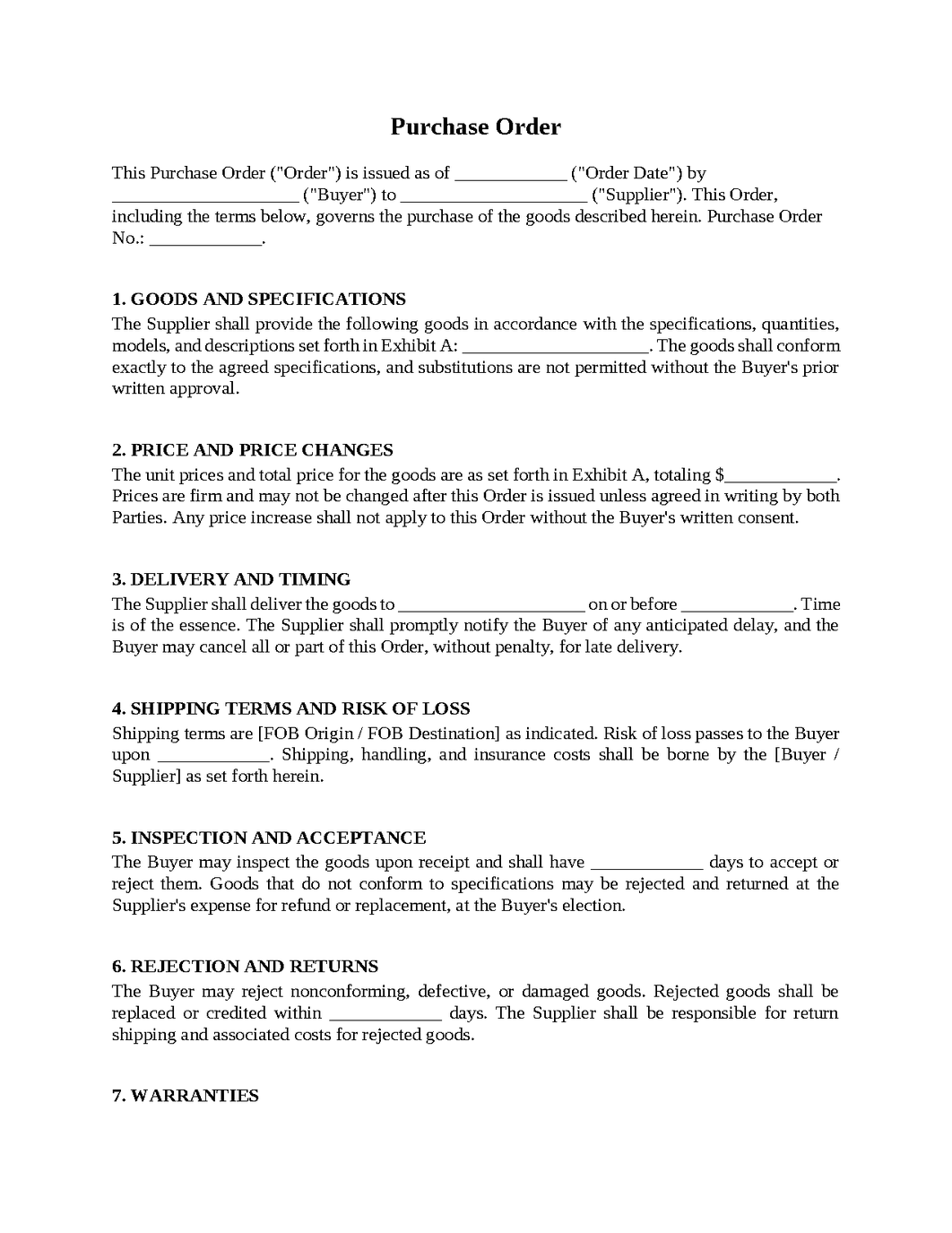
A Purchase Order (PO) is a legal and commercial document issued by a buyer to a seller specifying the products, materials, equipment, or services the buyer wishes to purchase. Purchase Orders are commonly used in business-to-business transactions, manufacturing, construction projects, retail operations, healthcare organizations, government procurement, and supply chain management. A Purchase Order typically identifies the items being purchased, quantities, pricing, delivery requirements, payment terms, and other transaction details. Once accepted, a Purchase Order can create binding contractual obligations between the parties. Because Purchase Orders often govern high-volume and recurring transactions, disputes can arise when expectations regarding pricing, delivery, quality, or payment are not clearly documented. A well-drafted Purchase Order helps reduce misunderstandings and promote efficient business operations.
The Supplier Delivers Different Products Than Expected
A manufacturing company issues a Purchase Order for specialized components needed to complete customer orders.
The supplier acknowledges the order and begins production. Several weeks later, the shipment arrives and the buyer discovers that certain specifications differ from what was expected. The products function similarly but do not match the exact requirements outlined by the buyer's engineering team.
The supplier believes the differences are minor and commercially reasonable. The buyer argues that even small deviations create production challenges and may affect customer commitments.
Neither side intended to create a problem, yet both have different interpretations of the product requirements.
The disagreement delays production schedules and increases costs for both parties.
To help avoid this problem, a Purchase Order should clearly identify product specifications, model numbers, technical requirements, and acceptance standards. Detailed descriptions help ensure that both parties understand exactly what is being purchased.
Pricing Changes After the Order Is Issued
A business issues a Purchase Order for a large quantity of materials at an agreed-upon price.
Before shipment occurs, market conditions change significantly. Raw material costs increase, transportation expenses rise, and the supplier's profit margin becomes much smaller than anticipated.
The supplier requests a price increase before delivery. The buyer refuses, pointing out that the Purchase Order reflects a mutually agreed transaction.
The supplier argues that circumstances have changed dramatically. The buyer insists that reliable pricing is essential for budgeting and customer commitments.
What began as a routine order becomes a dispute regarding whether pricing can be modified after the order has been accepted.
To reduce these risks, a Purchase Order should clearly address pricing commitments, circumstances permitting price adjustments, and procedures for handling unexpected cost increases.
Delivery Delays Affect Business Operations
A retailer places a Purchase Order for seasonal inventory expected to arrive before a major sales period.
The supplier confirms the order and provides estimated delivery dates. As production progresses, delays occur due to labor shortages, transportation issues, and supply chain disruptions.
The products eventually arrive, but not until after the peak selling season has passed. The retailer experiences lost sales opportunities and excess inventory concerns.
The supplier explains that the delays were outside its control. The retailer argues that timely delivery was critical and should have received greater attention.
The disagreement centers on responsibility for the business consequences of the delay.
To help prevent these issues, a Purchase Order should establish delivery requirements, define critical deadlines, address delay notifications, and clarify remedies available if delivery obligations are not met.
The Buyer Rejects Goods After Delivery
A supplier fulfills a Purchase Order and delivers products according to the agreed schedule.
Upon inspection, the buyer rejects a portion of the shipment due to concerns regarding quality, appearance, or performance. The supplier believes the products satisfy industry standards and comply with the order requirements.
The buyer insists that certain defects make the products unusable for their intended purpose. The supplier argues that the issues are minor and do not justify rejection.
As inventory remains in dispute, payment is delayed and business relationships become strained.
Neither party expected conflict after delivery had already occurred.
To help avoid these problems, a Purchase Order should clearly establish inspection rights, acceptance criteria, rejection procedures, and timelines for reporting defects or nonconforming goods.
Payment Is Delayed Because of Administrative Disputes
A supplier delivers products successfully and submits an invoice referencing the applicable Purchase Order.
The buyer intends to pay according to the agreed terms but discovers discrepancies involving quantities, invoice formatting, shipping documentation, or internal approval requirements.
The supplier becomes frustrated because the products were delivered and accepted. The buyer believes payment processing cannot occur until documentation issues are resolved.
What begins as an administrative issue quickly affects cash flow and damages the business relationship.
Both parties spend time addressing procedural matters rather than focusing on future business opportunities.
To help avoid these issues, a Purchase Order should clearly establish invoicing requirements, payment procedures, supporting documentation obligations, and timelines for resolving billing discrepancies.
Purchase Orders play a critical role in commercial transactions by documenting purchasing decisions and establishing clear expectations between buyers and suppliers. However, issues involving product specifications, pricing, delivery obligations, product acceptance, and payment procedures can become significant sources of conflict when expectations are not documented clearly. A carefully drafted Purchase Order provides a structured framework for managing these transactions and protecting both parties involved. When prepared thoughtfully, it can help reduce misunderstandings, improve operational efficiency, support reliable supply chains, and promote successful long-term business relationships.

Get started with Upsign today!
Easily send, sign and track your documents