

Quantity Discount Agreement
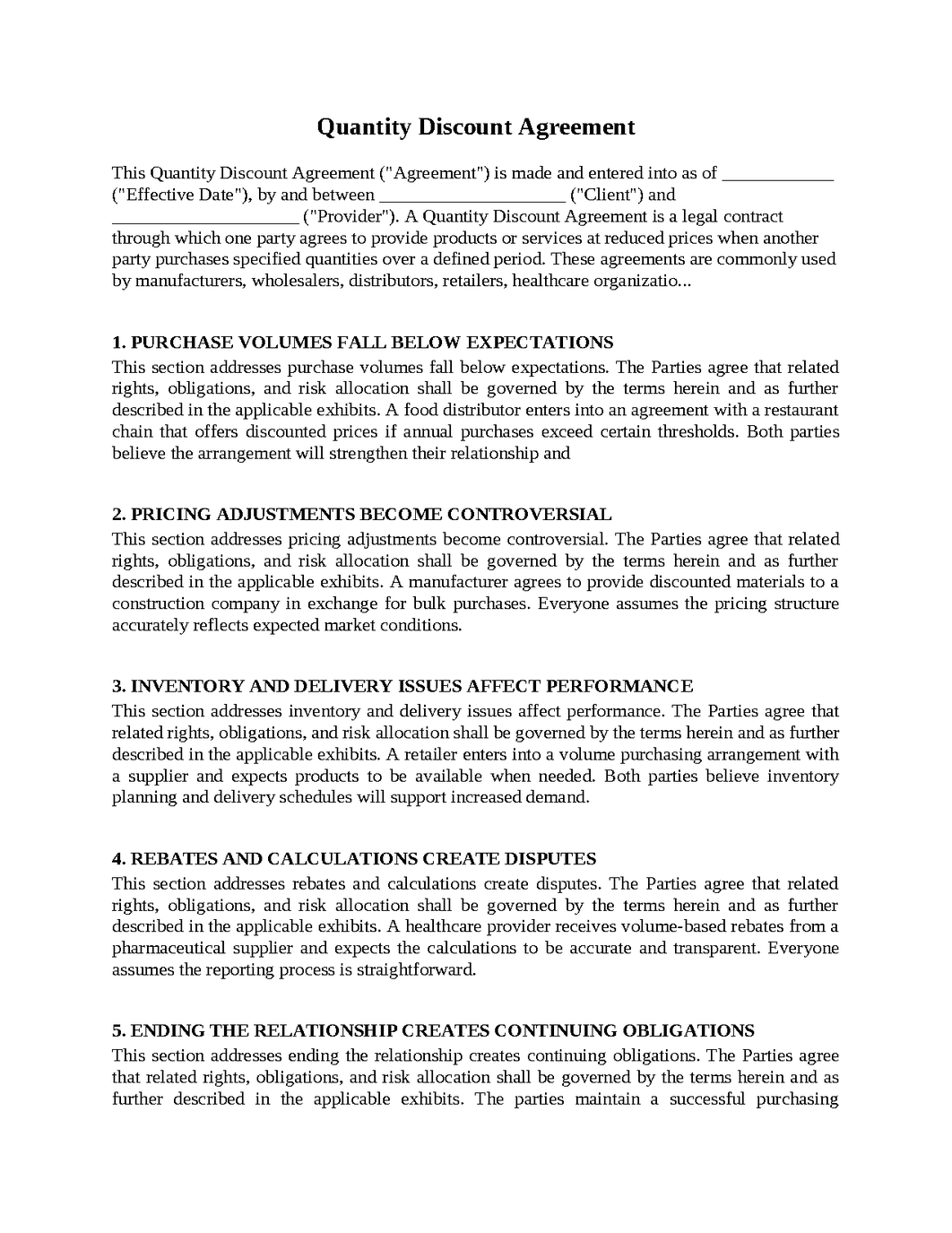
A Quantity Discount Agreement is a legal contract through which one party agrees to provide products or services at reduced prices when another party purchases specified quantities over a defined period. These agreements are commonly used by manufacturers, wholesalers, distributors, retailers, healthcare organizations, and large commercial buyers seeking to lower costs and encourage long-term purchasing relationships. A Quantity Discount Agreement typically addresses pricing schedules, minimum purchase requirements, delivery obligations, payment terms, inventory commitments, and procedures governing disputes and termination. Because pricing incentives depend upon purchase volumes and changing market conditions, disputes can arise when expectations regarding obligations and performance are not documented clearly. A carefully drafted Quantity Discount Agreement helps establish certainty and protect the interests of both buyers and suppliers.
Purchase Volumes Fall Below Expectations
A food distributor enters into an agreement with a restaurant chain that offers discounted prices if annual purchases exceed certain thresholds. Both parties believe the arrangement will strengthen their relationship and support continued growth.
Initially, sales volumes remain strong and the discount structure benefits everyone involved. Over time, however, economic conditions and changing customer preferences reduce demand, causing purchases to fall below expectations.
The supplier believes the agreed purchase commitments justified the discounted pricing because production and inventory decisions were based upon anticipated volumes. The restaurant chain believes changing market conditions affected demand and argues that flexibility is necessary during difficult periods. As sales decline, tensions emerge regarding pricing and minimum purchase requirements.
To help avoid this problem, a Quantity Discount Agreement should clearly establish volume requirements and define the consequences applicable when purchasing commitments are not achieved.
Pricing Adjustments Become Controversial
A manufacturer agrees to provide discounted materials to a construction company in exchange for bulk purchases. Everyone assumes the pricing structure accurately reflects expected market conditions.
As raw material costs increase, questions arise regarding whether the supplier may adjust prices despite the agreed discount schedule. Different expectations create uncertainty regarding future pricing.
The buyer believes predictable pricing is essential because project budgets and profitability depend upon stable costs. The supplier believes rising expenses and supply chain challenges justify modifications and argues that continuing to honor outdated pricing would create financial hardship. As costs increase, disagreements emerge regarding price adjustments.
To help prevent these issues, a Quantity Discount Agreement should clearly establish pricing provisions and define the circumstances under which adjustments may occur.
Inventory and Delivery Issues Affect Performance
A retailer enters into a volume purchasing arrangement with a supplier and expects products to be available when needed. Both parties believe inventory planning and delivery schedules will support increased demand.
Unexpected shortages and transportation delays eventually disrupt shipments. Questions arise regarding whether the supplier adequately prepared for the anticipated order volumes.
The retailer believes reliable deliveries are essential because customer relationships and sales depend upon inventory availability. The supplier believes external supply chain disruptions affected operations and argues that reasonable efforts were made to satisfy demand. As shortages continue, tensions develop regarding delivery obligations.
To help avoid these problems, a Quantity Discount Agreement should clearly establish delivery requirements and define expectations relating to inventory management and supply availability.
Rebates and Calculations Create Disputes
A healthcare provider receives volume-based rebates from a pharmaceutical supplier and expects the calculations to be accurate and transparent. Everyone assumes the reporting process is straightforward.
As purchase volumes increase, questions arise regarding product classifications, excluded items, and how rebates should be calculated. Different interpretations create uncertainty regarding the amounts owed.
The healthcare provider believes rebates should reflect all qualifying purchases because the discounts influenced procurement decisions. The supplier believes certain exclusions apply and argues that rebate calculations should follow the terms of the agreement. As financial amounts increase, disagreements emerge regarding rebate calculations.
To help prevent these issues, a Quantity Discount Agreement should clearly establish rebate formulas and define the procedures governing calculations and reporting.
Ending the Relationship Creates Continuing Obligations
The parties maintain a successful purchasing relationship for many years and assume the arrangement will continue indefinitely. Business plans and inventory strategies are built around that expectation.
Eventually, changing priorities lead one side to pursue alternative suppliers or customers. Questions arise regarding outstanding rebates, pending orders, and obligations associated with previously negotiated discounts.
The buyer believes commitments already earned should remain protected because purchasing decisions were made in reliance upon the agreement. The supplier believes future obligations should end once the relationship concludes and expects contractual rights to be respected. As the arrangement ends, disagreements emerge regarding the rights and responsibilities that survive termination.
To help avoid this problem, a Quantity Discount Agreement should clearly establish termination procedures and identify the rights and responsibilities that continue after the relationship ends.
Quantity Discount Agreements are valuable tools that allow buyers and suppliers to strengthen relationships while achieving efficiencies through larger purchasing commitments. However, issues involving purchase volumes, pricing adjustments, delivery obligations, rebate calculations, and post-termination responsibilities can become significant sources of conflict when expectations are not documented clearly. A carefully drafted Quantity Discount Agreement provides a structured framework for allocating responsibilities and protecting the interests of both buyers and suppliers. When prepared thoughtfully, it can reduce uncertainty, strengthen commercial relationships, improve planning, and provide the foundation necessary for successful long-term supply arrangements.

Get started with Upsign today!
Easily send, sign and track your documents