

Radio Advertising Agreement
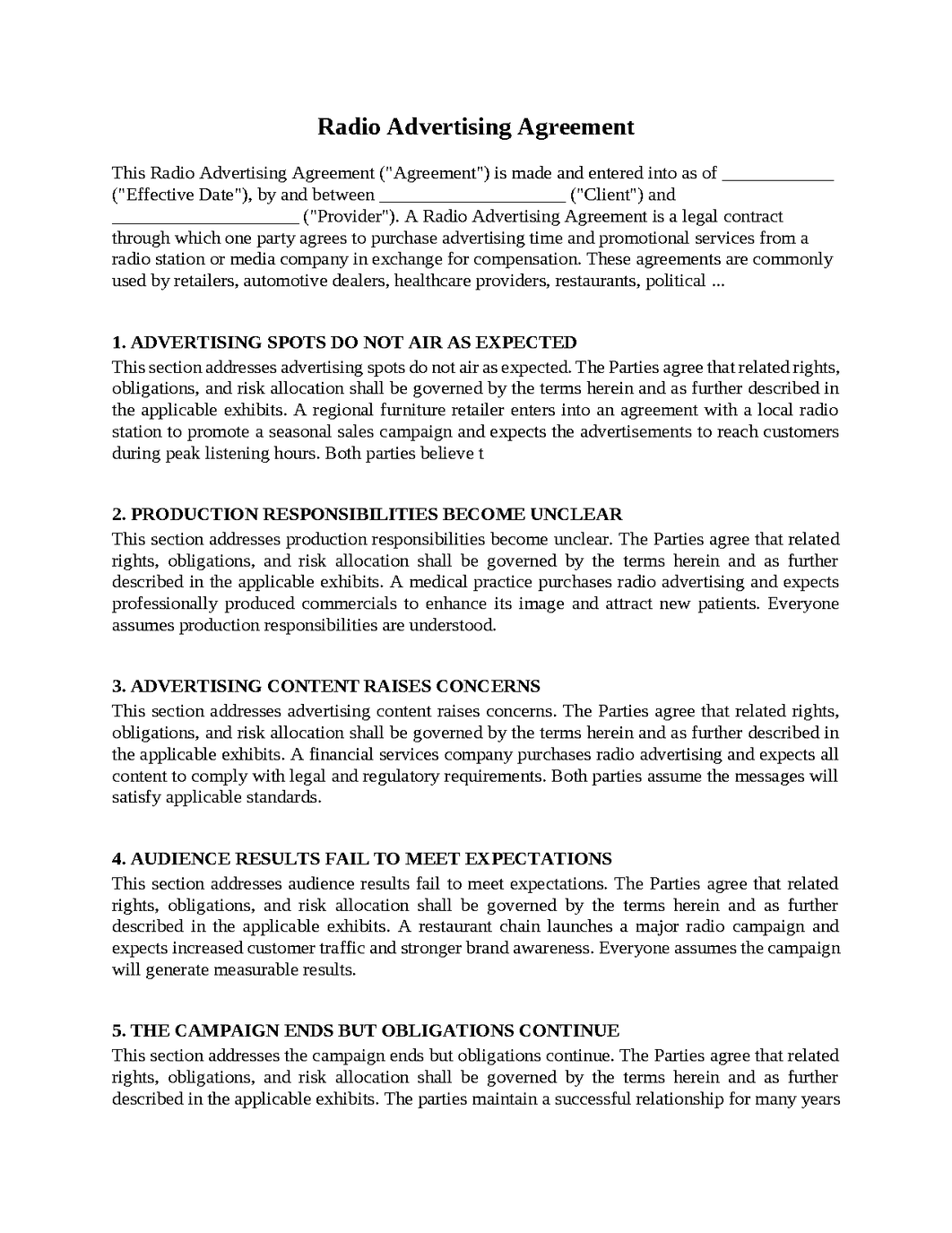
A Radio Advertising Agreement is a legal contract through which one party agrees to purchase advertising time and promotional services from a radio station or media company in exchange for compensation. These agreements are commonly used by retailers, automotive dealers, healthcare providers, restaurants, political campaigns, entertainment companies, and service businesses seeking to reach targeted audiences through broadcast advertising. A Radio Advertising Agreement typically addresses advertising schedules, rates, production responsibilities, content requirements, payment obligations, performance expectations, and procedures governing disputes and termination. Because advertising campaigns involve timing, audience reach, and brand reputation, disputes can arise when expectations regarding responsibilities and results are not documented clearly. A carefully drafted Radio Advertising Agreement helps establish certainty and protect the interests of both advertisers and broadcasters.
Advertising Spots Do Not Air as Expected
A regional furniture retailer enters into an agreement with a local radio station to promote a seasonal sales campaign and expects the advertisements to reach customers during peak listening hours. Both parties believe the campaign will increase traffic and support revenue growth.
Initially, advertisements air according to schedule and customer response remains positive. Over time, however, several spots are broadcast at unexpected times and some scheduled advertisements are missed entirely.
The retailer believes timely broadcasts are essential because advertising budgets and promotional events depend upon reaching customers at specific times. The radio station believes occasional scheduling changes are unavoidable and argues that substitute airtime provides equivalent value. As sales expectations are affected, tensions emerge regarding performance obligations.
To help avoid this problem, a Radio Advertising Agreement should clearly establish broadcast schedules and define the remedies applicable to missed or substituted advertising spots.
Production Responsibilities Become Unclear
A medical practice purchases radio advertising and expects professionally produced commercials to enhance its image and attract new patients. Everyone assumes production responsibilities are understood.
As the campaign develops, questions arise regarding who is responsible for script preparation, voice talent, and revisions to the advertisements. Different expectations create uncertainty regarding costs and creative control.
The advertiser believes professional production should be included because quality commercials are essential to maintaining a positive reputation. The radio station believes additional production work requires separate compensation and argues that creative services were never included within the original agreement. As revisions increase, disagreements emerge regarding production obligations.
To help prevent these issues, a Radio Advertising Agreement should clearly establish production responsibilities and define the services included within the agreement.
Advertising Content Raises Concerns
A financial services company purchases radio advertising and expects all content to comply with legal and regulatory requirements. Both parties assume the messages will satisfy applicable standards.
As advertisements are prepared, questions arise regarding disclosures, claims, and language that may be considered misleading. Concerns increase regarding regulatory scrutiny and reputational risks.
The advertiser believes the station should review content because broadcasters possess experience with advertising standards and regulatory expectations. The station believes responsibility for the accuracy of claims belongs to the advertiser and argues that broadcasters cannot independently verify every statement. As concerns increase, tensions develop regarding accountability.
To help avoid these problems, a Radio Advertising Agreement should clearly establish content responsibilities and define the obligations applicable to regulatory compliance and advertising standards.
Audience Results Fail to Meet Expectations
A restaurant chain launches a major radio campaign and expects increased customer traffic and stronger brand awareness. Everyone assumes the campaign will generate measurable results.
After several months, sales remain below expectations and questions arise regarding whether the campaign reached the intended audience. Different interpretations create uncertainty regarding the effectiveness of the advertising.
The advertiser believes the station's audience projections influenced the decision to purchase airtime because marketing budgets depend upon expected results. The broadcaster believes listener behavior cannot be guaranteed and argues that advertising effectiveness depends upon many factors outside its control. As frustrations increase, disagreements emerge regarding performance expectations.
To help prevent these issues, a Radio Advertising Agreement should clearly establish the scope of performance representations and define any limitations applicable to audience projections.
The Campaign Ends but Obligations Continue
The parties maintain a successful relationship for many years and assume future campaigns will continue strengthening their partnership. Marketing strategies are built around that expectation.
Eventually, changing priorities lead the advertiser to pursue other promotional channels. Questions arise regarding unpaid invoices, ownership of commercial recordings, and obligations relating to previously produced advertisements.
The advertiser believes completed campaigns should provide continuing access to certain materials because marketing investments were made in reliance upon the relationship. The broadcaster believes future rights should be limited to those expressly granted and expects contractual obligations to be respected. As the relationship concludes, disagreements emerge regarding the rights and responsibilities that survive termination.
To help avoid this problem, a Radio Advertising Agreement should clearly establish termination procedures and identify the rights and responsibilities that continue after the relationship ends.
Radio Advertising Agreements are valuable tools that allow businesses and broadcasters to work together to promote products and services while reaching targeted audiences. However, issues involving broadcast schedules, production responsibilities, advertising content, performance expectations, and post-termination obligations can become significant sources of conflict when expectations are not documented clearly. A carefully drafted Radio Advertising Agreement provides a structured framework for allocating responsibilities and protecting the interests of both advertisers and broadcasters. When prepared thoughtfully, it can reduce uncertainty, strengthen commercial relationships, increase marketing effectiveness, and provide the foundation necessary for successful advertising campaigns.

Get started with Upsign today!
Easily send, sign and track your documents