

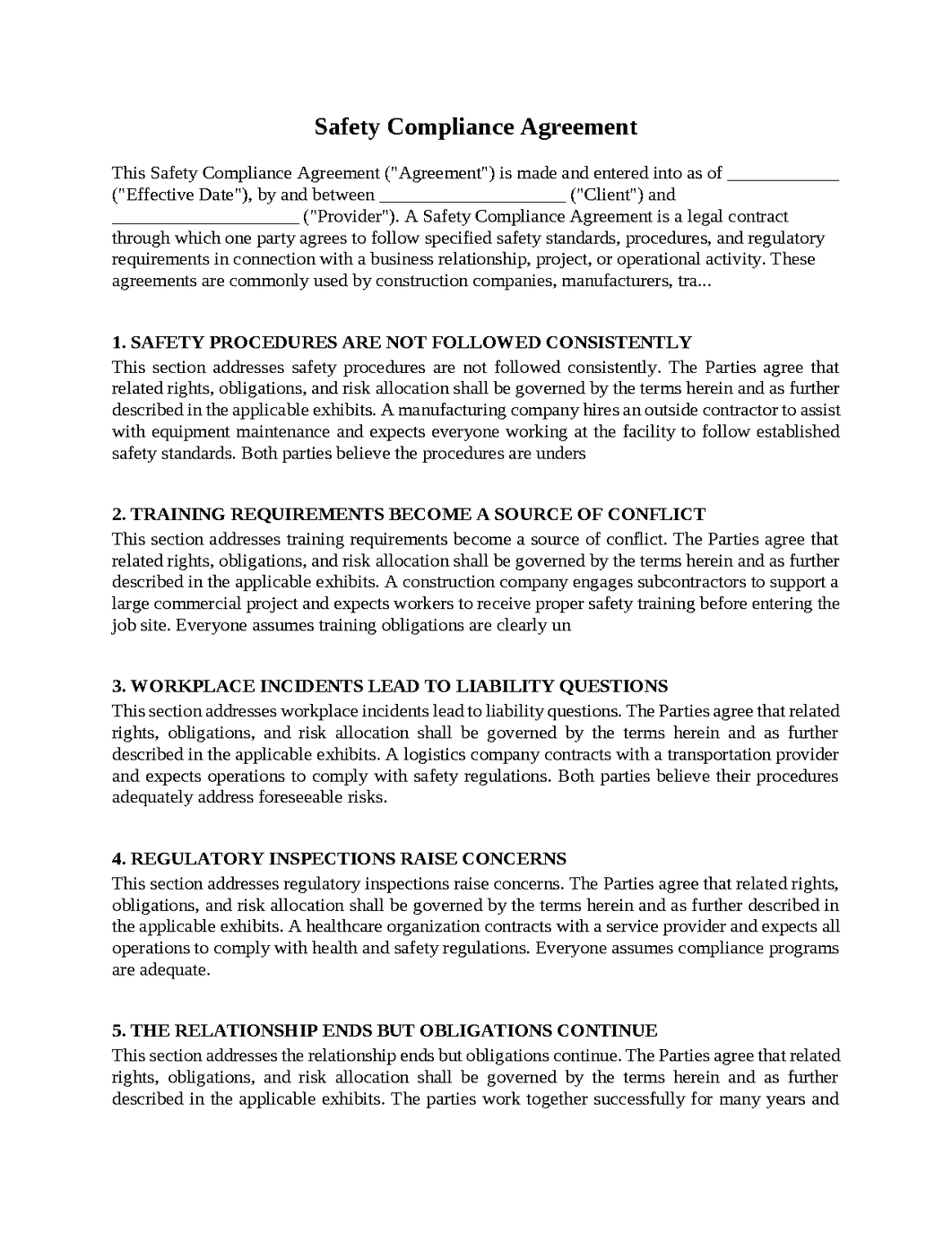
Safety Compliance Agreement
A Safety Compliance Agreement is a legal contract through which one party agrees to follow specified safety standards, procedures, and regulatory requirements in connection with a business relationship, project, or operational activity. These agreements are commonly used by construction companies, manufacturers, transportation providers, healthcare organizations, energy companies, and contractors seeking to reduce workplace hazards and ensure compliance with applicable laws. A Safety Compliance Agreement typically addresses safety procedures, training requirements, reporting obligations, inspection rights, corrective actions, and procedures governing disputes and termination. Because workplace accidents and regulatory violations can create significant liabilities and reputational harm, disputes can arise when expectations regarding safety responsibilities are not documented clearly. A carefully drafted Safety Compliance Agreement helps establish certainty and protect the interests of all parties involved.
Safety Procedures Are Not Followed Consistently
A manufacturing company hires an outside contractor to assist with equipment maintenance and expects everyone working at the facility to follow established safety standards. Both parties believe the procedures are understood and sufficient to protect workers.
Initially, operations proceed smoothly and no major incidents occur. Over time, however, employees begin noticing inconsistent practices and shortcuts that create concerns regarding workplace safety.
The manufacturing company believes strict adherence to procedures is essential because employee safety and regulatory compliance depend upon consistent practices. The contractor believes production schedules and operational demands occasionally require flexibility and argues that reasonable precautions are being taken. As concerns increase, tensions emerge regarding responsibility for maintaining safe conditions.
To help avoid this problem, a Safety Compliance Agreement should clearly establish safety standards and define the obligations applicable to all personnel performing work.
Training Requirements Become a Source of Conflict
A construction company engages subcontractors to support a large commercial project and expects workers to receive proper safety training before entering the job site. Everyone assumes training obligations are clearly understood.
As the project progresses, questions arise regarding certifications, refresher courses, and whether workers possess the necessary qualifications. Different expectations create uncertainty regarding responsibility for training expenses and oversight.
The general contractor believes adequate training is essential because accidents could delay the project and expose everyone to liability. The subcontractors believe additional requirements create unnecessary costs and argue that existing certifications are sufficient. As compliance concerns increase, disagreements emerge regarding training responsibilities.
To help prevent these issues, a Safety Compliance Agreement should clearly establish training requirements and define the standards applicable to certifications and qualifications.
Workplace Incidents Lead to Liability Questions
A logistics company contracts with a transportation provider and expects operations to comply with safety regulations. Both parties believe their procedures adequately address foreseeable risks.
Following a workplace accident, questions arise regarding who bears responsibility for injuries, investigations, and corrective actions. Different interpretations create uncertainty regarding liability.
The logistics company believes the transportation provider should be accountable because the incident occurred during activities under its control. The provider believes multiple factors contributed to the event and argues that responsibility should be shared. As claims and expenses increase, tensions develop regarding accountability.
To help avoid these problems, a Safety Compliance Agreement should clearly establish reporting procedures and define responsibility for incidents, investigations, and corrective measures.
Regulatory Inspections Raise Concerns
A healthcare organization contracts with a service provider and expects all operations to comply with health and safety regulations. Everyone assumes compliance programs are adequate.
As regulatory inspections become more frequent, questions arise regarding recordkeeping, audits, and documentation requirements. Concerns increase regarding penalties and enforcement actions.
The healthcare organization believes compliance is essential because regulatory violations could affect operations and public confidence. The service provider believes changing requirements create challenges and argues that compliance responsibilities should be shared. As scrutiny increases, disagreements emerge regarding accountability.
To help prevent these issues, a Safety Compliance Agreement should clearly establish compliance responsibilities and define the obligations relating to inspections and regulatory requirements.
The Relationship Ends but Obligations Continue
The parties work together successfully for many years and assume the arrangement will continue indefinitely. Operational plans and safety procedures are built around that expectation.
Eventually, changing priorities lead one side to terminate the relationship. Questions arise regarding accident records, ongoing investigations, and obligations associated with incidents that occurred before termination.
One party believes continuing cooperation is necessary because regulatory inquiries and claims may continue long after the relationship ends. The other party believes its responsibilities should conclude once contractual obligations have been fulfilled and expects finality. As unresolved matters remain, disagreements emerge regarding the rights and responsibilities that survive termination.
To help avoid this problem, a Safety Compliance Agreement should clearly establish termination procedures and identify the obligations that continue after the relationship ends.
Safety Compliance Agreements are valuable tools that help organizations promote safe operations and comply with legal requirements while reducing the risk of accidents and liabilities. However, issues involving safety procedures, training requirements, workplace incidents, regulatory compliance, and post-termination obligations can become significant sources of conflict when expectations are not documented clearly. A carefully drafted Safety Compliance Agreement provides a structured framework for allocating responsibilities and protecting the interests of all parties involved. When prepared thoughtfully, it can reduce uncertainty, strengthen working relationships, improve regulatory compliance, and provide the foundation necessary for maintaining safe and efficient operations.

Get started with Upsign today!
Easily send, sign and track your documents