

Temporary Staffing Agreement
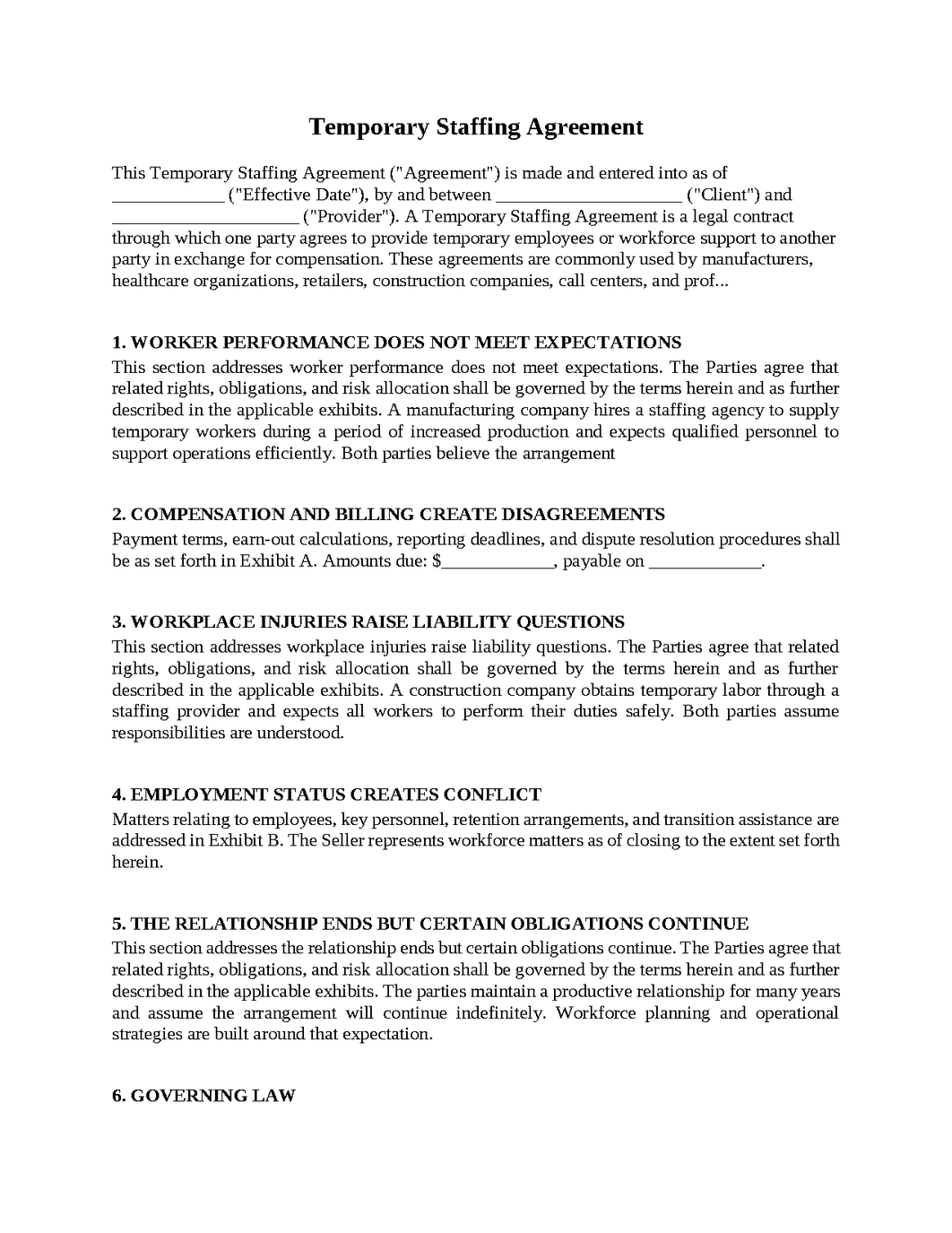
A Temporary Staffing Agreement is a legal contract through which one party agrees to provide temporary employees or workforce support to another party in exchange for compensation. These agreements are commonly used by manufacturers, healthcare organizations, retailers, construction companies, call centers, and professional service firms seeking to address seasonal demand, labor shortages, or special projects without hiring permanent employees. A Temporary Staffing Agreement typically addresses the scope of staffing services, compensation arrangements, worker qualifications, supervision responsibilities, liability issues, and procedures governing disputes and termination. Because temporary personnel often work under the direction of one organization while remaining employed by another, disputes can arise when expectations regarding responsibilities and performance are not documented clearly. A carefully drafted Temporary Staffing Agreement helps establish certainty and protect the interests of both staffing providers and clients.
Worker Performance Does Not Meet Expectations
A manufacturing company hires a staffing agency to supply temporary workers during a period of increased production and expects qualified personnel to support operations efficiently. Both parties believe the arrangement will satisfy labor demands and maintain productivity.
Initially, operations proceed smoothly and staffing needs are met successfully. Over time, however, certain workers struggle to perform assigned tasks and productivity begins to decline.
The manufacturing company believes the staffing agency should provide capable employees because production schedules and customer commitments depend upon reliable performance. The staffing agency believes training and supervision within the facility influence performance and argues that reasonable efforts have been made to provide qualified workers. As operational problems increase, tensions emerge regarding accountability.
To help avoid this problem, a Temporary Staffing Agreement should clearly establish qualification standards and define the responsibilities applicable to worker performance and supervision.
Compensation and Billing Create Disagreements
A healthcare organization relies upon temporary personnel to address staffing shortages and expects invoices to reflect the agreed rates. Everyone assumes compensation procedures are straightforward and predictable.
As overtime hours and shift differentials increase, questions arise regarding billing practices and additional charges. Different interpretations create uncertainty regarding amounts owed.
The healthcare organization believes costs should remain transparent because budgets and financial planning depend upon predictable expenses. The staffing agency believes additional charges are justified because labor demands and overtime requirements increased unexpectedly. As expenses rise, disagreements emerge regarding compensation.
To help prevent these issues, a Temporary Staffing Agreement should clearly establish billing procedures and define the circumstances under which additional charges may apply.
Workplace Injuries Raise Liability Questions
A construction company obtains temporary labor through a staffing provider and expects all workers to perform their duties safely. Both parties assume responsibilities are understood.
Following an accident involving a temporary employee, questions arise regarding workers' compensation coverage, safety obligations, and liability for injuries. Different expectations create uncertainty regarding responsibility.
The construction company believes the staffing provider should maintain employment-related insurance because the workers remain employees of the agency. The staffing provider believes job-site safety and supervision fall within the client's control and argues that responsibility should be shared. As claims increase, tensions develop regarding liability.
To help avoid these problems, a Temporary Staffing Agreement should clearly establish insurance requirements and define the responsibilities applicable to workplace safety and injuries.
Employment Status Creates Conflict
A retail company uses temporary workers during the holiday season and expects flexibility without creating long-term employment obligations. Everyone assumes the arrangement is properly structured.
As assignments extend beyond their original duration, questions arise regarding benefits, employment status, and whether certain workers should be treated as permanent employees.
The workers believe extended service and regular schedules justify additional rights and benefits because they perform duties similar to permanent employees. The retail company believes temporary assignments provide flexibility and argues that employment responsibilities belong to the staffing agency. As assignments continue, disagreements emerge regarding employment status.
To help prevent these issues, a Temporary Staffing Agreement should clearly establish the nature of the relationship and define the responsibilities of each party concerning employment matters.
The Relationship Ends but Certain Obligations Continue
The parties maintain a productive relationship for many years and assume the arrangement will continue indefinitely. Workforce planning and operational strategies are built around that expectation.
Eventually, changing priorities lead one side to terminate the relationship. Questions arise regarding unpaid invoices, confidentiality obligations, and liabilities associated with temporary employees previously assigned to projects.
The client believes access to records and continued cooperation are necessary because claims and operational issues may arise after the relationship ends. The staffing provider believes obligations should conclude once contractual requirements have been satisfied and expects finality. As the relationship concludes, disagreements emerge regarding the rights and responsibilities that survive termination.
To help avoid this problem, a Temporary Staffing Agreement should clearly establish termination procedures and identify the rights and responsibilities that continue after the relationship ends.
Temporary Staffing Agreements are valuable tools that allow organizations to respond to changing labor demands while maintaining operational flexibility. However, issues involving worker performance, billing disputes, workplace injuries, employment status, and post-termination obligations can become significant sources of conflict when expectations are not documented clearly. A carefully drafted Temporary Staffing Agreement provides a structured framework for allocating responsibilities and protecting the interests of both staffing providers and clients. When prepared thoughtfully, it can reduce uncertainty, strengthen business relationships, improve workforce management, and provide the foundation necessary for successful temporary staffing arrangements.

Get started with Upsign today!
Easily send, sign and track your documents