

Trademark Assignment Agreement
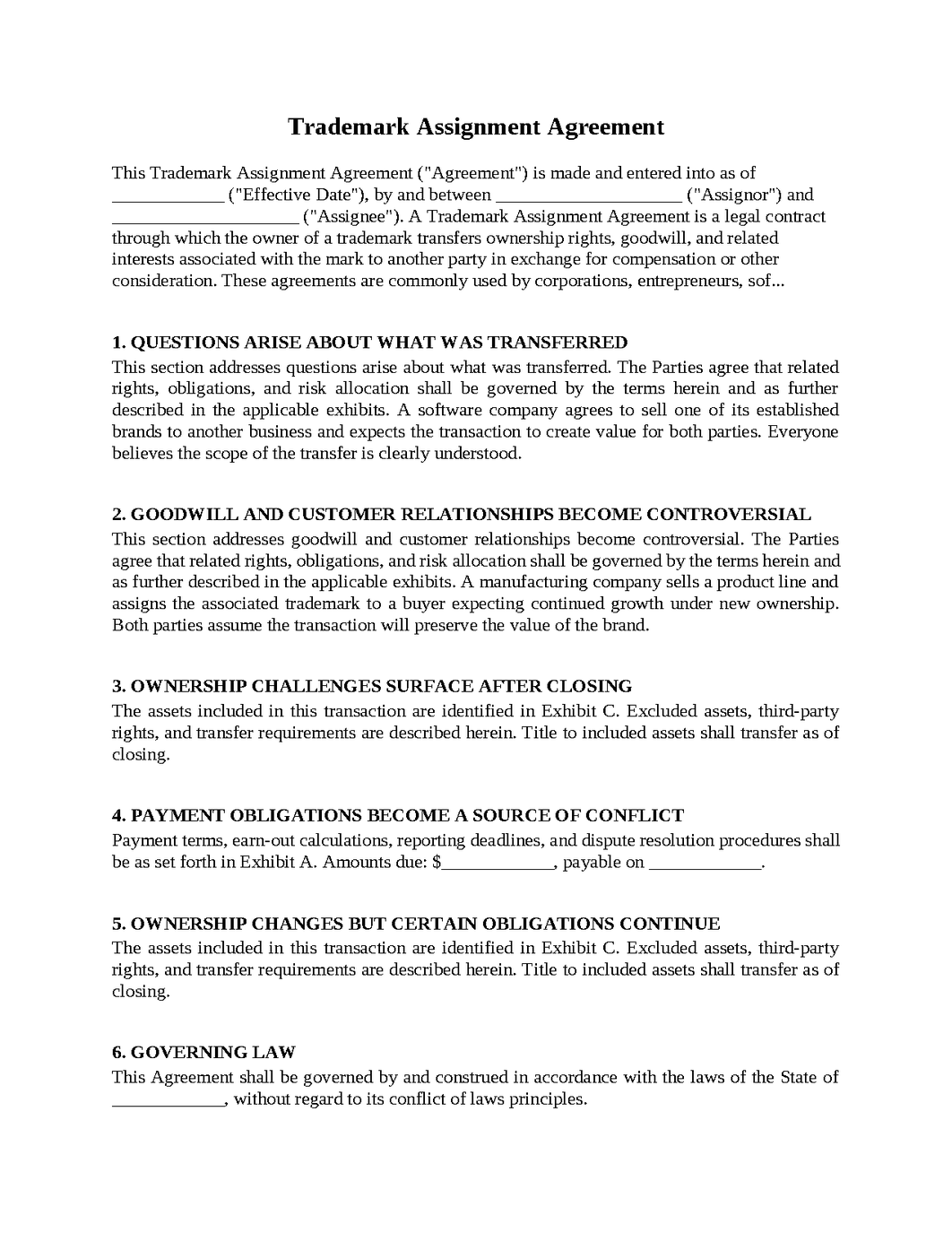
A Trademark Assignment Agreement is a legal contract through which the owner of a trademark transfers ownership rights, goodwill, and related interests associated with the mark to another party in exchange for compensation or other consideration. These agreements are commonly used by corporations, entrepreneurs, software companies, manufacturers, franchisors, and investors seeking to acquire or transfer valuable brand assets. A Trademark Assignment Agreement typically addresses the trademarks being transferred, associated goodwill, payment arrangements, representations and warranties, intellectual property rights, and procedures governing disputes and termination. Because trademarks represent customer recognition and commercial goodwill built over time, disputes can arise when expectations regarding ownership and obligations are not documented clearly. A carefully drafted Trademark Assignment Agreement helps establish certainty and protect the interests of both assignors and assignees.
Questions Arise About What Was Transferred
A software company agrees to sell one of its established brands to another business and expects the transaction to create value for both parties. Everyone believes the scope of the transfer is clearly understood.
Initially, the transition proceeds smoothly and customers continue recognizing the brand. Over time, however, questions arise regarding logos, domain names, slogans, and other assets connected to the trademark.
The seller believes only the registered trademark itself was intended to be transferred because certain related assets continue supporting other business activities. The buyer believes the value of the acquisition depends upon receiving all rights associated with the brand and argues that customer goodwill cannot be separated from supporting assets. As competing claims emerge, tensions develop regarding ownership.
To help avoid this problem, a Trademark Assignment Agreement should clearly establish the assets being transferred and define the intellectual property rights included in the assignment.
Goodwill and Customer Relationships Become Controversial
A manufacturing company sells a product line and assigns the associated trademark to a buyer expecting continued growth under new ownership. Both parties assume the transaction will preserve the value of the brand.
As the transition unfolds, questions arise regarding customer lists, marketing materials, and business practices associated with the trademark. Different expectations create uncertainty regarding the transfer of goodwill.
The buyer believes customer recognition and goodwill are essential because those assets represent much of the value being acquired. The seller believes certain relationships and business information remain separate from the transaction and argues that only the trademark rights were intended to change hands. As integration efforts continue, disagreements emerge regarding goodwill and associated assets.
To help prevent these issues, a Trademark Assignment Agreement should clearly establish the treatment of goodwill and define the rights transferred with the trademark.
Ownership Challenges Surface After Closing
An entrepreneur purchases a brand and expects ownership rights to be secure. Everyone assumes the trademark is free from competing claims and legal issues.
After the transaction closes, questions arise regarding prior licenses, undisclosed disputes, and challenges from third parties. Concerns increase regarding the value of the acquired trademark.
The buyer believes the seller should stand behind the transfer because ownership assurances influenced the purchase decision. The seller believes certain risks were disclosed and argues that unforeseen claims are part of ordinary business transactions. As legal expenses increase, tensions emerge regarding representations and warranties.
To help avoid these problems, a Trademark Assignment Agreement should clearly establish ownership representations and define the remedies available if competing claims arise.
Payment Obligations Become a Source of Conflict
A consumer products company acquires a trademark and agrees to pay the purchase price over time. Both parties expect the transaction to proceed according to the agreed schedule.
Unexpected business conditions affect revenues and questions arise regarding installment payments and performance obligations. Different interpretations create uncertainty regarding financial responsibilities.
The seller believes prompt payment is essential because the transfer was completed in reliance upon the agreed consideration. The buyer believes economic circumstances justify flexibility and argues that preserving the value of the acquired brand benefits both parties. As payment issues continue, disagreements emerge regarding compensation obligations.
To help prevent these issues, a Trademark Assignment Agreement should clearly establish payment terms and define the consequences applicable to missed or delayed payments.
Ownership Changes but Certain Obligations Continue
The parties complete the transfer and expect the transaction to provide finality. Business plans and future growth strategies are built around the assumption that ownership issues have been resolved.
Eventually, questions arise regarding prior liabilities, unresolved disputes, and obligations connected to activities that occurred before the assignment. Different interpretations create uncertainty regarding continuing responsibilities.
The buyer believes the acquired rights should be protected because significant investments were made in reliance upon the transfer. The seller believes future obligations should be limited according to the agreement and expects finality. As historical issues emerge, disagreements arise regarding the rights and responsibilities that survive the transaction.
To help avoid this problem, a Trademark Assignment Agreement should clearly establish survival provisions and identify the obligations and protections that continue after ownership has been transferred.
Trademark Assignment Agreements are valuable tools that allow businesses and individuals to transfer valuable brands and intellectual property rights while preserving customer goodwill and commercial value. However, issues involving transferred assets, goodwill, ownership representations, payment obligations, and post-closing responsibilities can become significant sources of conflict when expectations are not documented clearly. A carefully drafted Trademark Assignment Agreement provides a structured framework for allocating responsibilities and protecting the interests of both buyers and sellers. When prepared thoughtfully, it can reduce uncertainty, facilitate successful transactions, preserve brand value, and provide the foundation necessary for effective ownership transfers.

Get started with Upsign today!
Easily send, sign and track your documents