

Transportation Agreement
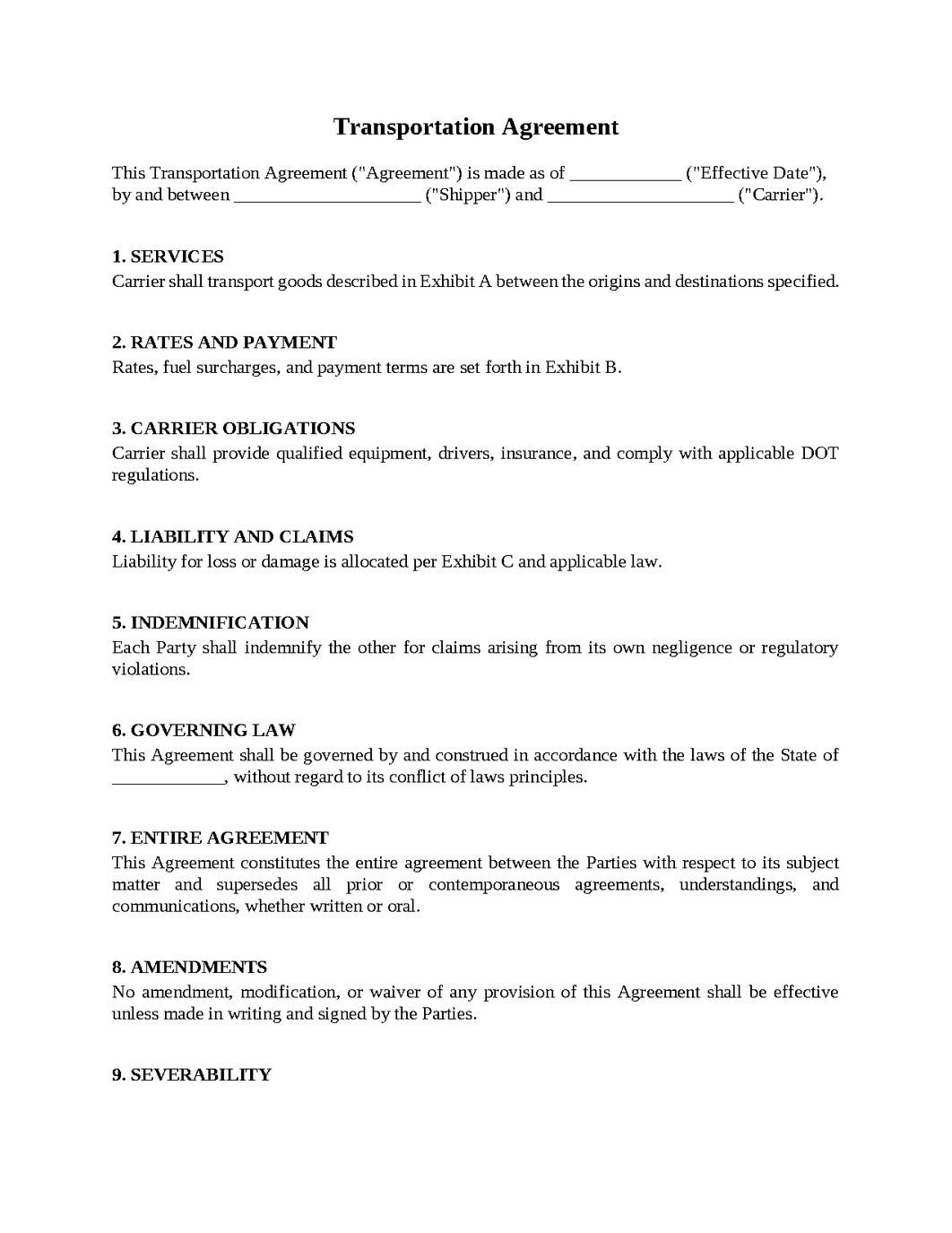
A Transportation Agreement is a legal contract that establishes the terms under which one party transports goods, products, materials, equipment, or other cargo on behalf of another party. These agreements are commonly used between shippers, manufacturers, distributors, logistics providers, freight brokers, trucking companies, rail carriers, maritime operators, and other transportation service providers. Transportation Agreements typically address shipment requirements, delivery schedules, freight rates, liability allocation, insurance obligations, cargo handling procedures, and compliance requirements. Because transportation services often involve valuable cargo, strict timelines, and multiple parties, disputes can arise when expectations are not documented clearly. A well-drafted Transportation Agreement helps protect all parties while promoting reliable and efficient movement of goods.
Cargo Is Damaged During Transit
A manufacturer hires a transportation company to deliver products to customers throughout the region.
The goods are loaded properly and leave the shipping facility in good condition. During transportation, however, a portion of the cargo arrives damaged due to shifting loads, improper handling, weather conditions, or other unforeseen events.
The shipper believes the carrier should be responsible because the goods were delivered in damaged condition. The carrier argues that packaging deficiencies, loading decisions, or circumstances outside its control contributed to the loss.
The customer receiving the shipment becomes frustrated because the damaged products cannot be used as intended.
What began as a routine delivery becomes a dispute regarding responsibility for cargo damage.
To help avoid this problem, a Transportation Agreement should clearly define cargo handling requirements, establish liability standards, identify inspection procedures, and address insurance obligations relating to damaged shipments.
Delivery Delays Cause Financial Losses
A retailer depends on timely deliveries to maintain inventory levels and satisfy customer demand.
A transportation provider agrees to move goods according to a schedule that aligns with the retailer's operational needs. Unexpected delays occur due to weather conditions, mechanical failures, traffic disruptions, labor shortages, or other transportation challenges.
The retailer experiences inventory shortages, missed sales opportunities, and dissatisfied customers. The transportation provider explains that many delays were beyond its reasonable control.
The disagreement becomes significant because both parties suffer financial consequences.
Neither side intended the disruption, yet each views responsibility differently.
To reduce these risks, a Transportation Agreement should establish delivery expectations, define service levels, identify circumstances excusing delays, and clarify remedies available when delivery schedules are not met.
Freight Charges Become a Source of Conflict
A shipper enters into a long-term transportation relationship based on agreed freight rates and service expectations.
Initially, invoices match expectations and payments are processed routinely. Over time, however, additional charges begin appearing for fuel surcharges, detention time, storage fees, special handling requirements, and accessorial services.
The shipper believes certain charges were never discussed or approved. The transportation provider argues that the fees are standard within the industry and necessary to cover operational costs.
The disagreement grows because transportation expenses represent a significant portion of overall logistics costs.
What should have been a straightforward billing process becomes increasingly contentious.
To help prevent these issues, a Transportation Agreement should clearly define pricing terms, identify potential additional charges, establish invoicing procedures, and explain how rate adjustments will be handled.
A Shipment Is Lost
A distributor ships valuable products through a transportation provider as part of a routine delivery process.
The shipment leaves the origin facility and appears to move normally through the transportation network. At some point, however, the cargo cannot be located and delivery never occurs.
The shipper expects compensation for the value of the missing goods. The transportation provider begins investigating but cannot immediately determine what happened.
Questions arise regarding liability limitations, insurance coverage, documentation requirements, and the process for resolving claims.
The loss affects multiple parties, including customers waiting for delivery.
To help avoid these problems, a Transportation Agreement should establish shipment tracking procedures, define claims processes, identify liability limitations, and address insurance requirements for lost cargo.
Regulatory Compliance Issues Interrupt Operations
A transportation provider performs services involving regulated cargo, interstate transportation, hazardous materials, or other activities subject to government oversight.
During operations, questions arise regarding permits, licensing requirements, driver qualifications, safety standards, or compliance procedures.
One party believes the other is responsible for ensuring compliance with applicable regulations. The other party disagrees and points to different contractual obligations.
The disagreement becomes increasingly important because regulatory violations may result in fines, delays, or operational restrictions.
Neither side intended noncompliance, but responsibilities were never clearly allocated.
To reduce these risks, a Transportation Agreement should clearly define compliance obligations, identify required licenses and permits, allocate regulatory responsibilities, and establish procedures for responding to compliance-related issues.
Transportation Agreements are essential tools for managing the movement of goods across supply chains and commercial markets. However, issues involving cargo damage, delivery delays, freight charges, lost shipments, and regulatory compliance can become significant sources of conflict when expectations are not documented clearly. A carefully drafted Transportation Agreement provides a structured framework for managing these relationships and protecting all parties involved. When prepared thoughtfully, it can help reduce misunderstandings, improve logistics performance, strengthen accountability, and support reliable transportation operations.

Get started with Upsign today!
Easily send, sign and track your documents