

Uniform Commercial Code Security Agreement
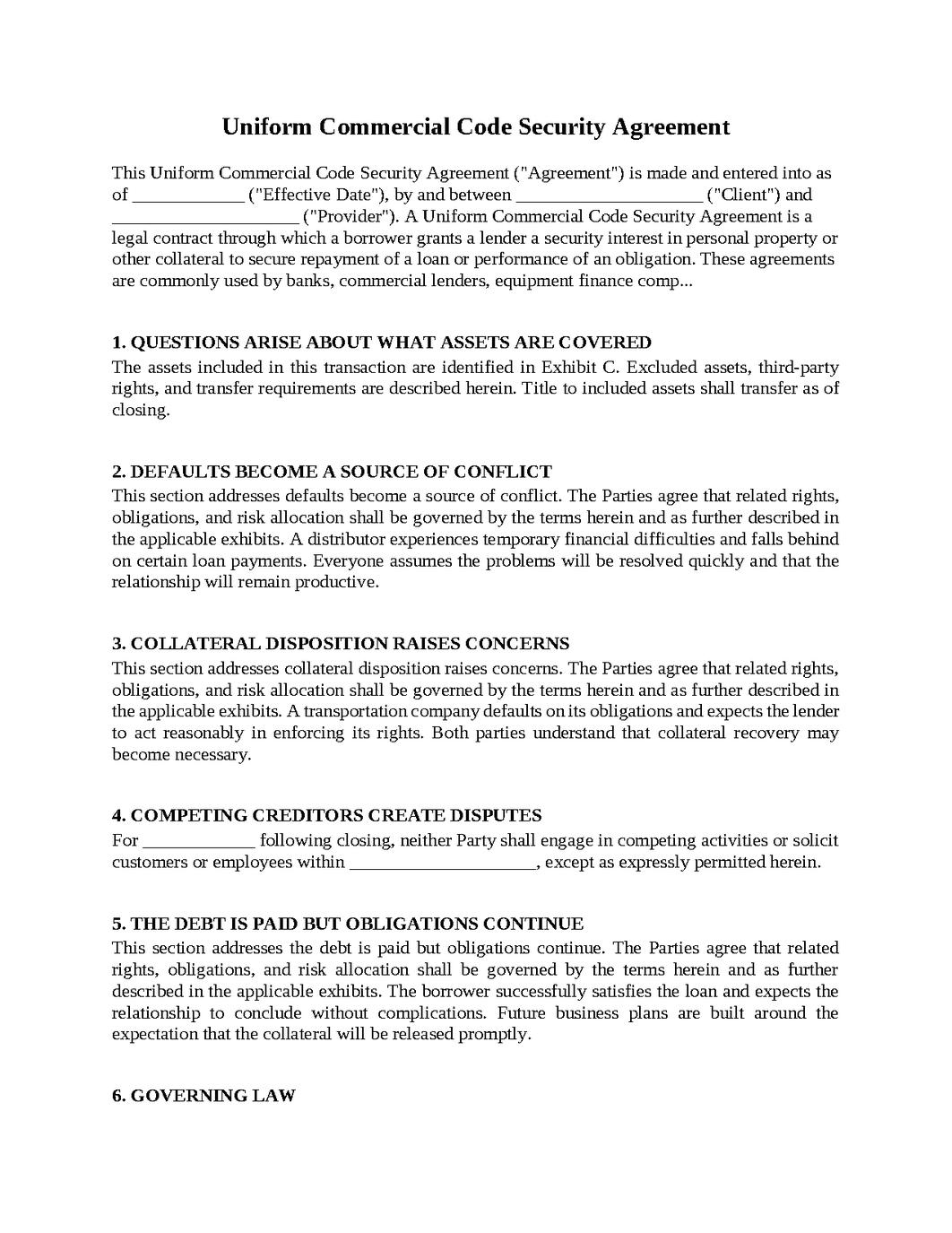
A Uniform Commercial Code Security Agreement is a legal contract through which a borrower grants a lender a security interest in personal property or other collateral to secure repayment of a loan or performance of an obligation. These agreements are commonly used by banks, commercial lenders, equipment finance companies, manufacturers, retailers, and businesses seeking access to credit while providing lenders with protection against default. A Uniform Commercial Code Security Agreement typically addresses the collateral being pledged, borrower obligations, events of default, remedies available to the lender, rights concerning proceeds, and procedures governing disputes and termination. Because these agreements directly affect ownership rights and the ability to recover assets, disputes can arise when expectations regarding obligations and remedies are not documented clearly. A carefully drafted Uniform Commercial Code Security Agreement helps establish certainty and protect the interests of both borrowers and secured parties.
Questions Arise About What Assets Are Covered
A manufacturing company obtains financing to support expansion and grants the lender a security interest in business assets. Both parties believe the collateral description adequately reflects the intended arrangement.
Initially, operations proceed successfully and loan payments are made according to schedule. Over time, however, the company acquires new inventory and equipment, creating uncertainty regarding whether those assets are automatically included within the collateral package.
The lender believes after-acquired assets should be covered because maintaining adequate collateral is essential to protecting repayment. The borrower believes certain newly acquired assets were never intended to secure the loan and argues that ownership rights should not be restricted unnecessarily. As the value of the assets increases, tensions emerge regarding the scope of the collateral.
To help avoid this problem, a Uniform Commercial Code Security Agreement should clearly establish the collateral being pledged and define whether future assets and proceeds are included.
Defaults Become a Source of Conflict
A distributor experiences temporary financial difficulties and falls behind on certain loan payments. Everyone assumes the problems will be resolved quickly and that the relationship will remain productive.
As payment issues continue, questions arise regarding whether the borrower has triggered an event of default and whether the lender may exercise its remedies immediately.
The lender believes prompt action is necessary because preserving collateral and minimizing losses are essential to protecting repayment. The borrower believes temporary setbacks should not justify drastic measures and argues that additional time would allow the business to recover. As financial pressures increase, disagreements emerge regarding default rights.
To help prevent these issues, a Uniform Commercial Code Security Agreement should clearly establish events of default and define the remedies available to the secured party.
Collateral Disposition Raises Concerns
A transportation company defaults on its obligations and expects the lender to act reasonably in enforcing its rights. Both parties understand that collateral recovery may become necessary.
As repossession efforts begin, questions arise regarding the sale of equipment and whether the assets are being disposed of at fair values. Different expectations create uncertainty regarding the lender's obligations.
The borrower believes the collateral should be sold in a commercially reasonable manner because unnecessary losses could affect future liabilities. The lender believes quick action is necessary because delays could reduce the value of the assets and increase expenses. As liquidation proceeds, tensions develop regarding the disposition process.
To help avoid these problems, a Uniform Commercial Code Security Agreement should clearly establish enforcement rights and define the procedures governing repossession and disposition of collateral.
Competing Creditors Create Disputes
A business owner grants security interests to multiple lenders and expects financing arrangements to coexist without difficulty. Everyone assumes priorities are properly documented.
As financial conditions deteriorate, questions arise regarding which creditor possesses superior rights to the collateral and how proceeds should be distributed.
One lender believes priority protections are essential because credit decisions were made in reliance upon collateral rights. Another creditor believes its interests should receive equal consideration and argues that filing and documentation issues affect priority. As collections become necessary, disagreements emerge regarding lien rights.
To help prevent these issues, a Uniform Commercial Code Security Agreement should clearly establish priority provisions and define the rights associated with collateral and proceeds.
The Debt Is Paid but Obligations Continue
The borrower successfully satisfies the loan and expects the relationship to conclude without complications. Future business plans are built around the expectation that the collateral will be released promptly.
Eventually, questions arise regarding lien releases, financing statement terminations, and obligations associated with transactions that occurred before repayment. Different interpretations create uncertainty regarding continuing rights.
The borrower believes all restrictions should be removed because the obligations have been fully satisfied. The lender believes certain rights and protections may survive because claims and disputes can arise after repayment. As the relationship concludes, disagreements emerge regarding the rights and responsibilities that continue after the debt has been paid.
To help avoid this problem, a Uniform Commercial Code Security Agreement should clearly establish termination procedures and identify the obligations and protections that survive satisfaction of the secured obligations.
Uniform Commercial Code Security Agreements are valuable tools that allow borrowers to obtain financing while providing lenders with meaningful protection through collateral rights. However, issues involving collateral descriptions, default remedies, asset disposition, competing creditor claims, and post-payment obligations can become significant sources of conflict when expectations are not documented clearly. A carefully drafted Uniform Commercial Code Security Agreement provides a structured framework for allocating responsibilities and protecting the interests of both borrowers and secured parties. When prepared thoughtfully, it can reduce uncertainty, facilitate access to capital, preserve asset value, and provide the foundation necessary for successful lending relationships.

Get started with Upsign today!
Easily send, sign and track your documents