

Vehicle Lease Agreement
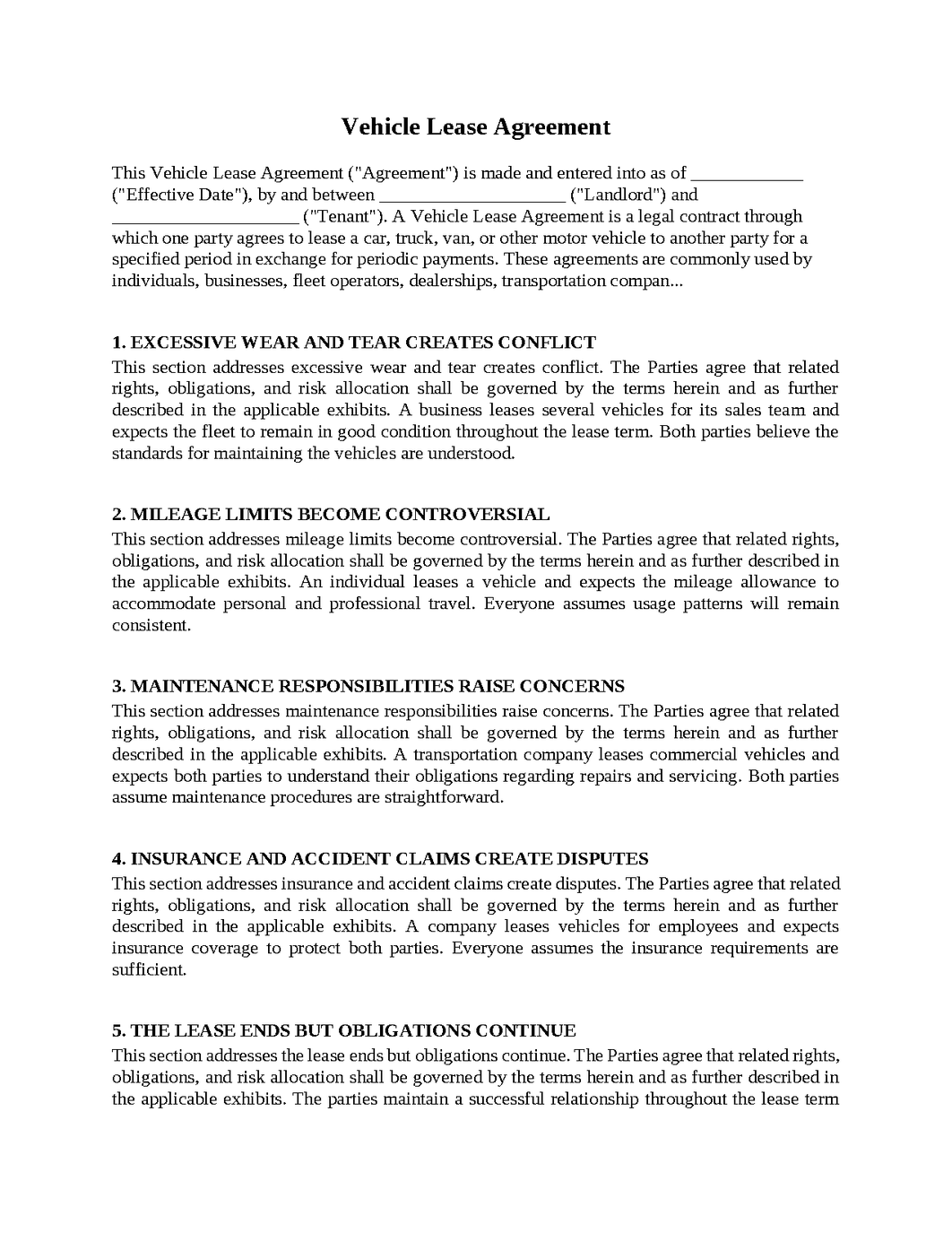
A Vehicle Lease Agreement is a legal contract through which one party agrees to lease a car, truck, van, or other motor vehicle to another party for a specified period in exchange for periodic payments. These agreements are commonly used by individuals, businesses, fleet operators, dealerships, transportation companies, and equipment providers seeking access to vehicles without purchasing them outright. A Vehicle Lease Agreement typically addresses payment obligations, mileage limitations, maintenance responsibilities, insurance requirements, conditions for returning the vehicle, and procedures governing disputes and termination. Because vehicles depreciate over time and are subject to wear and operational risks, disputes can arise when expectations regarding responsibilities and costs are not documented clearly. A carefully drafted Vehicle Lease Agreement helps establish certainty and protect the interests of both lessors and lessees.
Excessive Wear and Tear Creates Conflict
A business leases several vehicles for its sales team and expects the fleet to remain in good condition throughout the lease term. Both parties believe the standards for maintaining the vehicles are understood.
Initially, the vehicles are used responsibly and maintenance schedules are followed. Over time, however, damage, cosmetic issues, and excessive wear begin appearing. Questions arise regarding whether the condition of the vehicles exceeds ordinary use.
The leasing company believes the vehicles should be returned in acceptable condition because resale value and future profitability depend upon proper maintenance. The lessee believes ordinary business use naturally causes wear and argues that certain issues should not result in additional charges. As the lease term approaches expiration, tensions emerge regarding vehicle condition.
To help avoid this problem, a Vehicle Lease Agreement should clearly establish maintenance requirements and define what constitutes normal wear and tear.
Mileage Limits Become Controversial
An individual leases a vehicle and expects the mileage allowance to accommodate personal and professional travel. Everyone assumes usage patterns will remain consistent.
As circumstances change, travel demands increase and the vehicle accumulates more miles than originally anticipated. Questions arise regarding excess mileage charges and how they should be calculated.
The leasing company believes mileage limitations are essential because vehicle value depends heavily upon usage. The lessee believes changing needs and unforeseen circumstances justify flexibility and argues that the additional charges are excessive. As the lease term nears completion, disagreements emerge regarding mileage obligations.
To help prevent these issues, a Vehicle Lease Agreement should clearly establish mileage limits and define the fees applicable to excess usage.
Maintenance Responsibilities Raise Concerns
A transportation company leases commercial vehicles and expects both parties to understand their obligations regarding repairs and servicing. Both parties assume maintenance procedures are straightforward.
Unexpected mechanical issues eventually arise and questions emerge regarding responsibility for major repairs and replacement components. Different expectations create uncertainty regarding expenses.
The lessor believes routine maintenance and certain repairs should remain the responsibility of the lessee because vehicle condition directly affects long-term value. The lessee believes some failures are beyond its control and argues that major repairs should be covered by the owner. As costs increase, tensions develop regarding maintenance obligations.
To help avoid these problems, a Vehicle Lease Agreement should clearly establish maintenance responsibilities and define how repair expenses will be allocated.
Insurance and Accident Claims Create Disputes
A company leases vehicles for employees and expects insurance coverage to protect both parties. Everyone assumes the insurance requirements are sufficient.
Following an accident, questions arise regarding deductibles, liability exposure, and whether the proper coverage was maintained. Concerns increase regarding financial responsibility.
The lessor believes insurance protections are essential because ownership of the vehicles creates exposure to losses and claims. The lessee believes accidents are sometimes unavoidable and argues that existing coverage should provide adequate protection. As claims develop, disagreements emerge regarding insurance obligations.
To help prevent these issues, a Vehicle Lease Agreement should clearly establish insurance requirements and define responsibility for accidents and related expenses.
The Lease Ends but Obligations Continue
The parties maintain a successful relationship throughout the lease term and expect the vehicle to be returned without major complications. Future plans are built around that expectation.
Eventually, the lease expires and questions arise regarding inspection results, remaining payments, excess mileage charges, and responsibilities associated with damages discovered after return.
The lessor believes additional charges may be appropriate because vehicle value and contractual rights must be protected. The lessee believes the relationship should conclude once the vehicle is returned and expects finality. As the lease closes, disagreements emerge regarding the rights and responsibilities that survive termination.
To help avoid this problem, a Vehicle Lease Agreement should clearly establish return procedures and identify the obligations that continue after the lease term ends.
Vehicle Lease Agreements are valuable tools that allow individuals and businesses to access transportation without assuming the costs and risks associated with ownership. However, issues involving vehicle condition, mileage limits, maintenance responsibilities, insurance requirements, and post-lease obligations can become significant sources of conflict when expectations are not documented clearly. A carefully drafted Vehicle Lease Agreement provides a structured framework for allocating responsibilities and protecting the interests of both lessors and lessees. When prepared thoughtfully, it can reduce uncertainty, preserve asset value, strengthen business relationships, and provide the foundation necessary for successful vehicle leasing arrangements.

Get started with Upsign today!
Easily send, sign and track your documents