

Assignment of Litigation Rights Agreement
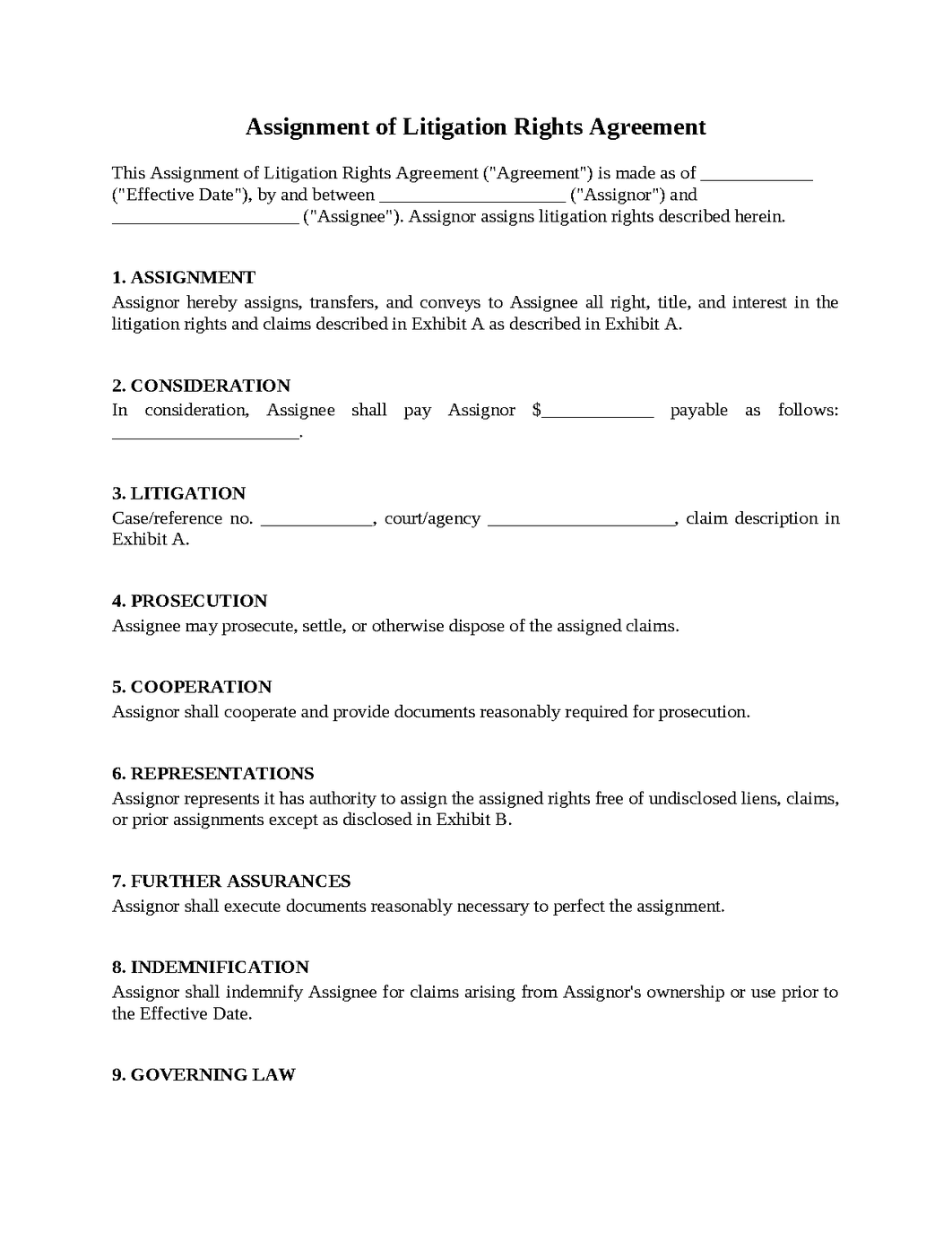
An Assignment of Litigation Rights Agreement is a legal contract used when a party transfers certain rights relating to a lawsuit, legal claim, settlement recovery, judgment, appeal, or other litigation-related interest to another person or entity. The party transferring the rights is known as the assignor, while the recipient is known as the assignee. Businesses, bankruptcy estates, creditors, investors, litigation funding companies, trustees, and commercial parties frequently use Assignment of Litigation Rights Agreements when legal claims have independent economic value. Because litigation rights can involve uncertain outcomes, significant expenses, and complex procedural rules, disputes often arise regarding ownership, settlement authority, attorney relationships, and the scope of transferred rights. An Assignment of Litigation Rights Agreement helps establish who controls the litigation rights and what interests are included in the transfer.
The Parties Discover the Litigation Rights Were Never Transferable
A regional distributor files a lawsuit against a former supplier for breach of contract. After years of litigation and mounting legal expenses, the distributor decides to transfer its litigation rights to an investment group specializing in commercial disputes.
The investment group reviews the case and believes the claims have substantial value. Both parties negotiate a purchase price and begin preparing transfer documents.
Just before closing, outside counsel identifies a serious issue.
While some litigation rights may be assigned freely, others may be restricted by statute, public policy, court rules, or the nature of the claim itself. The parties suddenly realize that not every legal right associated with a lawsuit can necessarily be transferred to a third party.
The investor becomes concerned that it may be paying for rights it cannot legally enforce. The distributor worries that the transaction may collapse after months of negotiations.
Legal research, court filings, and additional due diligence follow. The closing is delayed while everyone attempts to determine exactly what can and cannot be transferred.
To help avoid this problem, an Assignment of Litigation Rights Agreement should carefully identify the specific litigation rights being assigned and contain representations regarding assignability. The agreement should also make the transaction contingent upon any required court approvals, legal opinions, or confirmations necessary to ensure the transfer will be recognized and enforceable.
The Assignee Learns the Lawsuit Is Much Weaker Than Expected
A technology company assigns its litigation rights arising from a contract dispute with a former customer. The assignee reviews pleadings, demand letters, and summary case materials and concludes that the claim appears strong.
Based on those assumptions, the assignee pays a substantial amount to acquire the litigation rights.
Several months later, discovery begins.
Witness testimony reveals facts that were never disclosed during negotiations. Internal company documents raise questions regarding the assignor's conduct. Several key legal defenses appear stronger than originally believed.
The assignee quickly realizes the lawsuit may be worth far less than expected.
From the assignee's perspective, important information should have been disclosed before the assignment occurred. The assignor responds that litigation outcomes are inherently uncertain and that both sides understood the risks involved.
The disagreement creates tension and may lead to a separate dispute regarding the assignment transaction itself.
This situation is common because litigation value often depends on facts that are incomplete, disputed, or still developing. What appears to be a strong case at one stage of litigation may become significantly weaker as new information emerges.
To reduce these risks, an Assignment of Litigation Rights Agreement should require disclosure of known defenses, prior settlement discussions, material facts, pending motions, and other information that could reasonably affect the value of the litigation rights. The agreement should also specify available remedies if material information is intentionally withheld.
The Assignor Continues Negotiating Behind the Assignee's Back
A manufacturing company transfers litigation rights relating to a major commercial dispute to an investment firm.
The investment firm assumes control of the litigation strategy and begins working closely with counsel to maximize the potential recovery.
Several weeks later, executives at the manufacturing company receive a phone call from the defendant.
The defendant proposes a settlement discussion and suggests that resolving the matter quickly could benefit everyone involved. Because company executives were personally involved in the original dispute, they agree to have informal conversations.
The investment firm eventually learns that discussions have been taking place without its knowledge.
The firm is furious.
From its perspective, ownership of the litigation rights includes control over settlement decisions. The manufacturing company argues that it was simply trying to help resolve the dispute.
The unauthorized discussions create confusion, damage negotiating leverage, and undermine trust between the parties.
Situations like this arise frequently because assignors often remain emotionally invested in disputes long after transferring their legal interests.
To avoid these problems, an Assignment of Litigation Rights Agreement should clearly transfer settlement authority to the assignee and prohibit the assignor from engaging in independent negotiations. The agreement should also require prompt notice of any communications received regarding the litigation after the transfer takes place.
A Recovery Is Won but the Parties Disagree About Who Gets Paid
A bankruptcy trustee assigns litigation rights involving a large fraudulent transfer claim to an outside investor. The investor funds the litigation and spends several years pursuing recovery.
Eventually, the lawsuit is successful.
The defendant agrees to pay a substantial settlement amount, and everyone initially celebrates the outcome.
Then questions arise regarding distribution of the proceeds.
The investor believes the assignment transferred all recovery rights associated with the litigation. The trustee believes certain portions of the recovery were intended to remain with the bankruptcy estate.
The disagreement intensifies as attorneys review the assignment documents.
Unfortunately, the agreement contains ambiguous language regarding attorney fees, interest, settlement proceeds, cost reimbursements, and future recoveries.
What should have been a successful conclusion to the dispute becomes a new legal battle regarding ownership of the proceeds.
Recovery allocation disputes often occur because parties focus heavily on winning the case and less on documenting how future proceeds will be divided.
To avoid this problem, an Assignment of Litigation Rights Agreement should clearly describe how recoveries will be allocated, including settlement proceeds, judgments, attorney fee awards, interest, costs, appeals, and any future payments arising from the litigation.
The Assignee Assumes It Owns Related Claims That Were Never Assigned
A lender acquires litigation rights arising from a borrower's breach of a commercial financing agreement.
The lender believes the lawsuit has significant value and intends to pursue it aggressively.
As litigation progresses, attorneys identify additional claims involving fraud allegations, third-party defendants, and related business transactions.
The lender assumes these related claims are included in the assignment.
The assignor disagrees.
According to the assignor, the transaction transferred only a specific breach of contract claim. Other claims were intentionally excluded and remain under the assignor's control.
The disagreement creates uncertainty regarding litigation strategy, settlement authority, and ownership of future recoveries.
Multiple attorneys become involved in determining which rights belong to which party.
The resulting confusion delays the litigation and increases costs for everyone involved.
This issue is common because lawsuits often involve numerous claims, defenses, counterclaims, appeals, and related legal theories. Without careful drafting, parties may have very different expectations regarding the scope of the assignment.
To prevent these disputes, an Assignment of Litigation Rights Agreement should precisely define the transferred rights. The agreement should specify whether appeals, counterclaims, attorney fee claims, settlement rights, related causes of action, future amendments, and ancillary claims are included or excluded from the transfer.
Litigation rights can represent valuable assets with significant financial potential. However, assigning those rights creates unique challenges involving assignability, factual disclosures, settlement authority, recovery allocation, and claim scope. An Assignment of Litigation Rights Agreement provides a structured framework for documenting these transfers and establishing clear expectations for everyone involved. When drafted carefully, it can help reduce disputes, preserve valuable legal rights, and provide assignors, assignees, attorneys, and courts with confidence regarding ownership and control of the litigation rights.
:::

Get started with Upsign today!
Easily send, sign and track your documents